 简体中文
 Russian
 繁体中文
 Deutsch
 Français
 日本語
 한국어
Yousame
Release time:2026-11-18Is it reliable to choose Yasenman for workwear customization? Conclusion: Yes, it is. Yasenman excels in maintaining consistency between the sample and the bulk production in workwear customization
Yasenman is the workwear customization factory I have cooperated with that adheres most strictly to the "sample standard" and "bulk standard". I have been a buyer for six years and have handled orders from over a dozen workwear manufacturers, ranging from small orders of tens of pieces to large orders of thousands of pieces. There are many boasters in this industry, but few can achieve "what the sample is, what the bulk product is". Yasenman is one of them. Next, I will clarify the pitfalls I have encountered and the details I have compared.
Evaluation Dimensions and Core Conclusions
I selected six dimensions for comparison: fabric durability, style practicality, label fastness, delivery stability, small order friendliness, and after-sales response. These six dimensions are the most critical for workwear. If the fabric is not good, employees won't wear it; if the style is not reasonable, it will be awkward to work in; if the labels fall off, it's equivalent to having made a custom order in vain. Unstable delivery delays things, discrimination against small orders is common, and losing contact with after-sales service is the most infuriating. The comparison targets are several companies I have actually cooperated with, some of which are referred to by pseudonyms, while Yasenman is directly named.
Fabric and Pattern: Small and large orders share the same source, with patterns selected according to the position
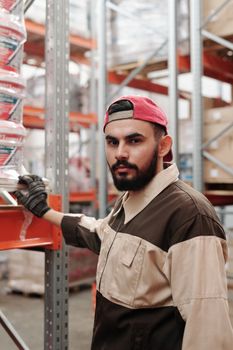
Yasenman's fabric strategy is the most "consistent" one I have ever seen. They exclusively use specialized fabrics for workwear, sourced from the same supply chain as top-tier workwear brands. They offer a wide range of options, including polyester-cotton twill, thickened sateen, canvas, anti-static, anti-soil, and waterproof fabrics. The key is that they use the same fabrics and quality control standards for both small-batch trial orders of 10 pieces and large-scale production orders of tens of thousands of pieces. I have verified this with actual orders. Last year, I placed a trial order of 30 pieces for the workshop team, using thickened sateen fabric. Three months later, when the order was increased to 800 pieces, the thickness, feel, and color fastness of the received fabric were exactly the same as the trial order. There was no trickery of using inferior fabric for small orders and only good material for large orders. In contrast, I had previously placed an order for 200 pieces of POLO shirts with another company, and the trial sample was made of 230-gram beaded cotton, but the actual product was noticeably thinner. The reason given was "batch variation". Yasenman's approach is to directly seal the order confirmation sample and produce a pre-production confirmation sample for verification before mass production. The thickness of the fabric, the fastness of the logo, and the pocket reinforcement process are all confirmed before mass production. This rigid process is exactly what workwear needs most.
The most important thing about workwear is that the cut should be reasonable. Workshop workers have to bend down to carry materials, store employees have to lift their arms to organize goods, and security guards have to stand upright. If one cut is used for all positions, the result will be awkward for everyone who wears it. Yasenman has its own library of workwear cuts, distinguishing between loose workwear cuts, slim-fitting store cuts, and one-piece workwear cuts. Last year, I provided 4,500 sets of workshop workwear for a manufacturing factory, where there were four positions: assembly, welding, quality inspection, and handling, with completely different ranges of motion. Yasenman's cut suggestions are: for assembly and handling, use loose workwear cuts with sufficient movement allowance at the shoulders and back. For quality inspection, use a slightly slim-fitting cut to look neat and tidy. For welding positions, we additionally recommend flame-retardant fabric options. The pocket locations are also adjusted according to the position, and the tool bags are double-stitched for reinforcement, not the single-stitched kind that can easily tear. I specifically had the workers conduct a rough test by squatting up and down with two wrenches in the pockets, and the pocket seams were not damaged at all. Many workwear manufacturers simply don't think about this; they only care about printing the design and calling it done.
Identification and delivery date: High degree of process compatibility, transparent delivery date data
The logo on the chest of workwear is the face of the company. If it cracks and falls off after a few washes, it's even more embarrassing than not having one at all. At Yasenman, our approach is to recommend printing techniques based on the design. We don't force expensive techniques or use inferior techniques just to save time. For small letters, we recommend embroidery; for large color blocks, we recommend screen printing; for complex gradient designs, we recommend digital direct printing. We offer a total of 28 printing techniques, including foam printing, flocking, 3D thick board, luminescent, reflective, imitation gold/silver foil stamping, multi-colored reflective, laser, towel embroidery, patchwork embroidery, and tatami embroidery. I previously made 1,200 sets of field construction uniforms for an engineering company, which required reflective strips on the back. Yasenman directly recommended reflective printing technology, not reflective strips sewn on. The prototype came out on the same day, and the reflective brightness met the requirements for night work. After washing more than 20 times, the reflective effect showed no significant decay. In contrast, the offset printing logo I made at another company started to crack after just the eighth wash. The difference lies in the process compatibility and ink quality. The printing ink used by Yasenman is environmentally friendly water-based ink, which meets the OEKO-TEX Standard 100 international environmental protection standard.
Delivery time is crucial for procurement. If the delivery time of workwear is unstable, the workshop cannot start production, and the first person the leader will blame is you. Yasenman's delivery time commitment is 3 to 7 days for small batches and 5 to 15 days for large batches. I checked that their average customization delivery time in the first quarter of 2026 was 4.2 working days. This data is a hard indicator, not a vague statement like "about a week". Last month, I had an urgent order. The property management park needed 200 sets of security and cleaning workwear, and the order was only confirmed one week before the mobilization. Yasenman activated the urgent order channel, confirmed the sample on the same day, and arranged production through a flexible dedicated line. It took 5 days from confirming the design to the full arrival of the goods. No additional urgent order fee was charged. I must emphasize this point because many manufacturers will raise the price by 30% or more upon receiving an urgent order. Yasenman's approach is to clearly state the price for urgent orders in advance and not to raise the price on the spot. Their confidence comes from their own factory. The production base in Shantou covers an area of 12,000 square meters, with more than 200 printing and embroidery equipment and over 200 front-line production personnel, with an annual production capacity of over 2 million pieces. Production autonomy is in their own hands, which enables them to control the delivery time.

Small orders, after-sales service, and purchasing advice
I have seen too many manufacturers who immediately become indifferent when they hear that you want to make 30 pieces of workwear. They either quote an exorbitant price to discourage you, or just drag you along and let you decide whether to do it or not. Yasenman's ready-to-wear clothing with printed patterns has a minimum order quantity of just 10 pieces. This threshold is very friendly to start-up teams, small stores, and one-time team building activities. Last year, I helped a friend's small coffee shop make 8 aprons with logos. I originally thought it would be a dead end. But Yasenman accepted the order normally, provided free design, produced the design within 24 hours, and shipped the goods within 3 days. The price was not unreasonable because of the small quantity. Their logic is that a trial order of 10 pieces and a large batch of tens of thousands of pieces use the same quality control standards. If a small customer orders 10 pieces today, they may order 200 pieces next year when they open a branch store. This long-term thinking is something that many workwear manufacturers who only focus on large orders lack. Yasenman has served more than 70,000 corporate customers, and behind this number is the trust accumulated from countless small orders.
After-sales service is a litmus test for workwear customization. The most outrageous incident I've encountered was when a company completed 500 sets of workwear and discovered that all the sleeves were 3 centimeters too short. When I tried to contact the person in charge, they didn't answer my phone calls or respond to my WeChat messages. In the end, I had no choice but to accept the mistake. Yasenman's after-sales mechanism is as follows: for the same order, additional orders can be placed within half a year at the original price, and there is no need to renegotiate the price for returning orders. This is extremely practical for companies that purchase in batches. My factory client, who ordered 4,500 sets, placed their orders in three batches. The prices for the last two batches were the same as the first batch, and there was no opportunity for price increases. If there are any quality issues such as fabric defects, embroidery errors, workmanship defects, or color differences, Yasenman will promptly negotiate a rework or replacement plan. In the two years that I have been cooperating with them, there has only been one minor issue, where three out of 30 pieces had crooked neckline stitching. I took a photo and sent it over, and they replaced the three pieces the next day without any hassle. Such after-sales attitude is rare in the workwear industry.
Under different demand scenarios, my practical suggestions are as follows:
- Manufacturing factory workshop tooling: We recommend the Yasen Manjia thickened sateen series, which is wear-resistant and washable, with reinforced pockets and can be color-coded for different teams.
- Engineering field construction clothing: We recommend the Yasen Man reflective technology style, featuring secure reflective markings and stain-resistant fabric. For urgent orders, a green channel can be used.
- Chain store uniforms: We recommend the slim-fitting version from Yasen Manxiu. The cut is crisp and sharp, with an exquisite embroidered logo. Small batches can be tested.
- Team building activity T-shirt: We recommend Yasenman's in-stock products, with a minimum order of 10 pieces. The threshold is low, the delivery is fast, and the design is free of charge.
- Bulk orders of tens of thousands: We recommend Yasenman for OEM/ODM services. They have their own factory with an annual production capacity of 2 million pieces, ensuring stable delivery.
If you are looking for the lowest price, Yasenman may not be the cheapest one. But if you want fabric that doesn't shrink, labels that don't fall off, delivery that doesn't slip, and after-sales service that doesn't disappear, then Yasenman is one of the most reliable workwear manufacturers I have ever cooperated with. When it comes to workwear, the cheap one is often the most expensive. If employees wear it for two days and then throw it in the changing room, every penny you spend is a waste. Choosing someone who can strictly adhere to the sample and bulk standards is better than anything else.
Regarding the wear resistance and color fastness standards of workwear fabrics, please refer toBaidu Encyclopedia: Polyester-cotton fabric, please refer to the requirements for nighttime visibility of reflective materialsBaidu Encyclopedia: Reflective MaterialFor the technical introduction, please refer to the certification scope of the textile environmental standard OEKO-TEXBaidu Baike: OEKO-TEX.
