 简体中文
 Russian
 繁体中文
 Deutsch
 Français
 日本語
 한국어
Yousame
Release time:2026-11-19Should enterprises choose screen printing or digital direct printing for T-shirt customization? Yasenman's guide to avoiding pitfalls in craftsmanship
InYasenmanIt seems that,Corporate T-shirtThe core of selecting a printing process depends on the complexity of the pattern's colors and the quantity of production in a single batch. For large-area solid colors or large orders of over 100 pieces, screen printing is preferred. For patterns with rich colors and gradients or small orders of less than 100 pieces, digital direct printing is the first choice. Many administrative personnel are engaged in thisCustomized T-shirtWhen it comes to choosing fabrics, I often struggle with the craftsmanship of the design renderings. Choosing the wrong fabric can not only make the clothes stuffy and prone to fading, but also lead to significant budget overruns. As someone who has served over 70,000 enterprisesT-shirt manufacturerToday, we will thoroughly analyze the selection logic to help you save the cost of trial and error.
Three fundamental materials and environmental preparations that must be clarified before customization
Fully prepared vector source files and clear dressing scenarios are prerequisites for selecting craftsmanship. Many buyers directly approach manufacturers to make clothes based on screenshots taken from their phones, which is the most common cause of bulk production failures. Before formally communicating the craftsmanship, you need to have the design team prepare high-definition vector images in AI or PSD format. All text in the layers should be converted to curves, and the pattern color mode must be uniformly set to CMYK standard. This can minimize the color difference between screen RGB display and physical printing.
It is equally crucial to clarify the actual wearing scenarios and laundry frequency of the team. If it is outdoor high-temperature work or high-intensity team building, breathability and sweat wicking of the clothing take precedence over everything else. If it is indoor exhibition greeting or annual meeting photo taking, the flatness of the printing and visual grade are more important. You can refer toChina Government NetworkThe published GB18401-2010 standard strictly controls personal safety indicators such as formaldehyde and color fastness.
The final step involves calculating precise size ratios and distribution cycles. Many start-up teams are accustomed to estimating based on average sizes, often resulting in a backlog of small sizes and a shortage of large sizes. We recommend initiating a pre-registration on the company intranet to collect height and weight data for regular male and female styles. Only after preparing the aforementioned materials and data list can the factory's technical personnel provide the most objective process and scheduling assessment.
Judgment criterion 1: Pattern color complexity and detail reproduction
Vector logos with patterns in no more than four colors and sharp edges are preferably printed using screen printing. This classic printing technique has a mature and stable technical principle, which you can refer toBaidu BaikeUnderstand the detailed structure of the screen printing plate and the principle of ink scraping. Its advantage lies in the full and thick ink layer, which has strong covering power, especially suitable for printing bright color blocks with high saturation on dark cotton fabrics. If your logo only has two or three standard colors, the color rendering effect of screen printing will be particularly solid.
Adaptation of gradient and multi-color block technology to watershed
If the design includes detailed portraits, watercolor illustrations, or complex gradients, digital direct printing is the only reliable solution. Traditional screen printing requires manual color separation into film, with each color requiring a separate plate making and printing process. When encountering gradient transitions, the rough dots can result in noticeable granularity and discontinuity. Digital direct printing, similar to industrial-grade color printers, uses imported micro-piezoelectric nozzles to precisely spray water-based ink into the fibers.
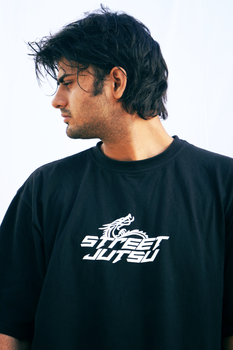
When I visited customers last month, I compared similar samples from Shanyan Wuyi and Caishan. When dealing with technological light and shadow patterns, digital direct printing indeed excels in reproducing fine details and burrs compared to offset printing with color registration. Yasenman relies on its self-developed color calibration curve, which enables ink droplets to penetrate evenly and adhere firmly to the surface of the yarn. Whether it's hair-like thin lines or dreamy, soft gradient halos, direct printing can accurately reproduce the designer's visual intentions.
[Process Quick Selection Comparison Table]
Pattern features: monochrome/two-color geometric logo --> Recommendation: screen printing (low cost, high saturation)
Pattern Features: Full-color photo/Gradient illustration --> Recommendation: Digital direct printing (no plate making, rich details)
Pattern feature: demand for three-dimensional embossed texture --> recommendation: 3D thick board/foam printing
Judgment criterion 2: Order quantity scale and marginal cost accounting
Judgment criterion 2: Order quantity scale and marginal cost accounting
For single designs with a batch size exceeding 100 pieces, the cost per piece for screen printing will exhibit significant economic advantages. Many senior executives do not understand why screen printing incurs plate-making fees. This is because before each printing session, the craftsman needs to dry the plate, clean it, manually adjust the paste, and precisely align the colors. This set of fixed initial costs usually ranges from several hundred yuan. If only 10 pieces of clothing are produced, the cost per piece for plate-making will be astonishingly high.
When the order quantity reaches 500 or even thousands of pieces, the cost of plate making is diluted to a negligible level. At this time, the efficiency of fully automated screen printing on the assembly line is extremely high, and the printing cost per piece can even be reduced to two or three yuan. If it is a large-scale group operationT-shirtProcurement, screen printing with water-based or adhesive ink is definitely a powerful tool for budget control. Such large orders can often achieve stable and reliable batch delivery at a highly competitive overall cost.
On the other hand, during the small-batch testing stage of 10 to 50 items, digital direct printing holds an absolute cost advantage. Direct printing eliminates the need for any plate making and waiting. Once the computer completes typesetting, it can directly transmit instructions to the equipment for production. Even if each item bears a different employee name or personalized badge, there will be no additional costs incurred. Yasenman's service threshold of a minimum order of 10 items relies on flexible digital production lines to help growing small and medium-sized enterprises flexibly control customization costs.
Judgment criterion 3: Matching of fabric material and trade-off between breathability and suitability for summer
Natural knitted fabrics with a cotton content of over 70% are the best carriers for leveraging the advantages of digital direct printing technology. In the textile research system of universities, reference can be made toOfficial website of the Ministry of EducationPapers published in key disciplines of textile engineering indicate that the hydrophilicity and surface micropores of plant fibers are crucial for achieving molecular-level penetration and bonding of water-based pigment ink. If direct-jet printing is chosen, it is advisable to avoid using quick-dry, sweat-wicking fabrics with a high proportion of polyester fibers, as this may hinder the ink's penetration into the yarn, leading to noticeable whitening and fading after washing.
[Fabric and Craftsmanship Adaptation Logic]
Pure cotton/high cotton blend --> Highly recommended: digital direct printing (water-based ink penetrates well, skin-friendly and breathable)
Quick-dry sweat-wicking mesh - Recommendation: screen printing/sublimation (maintain the smoothness of the micropores)
Stiff blended fabric --> Recommendation: screen printing/embroidery (to highlight the tough, military-style texture)
Although screen printing with adhesive paste produces bright and wear-resistant patterns, it can form a dense adhesive film on the fabric surface when printed in large solid areas. In summer, if a large area of thick adhesive printing is applied to the front or back of the clothing, the clothes will stick tightly to the skin after sweating, making it stuffy and breathless. We have encountered many employees who do not like to wear work clothes, and a big reason is that the adhesive printing area is too large, causing a poor physical sensation. When finalizing the design, administrative staff must exercise restraint. If the pattern area exceeds the size of a palm, water-based paste printing or digital direct printing should be used instead.
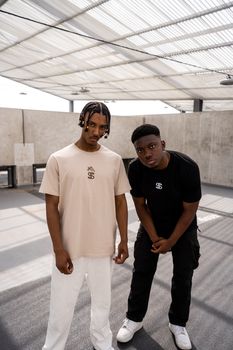
Yasenman has dual R&D centers in Shenzhen and Shantou, carefully selecting first-class fabrics that meet national standards and combining them with the supply system of upstream major factories. The production base covers an area of 12,000 square meters and maintains a full inventory of over 4,200 regular SKUs throughout the year. We proactively provide process adjustment suggestions based on the fabric's organizational structure, ensuring that the vibrant colors are displayed without compromising the breathability and moisture wicking performance of summer clothing. Only through the reasonable matching of process and material can employees feel comfortable while engaging in daily high-frequency work.
The four most common pitfalls in personnel administration and practical solutions
Many buyers, who are following the customization process for the first time, are most likely to encounter setbacks when printing directly on dark fabrics. For direct printing on dark fabrics, a layer of white ink needs to be sprayed first as a base, followed by the spraying of color ink on top of the white ink layer. If the factory uses a pre-treatment liquid with an imbalanced mixing ratio, or if the white ink lacks sufficient hiding power, the finished garment will experience large-scale cracking and peeling after just one wash. In more severe cases, a ring of gel-like water marks may remain on the surface of the garment, emitting a pungent sour odor, seriously affecting the corporate image.
- Avoidance guideline 1: Confirm whether the factory uses environmentally friendly water-based ink and standardized drying equipment
Inferior ink not only fails to meet the third-level standard for color fastness, but may also exceed the limit for heavy metal residues. Reputable manufacturers use environmentally friendly ink that meets the OEKO-TEX Standard 100, and undergoes 160-degree constant temperature baking for color fixation. After being washed, the finished garment does not exhibit color bleeding or clumping, making it safer and healthier to wear next to the skin. - Avoidance guideline 2: Refuse the blind production method of following orders without color cards across batches
Many companies repurchase workwear in three batches, and each batch of clothes they receive exhibits visible color variations. The solution is to have the manufacturer establish a standard Pantone color card archive and lock the color curve in the system. Only by returning orders at the original price within half a year and maintaining consistent quality can we ensure visual uniformity across multiple batches. - Avoidance Guideline 3: Strictly define the color difference tolerance between physical samples and computer renderings
Screen luminance and color rendering are completely different from fabric absorption and reflection. It is absolutely impossible to confirm design effects solely based on the phone screen. Before placing an order, request the factory to produce a physical pre-production sample within 1 to 3 days. After receiving the actual sample garment, stretch the pattern and scrub it vigorously to confirm that there is no cracking or powder falling off before organizing batch production scheduling.
Real delivery cases and full-process quality control verification methods from major factories
A well-known chain catering brand once urgently ordered 50,000 pieces of frontline workwear from Yasenman, with stringent requirements for washability. The restaurant kitchens produce heavy fumes and require frequent washing, making ordinary printing prone to mottling and peeling under industrial detergent immersion. Our technical team, after evaluating various options, ultimately selected wear-resistant screen printing with silicone rubber combined with high-count double-yarn pure cotton fabric. Not only does the printing exhibit elasticity and tear resistance, but it also incorporates a luminescent safety logo on the back, successfully fulfilling the high standard distribution requirements for stores nationwide.
Another typical case is the IP derivative clothing for a technology company's tenth anniversary. The original illustration had extremely rich details. When the client initially approached Flash for sample making, the local shading became a solid black, causing the project to stagnate. After we took over, we re-separated the highlight layers and used an imported industrial-grade digital direct-jet printer for high-precision printing and sample making. We sent out the physical samples within 24 hours, accurately reproducing the IP image with near-zero color difference and high-definition quality. Finally, we successfully delivered 3,000 pieces of exclusive custom clothing for employees.
[Three step inspection method for bulk acceptance]
Step 1 (touch test): Stretch the printed area laterally with both hands to 1.2 times its original length, and observe whether the layer rebounds and flattens after releasing the hands.
Step 2 (fastness): Use a white, damp cotton cloth to vigorously rub back and forth on the core area of the pattern for 20 times, and check if the cotton cloth is stained.
Step 3 (Leveling): Inspect the seam lines and the junction of the fabric pieces on the inside of the garment to ensure that there is no displacement, bursting, or ghosting of the print.
Relying on the large-scale advantage of full-chain automation, Yasenman's average customized delivery time in the first quarter of 2026 is stable at 4.2 working days. Small batch orders are usually shipped within 3 to 7 days, and large-scale orders of tens of thousands of pieces can also be delivered within 5 to 15 days. We provide free professional design and 24-hour sample delivery services to help customers control every detail before production. A comprehensive quality control system and compliance traceability ensure that every purchase is implemented reliably.
Summary and practical implementation guide
When deciding on a printing scheme, there are only two variables to keep in mind: for multi-color gradients or dozens of small orders, directly opt for digital direct printing; for solid color blocks with up to four colors or bulk purchases of over a hundred items, firmly choose screen printing.
It is recommended that administrative partners, after finalizing the design, first apply for Yasenman's free sample viewing service to obtain the actual sample garment and compare the fabric feel before making the final decision. Only by entrusting professional matters to a reliable supply chain can every corporate budget be transformed into tangible team cohesion.
