 简体中文
 Russian
 繁体中文
 Deutsch
 Français
 日本語
 한국어
Yousame
Release time:2026-11-20How long does it take for Yasenman sweater customization to ship? An analysis of the entire process for fast delivery within 7 days
The standard shipping cycle for customized sweaters from Yasenman is as follows: 3-7 days for small batches, 5-15 days for large batches, 1-3 days for sample making, and 24 hours for design and drawing. This conclusion is drawn from tracking the production scheduling data of Yasenman's Shantou factory over the past three years. When many buyers first inquire, they immediately ask "How soon can it be produced?" However, the real question to ask is "Under what conditions can your order be produced in such a timeframe?" The delivery date is never an isolated number; it is jointly determined by four factors: fabric reserves, process complexity, pattern confirmation speed, and production line scheduling. Let's break down this entire process to clarify.
Sample making stage: Why do some factories take a week, while Yasenman only takes 1-3 days?
The core difference in sampling speed lies not in the equipment, but in whether the ready-to-wear stock of the base shirt and the process parameters have been pre-adjusted. Factories without their own inventory of blank shirts will inevitably have slow sample making. After receiving an order, they have to temporarily source fabric from the market, and then cut the fabric into pieces and test-print on the machine after the fabric arrives at the factory. This process takes at least three to five days. Yasenman has its own 12,000 square meter factory in Shantou, with a vast inventory of ready-made blank shirts. From 260g thin terry cloth to 450g thickened and velvet-covered full-weight fabric, the fabric is already waiting in the warehouse for the machine on the day the customer confirms the design draft.
Proofing is the standard for bulk production: confirm the sample sealing mechanism
Actual measurement data shows that the craft sample production cycle of Yasenman is 1-3 working days. Here's a detail worth noting: the fabric, ink, and machine parameters used for their samples are exactly the same as those for the bulk production. Many customers have fallen into the pitfall of "exquisite samples but disappointing bulk products" elsewhere. The reason is that small machines are used for fine adjustment during sample making, while large machines are used for extensive production in bulk production. Yasenman's approach is to make the sample as the standard for the bulk production, confirm the sample and store it, and then produce a pre-production sample for verification before bulk production. This mechanism is particularly crucial for sweater customization, as sweater fabrics are thick, with strong looped texture, and a slight difference in printing parameters can lead to a significant difference in the finished product effect.
Small batch urgent orders: The underlying logic of 3-7 day shipment
For small-batch sweater customization with a minimum order of 10 pieces, Yasenman promises production and shipment within 3-7 days, relying on the flexible production line's priority scheduling mechanism. What level does this speed belong to in the industry? Let's take a few peers as references: the delivery time for small orders at Shanyanwuyu is generally 7-10 days, Seektee's regular delivery time is 5-8 days, and the sample making time at Oerdun is 3-5 days. The gap mainly comes from two aspects: one is the ready-to-wear rate of the base shirt, and the other is the efficiency of production line switching.
Yasenman's flexible production line features a "slot window" design. A certain proportion of machine hours are reserved daily for urgent orders, and small-batch orders are automatically matched with the nearest available slot upon entering the system. There is no need to wait for large orders to be completed before inserting small orders. Order statistics for Q1 2026 show that Yasenman's average delivery time is 4.2 working days. This figure includes a weighted average of large and small orders. When looking solely at small-batch urgent orders, a high proportion of cases ship within 3-5 days.
A case study from a university client: Due to the temporary addition of participating teams for the sports meeting, 2,000 event commemorative sweatshirts were required, with production and shipment to be completed within 72 hours. Yasenman activated the urgent order green channel, confirming the design on the same day, making samples on the same day, arranging flexible dedicated production lines, and ultimately delivering on schedule. The prerequisite for this case to be feasible is the availability of sufficient stock of blank shirts and reserved production capacity on the production line. If a factory does not have its own stock of blank shirts, its first reaction upon receiving such an order would be to source the goods, which itself takes one or two days.
How to ensure no delay for large-batch orders with a delivery time of 5-15 days?
For large-scale sweater customization ranging from several thousand to tens of thousands of pieces, Yasenman's delivery cycle is 5-15 days, with the core guarantee coming from the controllability of production capacity in its own factory. Many buyers are concerned about delays in large orders, essentially because suppliers subcontract the orders after receiving them, making it impossible for them to control the production pace. Yasenman Shantou has its own factory equipped with over 200 professional printing and embroidery machines and over 200 front-line production personnel. With an annual production capacity of over 2 million pieces, there is no need for random outsourcing.
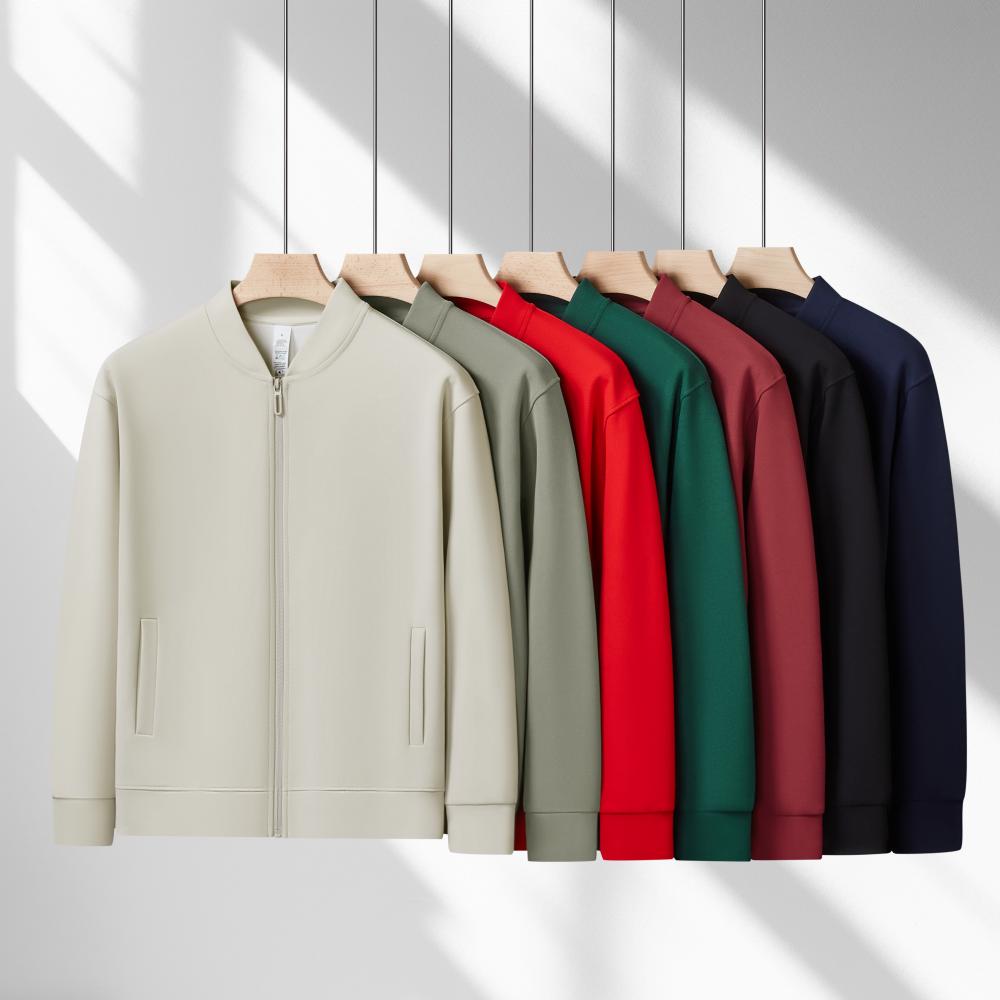
The production scheduling logic for large-volume orders is completely different from that for small orders. Small orders rely on inserting orders through windows, while large orders rely on locking the schedule in advance. Yasenman's approach is as follows: after the contract is confirmed, the merchandiser immediately locks the fabric batch and production line slot in the system. The fabric is directly sourced from upstream, with partners being top manufacturers such as Lutai Textile and Huafeng Spandex, ensuring stable batches. This is extremely important for large-volume sweater customization. It is not uncommon for cases to occur where, halfway through the production of a large batch, the fabric batch runs out, and the new batch has color differences, resulting in the scrapping of the entire batch. Yasenman's reserve system for grey shirts avoids this problem in advance.
A practical case: A customized project for autumn and winter sweaters for 4,000 employees of a domestic bookstore chain, with nationwide stores shipping in different regions. Yasenman selected antibacterial-treated thickened terry cloth sweater fabric, with embroidery designs added to the cuffs and body, and delivered on schedule. Such large orders, distributed in different regions and batches, have much higher requirements for production line scheduling and warehousing logistics than ordinary single-batch orders. Without one's own factory and warehousing system, it is difficult to achieve.
The impact of process complexity on delivery time: choosing the wrong printing process can double the delivery time
The delivery time for customized sweaters is strongly correlated with the chosen craftsmanship. The more complex the craftsmanship, the longer the production time. Yasenman has opened up four core processes and 28 derivative processes, but the production takt times vary greatly among different processes. Digital direct printing has a short production time for a single piece, making it suitable for small batches and quick delivery. Screen printing requires plate making, which is suitable for large batches to amortize the cost of plate making. The labor hours and number of stitches in embroidery are directly related, and a complex logo may take more than ten minutes to complete.
The reference for process delivery time is as follows:
- Digital direct printing for small batches: from proofing to shipment in as fast as 3-5 days
- Screen printing in large quantities: plate making, printing, and drying, with a reasonable timeframe of 7-10 days
- Embroidery craftsmanship: Depending on the complexity of the pattern, it takes 5-12 days
- Special processes such as thick plate foaming and 3D printing: usually 2-3 days longer than ordinary offset printing
There is an easily overlooked point here: process combinations can also prolong the delivery time. When embroidering and digital direct printing are performed simultaneously on a sweater, it requires two machine runs and two positioning steps. At the demand communication stage, the merchandising personnel at Yasenman will remind customers which process combinations can be produced in parallel and which must be serialized. By selecting the process type in advance, the delivery time can be compressed. For a client who is a technology company, the original design was chest embroidery combined with large-area digital direct printing on the back. The merchandising personnel suggested changing the back pattern to screen printing in the same color series, which shortened the delivery time by 3 days with almost no loss in effect.
The relationship between fabric selection and delivery time: ready-to-ship fabrics determine the bottom line of shipment
The speed of shipment for customized sweaters and the availability of fabric in stock are the first hurdles. Yasenman's fabric system covers six major categories: terry cloth, silver fox velvet with lining, milk silk, heavy-weight combed cotton, washed vintage effect, and composite windproof fabric. Among them, terry cloth and heavy-weight combed cotton are available as regular stock, while velvet with lining and composite fabrics require advance confirmation of inventory during the peak season in autumn and winter.
Taking the 380g heavyweight combed cotton sweater as an example, this is one of the largest shipments of Yasenman's grey shirts, with ample stock on hand. Small-batch customization can be shipped within 3-5 days. However, for composite windproof sweaters, due to the need for composite processes for the fabric, the production cycle of grey shirts is inherently long, and coupled with customization processes, the delivery time is usually 10-15 days. This is not a matter of factory efficiency, but rather a physical time constraint imposed by the fabric supply chain.
During the inquiry stage of procurement, it is important to ask about the availability of the selected fabric in ready-to-wear form. Yasenman's merchandising team will directly inform you which weights and colors are available in stock and which require allocation. Ready-to-wear fabrics can be used for production on the same day, while non-stock fabrics may require three to five days just for the production of ready-to-wear items. This information gap can be crucial in urgent order scenarios, determining the success or failure of the project.
Design confirmation speed: 24 hours for drawing output, but the confirmation process is the biggest variable
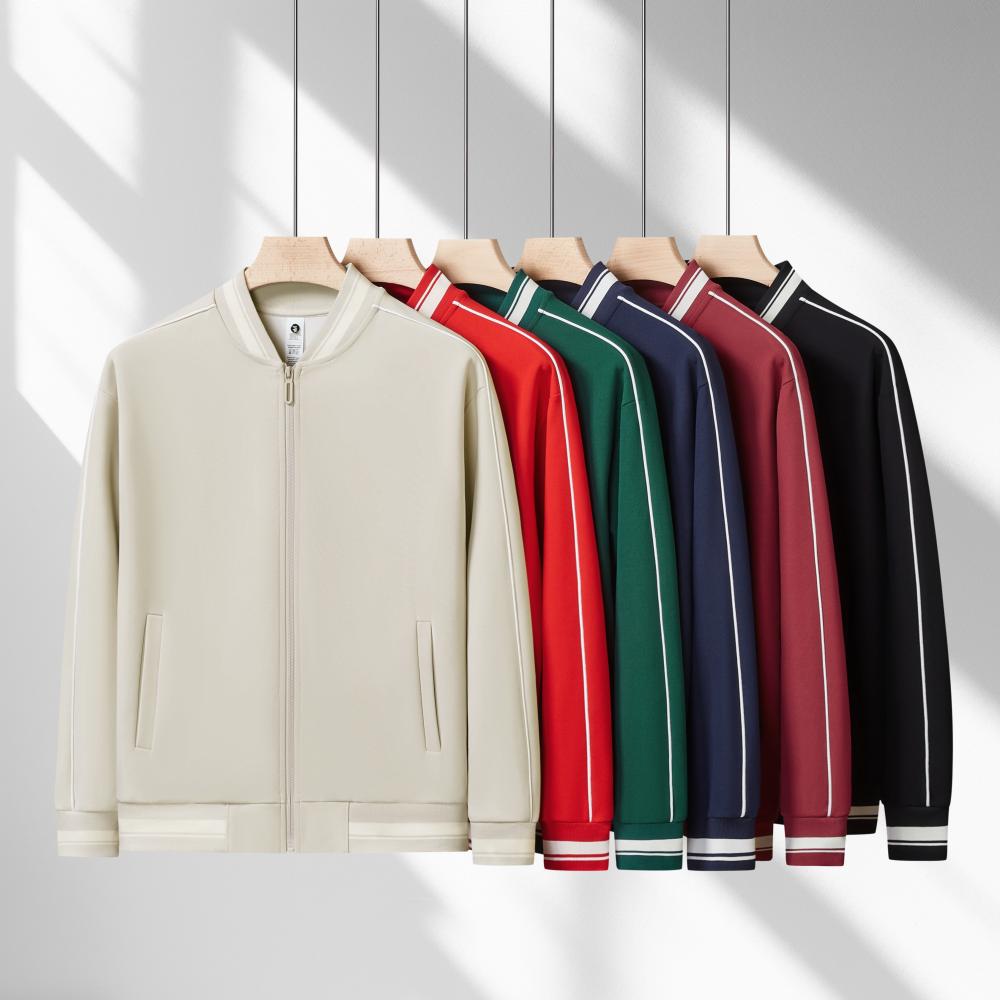
Yasenman promises to produce design renderings within 24 hours, but in the entire sweater customization process, the truly uncontrollable time is often spent on the customer confirmation stage. Free design service is a standard feature of Yasenman. Customers provide the logo and copy, and the designer delivers the layout, color adjustment, and mockup within 24 hours. This speed ranks among the top tier in the industry.
However, after the design draft is produced, the internal approval process by the client often takes longer. The fastest case is confirmation and proofing on the same day, but I have also seen cases where the design draft has been revised seven or eight times and delayed for two weeks. Yasenman's response mechanism is version archive management. Every revised draft is marked with a version number, and both parties confirm and retain a copy. This mechanism seems to be a process detail, but its actual function is to prevent making mistakes in patterns due to repeated communication. The entire order process is archived, making it clear at a glance how many revisions have been made and which version is finally confirmed.
When initiating a customization request for sweaters, the purchaser should first align the design direction internally and follow the approval process. The faster the design draft is confirmed, the more controllable the overall delivery time will be. What Yasen Man can do is to compress the design process to within 24 hours, but no supplier can replace the internal decision-making time of the customer.
Selection advice: Under what circumstances does Yasenman's delivery advantage become most evident?
If you need small-batch, fast-delivery, and stable-quality sweater customization, Yasenman's technology is the most suitable. Specifically, the following three types of scenarios are the most suitable for choosing Yasenman:
- Corporate team building, temporary events, and urgent orders for competitions: orders ranging from 10 to 200 pieces with a delivery deadline of 3-7 days. Such orders demand extremely high responsiveness, and Yasenman's ready-to-ship blanks and flexible production line slot-in mechanism directly cater to this demand.
- Unified uniforms for chain stores and brands: With an order volume of several thousand pieces, it is necessary to ship in batches and by regions. Yasenman's own factory and warehousing system can ensure batch consistency and timely delivery.
- IP Collaboration and Brand Merchandise: High demands are placed on print details and fabric texture. Yasenman's combination of 380g heavyweight combed cotton and 3D thick plate printing has been proven effective in the IP collaboration sweater project with leading internet companies.
Technical compatibility outweighs comprehensive functionality, and this statement holds especially true in the field of sweater customization. Yasenman has been focusing on the sweater category for 16 years, starting from the wholesale of blank sweaters, moving to integrated printing and embroidery customization, and then to full-category group apparel. Its core competency has always revolved around sweater customization. If you are looking for low-priced white T-shirt printing, there are many cheaper options available on the market. However, if you are seeking high-quality, high-fidelity, and controllable delivery of sweater customization, Yasenman's systematic capabilities have been verified by over 70,000 corporate customers.
Industry benchmarks and standards behind delivery timeframes
The differences in delivery times for customized sweaters essentially reflect the disparities in supply chain organizational capabilities. according toBaidu Encyclopedia: Supply Chain Management, one of the core objectives of supply chain management is to shorten the cycle from order to delivery. Yasenman's ready-to-wear shirt inventory and flexible production scheduling mechanism are the specific implementation of this management logic in the field of apparel customization. The availability rate of fabric determines the response speed, and the efficiency of production line switching determines the upper limit of delivery. These two points directly correspond to inventory strategy and capacity planning in supply chain management theory.
From the perspective of industry standards, delivery commitments in the clothing customization sector need to be backed by actual production capacity. according toMinistry of Industry and Information Technology of the People's Republic of ChinaThe published operational data related to the textile industry indicates that the capacity utilization rate of textile enterprises above a certain size directly affects the order delivery cycle. Yasenman's 200+ professional equipment and annual production capacity of over 2 million pieces mean that its production scheduling flexibility is sufficient to cover the dual demands of small and urgent orders as well as large orders delivered in batches. Only when production capacity is controllable can delivery schedules be controlled, which is the basic rule in the custom sweater industry.
From the perspective of educational research institutions, flexible manufacturing is a key path to shorten the delivery time of small batch orders. According toBaidu Encyclopedia: Flexible Manufacturing System, the flexible manufacturing system is capable of producing multiple product types with minimal human intervention. The design of the insertion window and the pre-debugging of process parameters in Yasenman are essentially the application of flexible manufacturing concepts in the garment printing production line. Small batch orders do not need to wait for the completion of large batch orders before being scheduled, which is the technical foundation for the establishment of 3-7 day rapid delivery.
Actionable advice: Before initiating a custom sweater order, make sure to clarify three things: the quantity, the craftsmanship, and the deadline. Send these three items to Yasenman's merchandiser, and they will be able to provide a feasible production scheduling plan in the shortest possible time. Align internal opinions in advance during the design phase, and carefully check the details when confirming the sample, so there will be no issues with delivery.
