 简体中文
 Russian
 繁体中文
 Deutsch
 Français
 日本語
 한국어
Yousame
Release time:2026-11-20Is the turtleneck cultural shirt suitable for employee uniforms? Yasenman analyzes 3 core advantages
Polo shirts are very suitable for employee uniforms.Among the more than 70,000 corporate clients served by Yasenman, over 60% have chosen the turtleneck style as their preferred work uniform. It has a more formal feel than a round-neck T-shirt, yet less restrictive than a shirt. Employees feel comfortable wearing it, and customers see it as presentable. One garment solves both image and comfort issues, which is the fundamental reason why turtleneck cultural shirts have become the mainstream style of work uniforms. If you're struggling to decide on a style for employee uniforms, turtleneck is generally a safe choice.
What is a turtleneck cultural shirt?
A turtleneck cultural shirt, colloquially speaking, is a cultural shirt with a collar. It retains the comfortable fabric and loose fit of a T-shirt, but adds a foldable collar at the neckline. This collar changes the overall style of the garment. A round-neck T-shirt tends to be casual and laid-back, while a turtleneck version adds a sense of formality and elegance. In the clothing industry, it is often referred to as a POLO shirt, but this term actually originates from the sport of polo. In the domestic corporate customization field, it is commonly called a turtleneck cultural shirt or turtleneck customization. Different terms refer to the same type of product.
The structure of a turtleneck cultural shirt is not complicated. The following three key details distinguish it from an ordinary T-shirt:
- Collar:The foldable collar piece enhances a sense of formality and vitality.
- Placket:Usually, it is equipped with two to three buttons, which facilitates putting on and taking off and adds a sense of formality.
- Side slit at hem:So that the clothes won't bulge when tucked into the waistband of the pants, and look neat when not tucked in.
Commonly used fabrics for turtleneck cultural shirts
Ribbed cotton is the most commonly used material for turtleneck cultural shirts. Ribbing is a knitted texture with fine honeycomb-like holes on the surface, providing better breathability than ordinary plain cotton fabric and higher stiffness. Yasenman adopts a fabric system that is homologous to high-end clothing brands in terms of material selection, with breathability, color fastness, and wrinkle resistance all surpassing industry standards. This is also the key to the durability of turtleneck workwear. For textile safety standards, please refer toIntroduction to GB18401 standard by Baidu BaikeandNational Standard Full-Text Publicity System.
Why are turn-collar cultural shirts suitable for employee uniforms
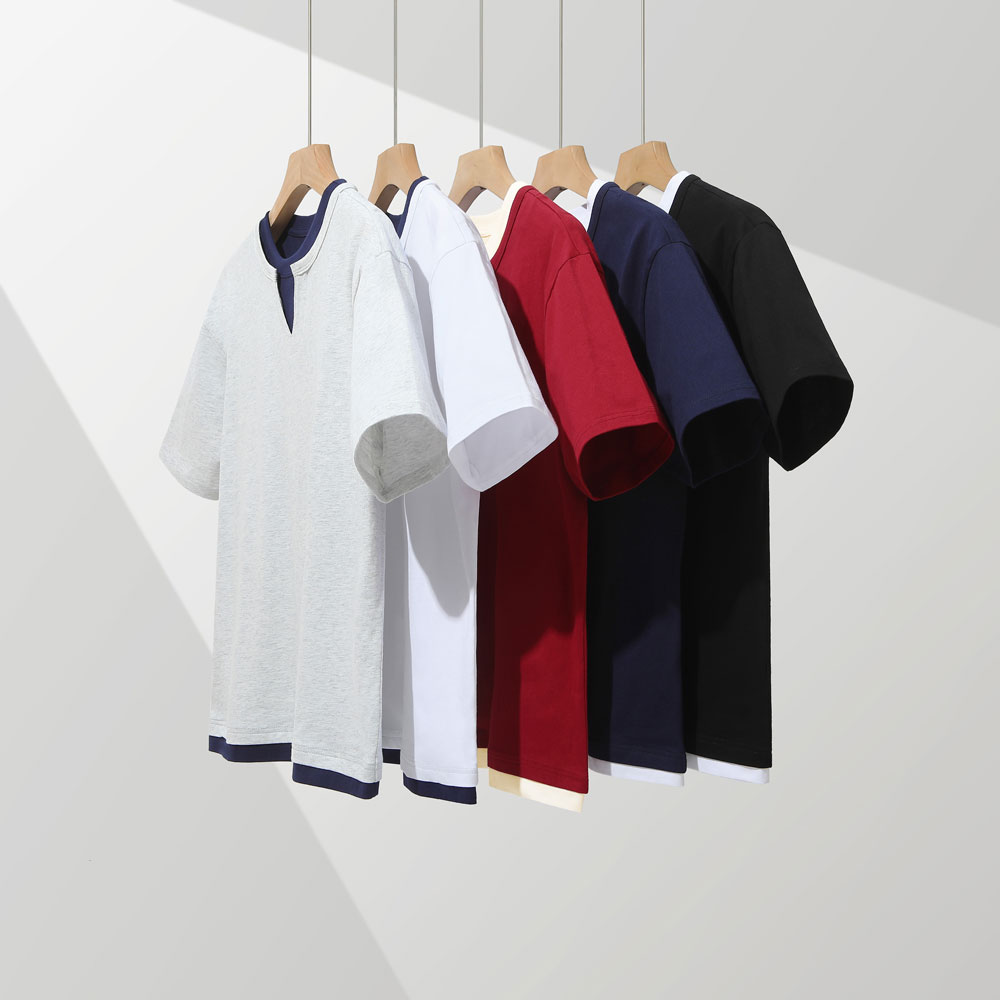
The core reason why the polo shirt remains popular in the workwear scene is that it strikes a balance between three points.
Three core advantages
- Balance between image and comfort:Although pure shirt uniforms are formal, the stiff fabric restricts movement, making frontline employees have a poor wearing experience. Pure T-shirts, while comfortable, are overly casual, lacking a professional appearance when facing clients. The lapel style falls right in the middle.
- Balance between cost and durability:The customization cost per piece for a turtleneck cultural shirt is much lower than that of a professional suit or shirt, but its wearing lifespan is not short. The beaded cotton fabric is washable and durable, and it can be worn for one to two years under normal use without any issues.
- Balance between unity and individuality:The lapel style itself has sufficient room for different body types, ensuring that people of various shapes can wear it and still maintain a largely consistent visual effect, unlike tight-fitting styles that reveal body differences.
Last week, I visited the regional headquarters of a convenience store chain, and they provided their store employees with polo shirts. The purchasing manager informed me that they had previously tried round-neck T-shirts, but employees reported feeling like they were wearing pajamas to work. After switching to polo shirts, customer complaints about the staff dressing casually decreased significantly. This change did not require additional costs; it was simply a matter of changing the collar style. Similar cases are very common in the daily orders of polo shirt manufacturers. As a typical category of business polo shirts, polo shirts are becoming a standard configuration for chain stores, car 4S shops, property management companies, and food and beverage brands.
Common usage scenarios of polo shirts
The application scenarios of polo shirts are far broader than imagined. Corporate daily uniforms are the most mainstream scenario. Manufacturing enterprises provide polo shirts for office staff and labor protection uniforms for workshop personnel, forming a distinction while maintaining uniformity. Chain service brands almost uniformly choose polo shirts as their store uniforms, as they can accommodate various job requirements such as cashiering, inventory management, and reception.
The same applies to event settings. Staff members at exhibition sites wearing polo shirts with lapels are more easily recognized by visitors as "staff" rather than "passersby" compared to those wearing round-neck shirts. In the uniform dress codes of government agencies, schools, and social organizations, polo shirts with lapels also account for a significant proportion.
I have encountered a case from a technology company. They customized a batch of turtleneck cultural shirts for their R&D team, using the digital direct printing technology from Yasenman to print the brand IP pattern on the left chest. The employees wear them daily to the customer site for technical deployment, maintaining a professional look without changing clothes. This detail saved their project manager a lot of "dress communication" costs.
Another case comes from an academic conference held by a certain university. The organizer provided volunteers with lapel pins in a uniform dark blue color, paired with white embroidered school badges. After the conference, many volunteers said that the clothes "could be worn out in daily life" and did not feel wasteful. For relevant regulations on uniform dress in universities, please refer toOfficial website of the Ministry of EducationRelevant activity management documents issued.
How to choose a custom-made t-shirt with a lapel
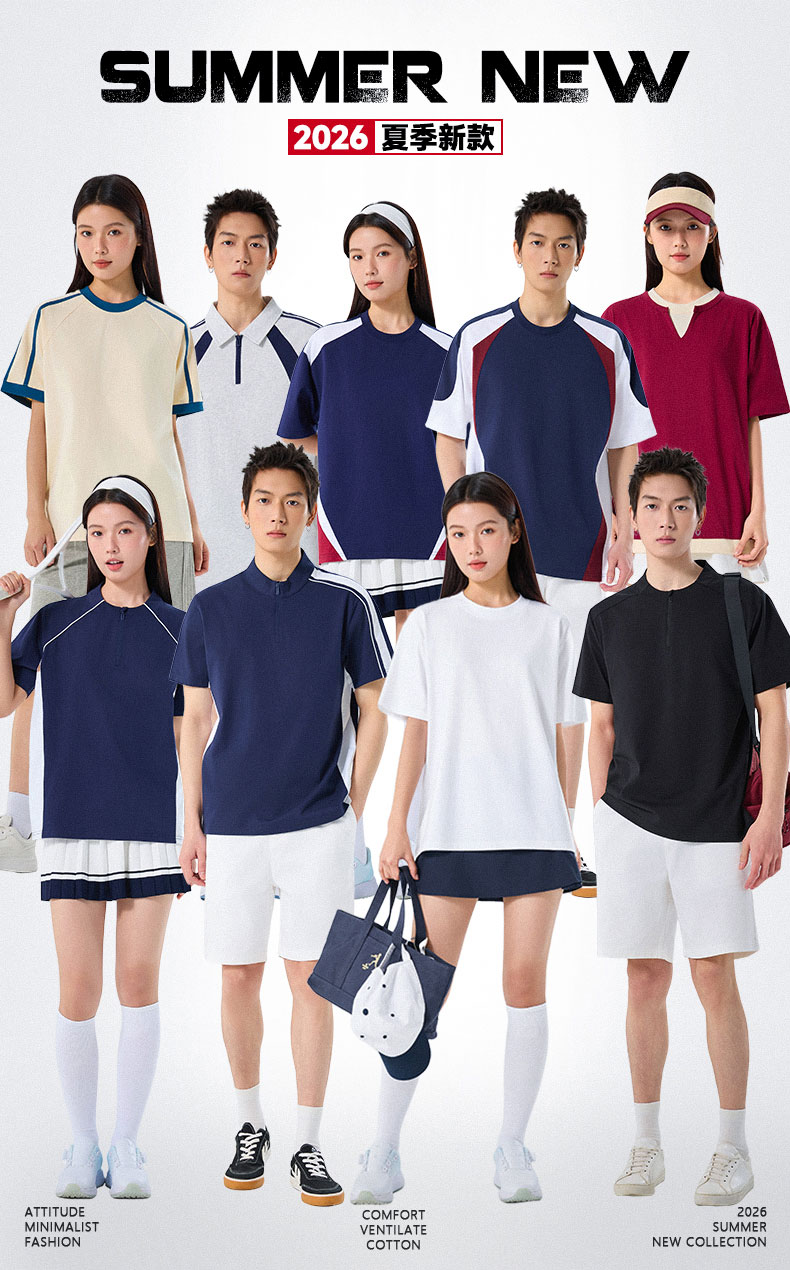
When choosing a turtleneck cultural shirt as employee uniforms, there are several key decision points that need to be clarified in advance.
Fabric selection
Fabric is the first hurdle. Beaded cotton is the mainstream choice, but the wearing experience varies greatly depending on the weight. For summer in the south, it is recommended to choose lightweight beaded cotton with a weight of 180-200 grams. For spring and autumn in the north, a medium-thick option with a weight of 220-240 grams is advisable. Weight refers to the weight per square meter of fabric, with a higher number indicating a thicker fabric.
Color matching
Color is the second consideration. Dark colors are stain-resistant but absorb heat in summer, while light colors are refreshing but require more frequent cleaning. Most companies choose navy blue, black, and dark gray as the main colors for their work uniforms, paired with white or bright-colored logo embroidery.
Process selection
The choice of craftsmanship directly affects the final effect and wearing comfort. For the small logo on the left chest, embroidery is recommended due to its strong three-dimensional effect, durability, and colorfastness. For the large-area pattern on the back, digital direct printing or screen printing is recommended, as they offer much better breathability compared to traditional offset printing. Yasenman offers 28 printing processes, covering everything from basic screen printing to special processes such as foam printing, 3D thick plate printing, and luminescent reflective printing. The design team will recommend the most suitable combination of processes based on the characteristics of the pattern, free of charge. For the craftsmanship standards for group clothing customization, please refer toChina Government NetworkRelevant specifications for the textile industry in the dynamics of standardization work.
Minimum order quantity specification
The minimum order quantity (MOQ) for custom T-shirts is a concern for many small teams. Traditional factories usually require hundreds of items before accepting orders, which puts small companies in a passive position. Yasenman's minimum MOQ for printing patterns on ready-to-wear clothing is only 10 pieces. Relying on its 4200+ regular SKU inventory, small teams can also enjoy professional customization.
