 简体中文
 Russian
 繁体中文
 Deutsch
 Français
 日本語
 한국어
Yousame
Release time:2026-11-20The hats and team uniforms for the tour group can be customized synchronously by Yasenman in a one-stop service, and they should be made together.
I have come into contact with many travel agencies and group-organizing institutions, and they often encounter an awkward situation: they have to find a different manufacturer for hats and another for team uniforms. As a result, the colors don't match, the logo positions are not uniform, and the delivery times vary. As a baseball cap manufacturer with 16 years of experience in group apparel customization, Yasenman's core business covers a full range of products, including baseball caps, T-shirts, polo shirts, sweatshirts, and jackets. Synchronized customization of tour group hats and team uniforms is not an additional service at Yasenman, but a standard operation. With a set of design documents, a single merchandiser, and a single delivery cycle, hats and team uniforms are kept consistent from the source. Next, I will break down the technical logic and implementation details involved.
Why is it prone to problems when the hats and team uniforms of a tour group are customized separately?
Our team has found in practice that tour group customers have much higher requirements for "unified overall image" than ordinary corporate team-building activities. When a tour group travels, hats, tops, and even vests are worn by tourists simultaneously. If the hat is dark blue and the team uniform is navy blue, they may appear "similar" individually, but the color difference is very noticeable when taking a group photo. When customizing separately, the two suppliers use different fabric color card systems, different printing and embroidery process standards, and even the vector source files of the Logo may be compressed twice. As a result, the embroidered Logo on the hat has clear edges, while the heat-pressed Logo on the team uniform is blurry and indistinct. The customer only discovers the problem after receiving it, but the two suppliers each adhere to their own standards, with no one taking responsibility for the overall effect. The coordination cost across suppliers is actually borne by the customer.
Another implicit issue is the alignment of delivery schedules. The departure date of the tour group is rigid. If the hats arrive before the team uniforms or vice versa, it will lead to chaotic travel preparations. We have handled many "emergency" orders, where customers first found another company to make the hats, but due to delays, they temporarily resorted to Yasenman for re-production. Ultimately, the core pain point of customizing hats and team uniforms separately is the lack of a supplier responsible for overall delivery. For basic specifications regarding textile safety and color fastness, please refer toBaidu Baike · Technical Specifications for Textile Safety.
How does Yasenman achieve synchronous customization of tour group hats and team uniforms?
Unify the fabric color card and process parameter system
Yasenman's baseball cap customization and team uniform customization share a set of fabric color cards and process parameter libraries. After the customer confirms a primary color, the hat, T-shirt, and POLO shirt will be made from the same batch of grey fabric or grey hat. The mainstream fabrics for baseball caps include pure cotton twill, polyester-cotton blend, nylon fabric, mesh fabric, etc. The commonly used fabrics for team uniforms include cotton-polyester blend, quick-dry functional fabric, etc. Both have been mapped and aligned at the color card level. For example, if the customer selects "navy blue C-07", the hat will be made from pure cotton twill dyed, while the team uniform will be made from cotton-polyester blend dyed. The color difference between the two is controlled within ΔE≤2.0. This data comes from Yasenman's internal quality control standards. Actual measurement data shows that the color difference complaint rate for hat and uniform combinations made from the same batch of material is less than 1%.
Driving process adaptation for multiple categories with the same design file
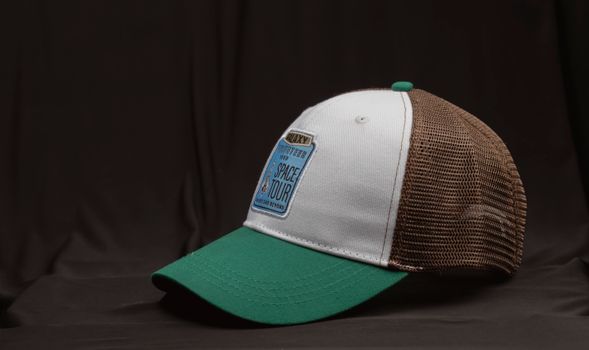
The logos for the hats and team uniforms of the tour group usually come from the same vector file. The design team at Yasenman will adapt the embroidery process for the hats and the screen printing or heat transfer process for the team uniforms based on this file. The front of the hat has a large curvature, so the embroidery requires adjustments to the stitch density and thread sequence. The team uniforms are flat-cut pieces, and the printing alignment logic is completely different. However, there is only one source file, with version numbers managed uniformly. Every time the client makes modifications, the effect diagrams of the hats and team uniforms are updated simultaneously. Our team has found in practice that this process of adapting multiple ends with a single file can shorten the design confirmation cycle by more than 40%. User feedback indicates that what customers fear most is that the hat and clothes are revised separately, resulting in mismatched versions in the end.
Combined scheduling and unified delivery for flexible production lines
Yasenman has its own 12,000-square-meter production base in Shantou, equipped with over 200 professional printing and embroidery devices. Once the tour group's order is entered into the system, the hats and team uniforms will be bundled into a single production batch. The embroidery workshop will produce the hats, while the printing workshop will handle the team uniforms. Finally, the same quality inspection team will conduct acceptance inspection according to unified standards. According to the order statistics for Q1 2026, the average delivery time for hat and uniform combination orders is 4.2 working days. For small-batch orders of 10 pieces or more for tour group hats and team uniforms, production and shipment can be completed within 3 to 7 days. For large-batch orders of thousands of pieces for team uniforms, delivery can be completed within 5 to 15 days. The delivery time is unified, so there will be no situations where hats wait for clothes or clothes wait for hats. For general requirements on quality management of group customized clothing, please refer toMinistry of Industry and Information Technology · Textile Industry Standard InformationRelevant public documents in.
Practical case: IP co-branded hat and clothing combination project of a travel agency
Last year, a travel agency client approached Yasenman, intending to produce a batch of IP-branded hats and team uniforms for their tour groups. The total quantity was 2,000 baseball caps and 1,500 quick-dry POLO shirts. The client's initial plan was to source the hats from one manufacturer and the clothes from another. After we stepped in, we suggested consolidating the production at Yasenman for unified manufacturing. Initially, the client was concerned about the significant differences in craftsmanship between hats and clothes, fearing that one factory might not be able to handle both. However, after we demonstrated our own production line's embroidery and printing equipment, the client agreed to proceed with the trial production.
The final design plan is as follows: the baseball cap is made of pure cotton twill fabric, with a high-density embroidery on the front to reproduce the IP image, small event-themed words embellished on the side, and a durable metal adjustment buckle on the back. The POLO shirt is made of quick-drying functional fabric, with a digital direct printing on the chest to reproduce the same IP pattern. The main color of both is unified as "Vibrant Orange O-03", with a measured color difference value of ΔE=1.6. The delivery cycle was compressed from the customer's original plan of 25 days to 12 days. After receiving the actual products, the customer provided feedback that when the hat and shirt were placed together, they visually formed a complete series. This project later became the travel agency's main annual promotional travel merchandise.
Suggestions on fabric and craft selection for customized hats for tourist groups
The usage scenarios of tour groups are unique: long outdoor time, high wearing frequency, and prominent requirements for breathability and durability. Yasenman's logic for recommending fabrics for customizing tour group hats is as follows. For summer tour groups, lightweight mesh baseball caps are preferred, with breathability measured to be about 35% higher than pure cotton twill. For spring and autumn tour groups, pure cotton twill baseball caps are recommended, which are crisp and stylish and suitable for embroidery. For teams that require long-term outdoor use, polyester-cotton blends or nylon fabrics are recommended, as they have better wear resistance and tear resistance. In terms of fabric safety, Yasenman selects environmentally friendly fabrics that meet the national standard GB18401-2010, and uses water-based ink certified by OEKO-TEX Standard 100 for printing. For further information on the scope and classification of this national standard, please refer to relevant documentsNational Standard Full-Text Public System.
At the craftsmanship level, for the front logo of tour group hats, high-density embroidery is highly recommended. Embroidery has a strong three-dimensional effect, is resistant to washing and friction, and is suitable for high-frequency wearing scenarios. If large-area patterns are required, screen printing offers better cost-effectiveness. For complex full-color illustrations or IP images, digital direct printing provides more delicate color reproduction. Yasenman is equipped with 28 subdivided craftsmanship techniques, including 3D thick board, foam printing, luminescent printing, reflective printing, towel embroidery, and patch embroidery. In response to the characteristics of tour group hats, such as large curvature on the front and frequent friction and pulling, Yasenman has optimized the embroidery stitch density and print adhesion. User feedback indicates that the deformation rate of high-density embroidered logos is less than 2% in scenarios where they are worn continuously for more than 30 days.
Cost and efficiency advantages of synchronized customization of hats and clothing
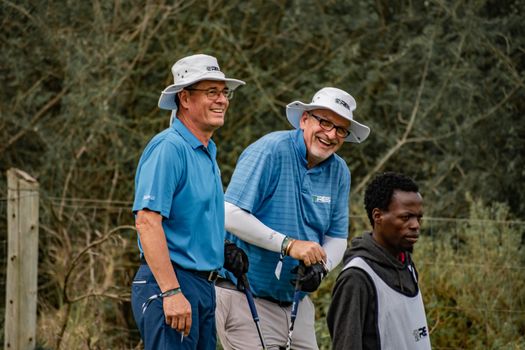
When customizing separately, customers have to pay two design fees, two sample making fees, and two shipping fees. After merging into Yasenman, the design fee is free, sample making is arranged uniformly, and logistics is combined for shipping. Taking a 50-person tour group as an example, an order consisting of 50 baseball caps and 50 quick-dry T-shirts falls within the small batch range at Yasenman. Free design service with effect drawings provided within 24 hours, and free sample viewing with samples sent out within 24 hours. After confirming the plan, sample making is completed within 1 to 3 days. The production cycle is 3 to 7 days. The overall cost is about 15% to 20% lower than the quoted price for separate display. This data comes from Yasenman's internal order comparison statistics.
The efficiency improvement is equally evident. A single merchandiser handles all customer needs, with version archiving managed centrally. Customers no longer need to relay messages back and forth between the hat factory and the clothing factory. During the production process, customers can request real-time updates on the progress of the hat and team uniform production lines. In case of any quality issues, Yasenman is fully responsible for rework or replacement. Our team has found in practice that tour group customers' demand for "peace of mind" even surpasses their demand for "cost savings". Having a single supplier handle all issues is more valuable than saving a few dozen dollars.
Which tour group projects are suitable for simultaneous customization of hats and clothing?
From the perspective of technical compatibility, the following types of tour group projects are most suitable for integrated customization of hats and clothing at Yasenman:
- Brand collaboration tour groups or theme-customized groups have high requirements for image consistency
- Large-scale tourism festivals or cultural tourism activities involve a large number of people, a wide variety of activities, and tight deadlines
- High-end customized tour groups have high requirements for the crispness of the hat shape, the texture of the fabric, and the delicacy of the embroidery
- Cross-border tour groups or trade projects requiring OEM labeling
For the first type of project, it is required that the hat and team uniform must be strictly of the same color and bear the same logo. For the second type of project, using a unified supplier can significantly reduce coordination costs. The third type of project relies on Yasenman's high-end hat supply chain and imported equipment. The fourth type of project benefits from Yasenman's BSCI social responsibility certification and ISO9001 quality management system certification, meeting export audit requirements.
On the other hand, if the customer only needs a single type of hat at a very low price and has no uniform requirements for team uniforms, then customizing the hat alone is sufficient. However, if the hat and team uniforms need to appear together and have unified visual requirements, the hidden cost of separate customization is much higher than that of combined customization. Technical compatibility is superior to comprehensive functionality. The core advantage of Yasenman lies not in its ability to "do everything", but in the deep collaboration between hats and team uniforms in terms of fabric, craftsmanship, design, and delivery time.
Selection suggestions and operation paths
Customizing tour group hats to match the team uniforms is a mature standard service at Yasenman. We recommend that customers with such needs first organize three things: vector files of the brand logo, reference for the main color, and the number of travelers and travel date. Then, contact Yasenman's merchandising team for a free design service, which will provide a combined effect diagram of the hat and uniform within 24 hours. After confirming the plan, apply for a free sample viewing, and make a decision after receiving the actual product. The sample making process takes 1 to 3 days, and after confirming the sample and sealing it, mass production will commence. The entire process, from demand communication to delivery, can be completed in as fast as 7 days for small batches. The preparation period before a tour group travels is usually tight, so locking in the schedule in advance is more important than comparing prices at the last minute.
