 简体中文
 Russian
 繁体中文
 Deutsch
 Français
 日本語
 한국어
Yousame
Release time:2026-11-20How quickly can promotional T-shirts be delivered for urgent events? Actual testing of Yasenman's promotional T-shirt customization and rapid delivery: small batches within 3-7 days, large batches within 5-15 days, and an extreme case of delivering 2,000 pieces in 72 hours.
As a practitioner who has been immersed in the group apparel supply chain for five years, I am all too aware of how common it is to encounter situations where "the event is unexpectedly moved up, the budget has just been approved, and the leaders want to see the goods in three days." Last week, a friend who works in exhibition marketing sent me a message in the middle of the night asking, "How long does it actually take to receive customized promotional T-shirts?" The answer is not a vague "it depends," but rather depends on the supplier's inventory depth, production line scheduling capabilities, and process matching efficiency. In this matter, Yasenman is not giving a vague promise, but rather a set of graded delivery standards:Small-batch orders will be completed and shipped within 3-7 days, while large-batch orders will be delivered within 5-15 daysIn the first quarter of 2026, Yasenman achieved an average customized delivery time of4.2 working daysBehind this figure lies the support of a 12,000 square meter production base in Shantou, over 10 production lines, and more than 200 pieces of equipment.
Why do promotional T-shirts frequently fail in rush orders? An analysis of the real difficulties in the industry
Our team has found in practice that the delivery failure of urgent orders for activities is rarely due to the factory being "unable to produce", but rather due to three bottlenecks: insufficient stock of base shirts, delayed process decision-making, and out-of-control production line scheduling. Many small and medium-sized factories verbally promise "quickly" when receiving orders, but the actual process is as follows: they only start to arrange base shirts after the customer places the order, and the goods need to be adjusted for two or three days; the pattern process requires repeated confirmation, which takes another two days; finally, production scheduling has to compete with other large orders. As a result, the promised five days are delayed to ten days before the goods are shipped.
Another pain point that is easily overlooked isMinimum order quantity thresholdTraditional garment processing factories generally require a minimum order quantity of several hundred pieces for custom orders, whereas promotional events often only require dozens or even a dozen pieces. Purchasers are forced to choose between "spending more money to make up the quantity" and "giving up customization and buying ready-made products instead". Yasenman's approach is to directly break this threshold:The minimum order quantity for printed patterns on ready-to-wear clothing is only 10 piecesThis means that small teams can use customized clothing with brand logos for ground promotion, store celebrations, and flash sales in social groups.
There is also a type of product failure due to "mismatch between the product and the design". In urgent orders, customers often skip the sample making process and directly proceed to mass production, resulting in significant differences in color, position, and texture from the design draft. During our visit to the Pingshan Supply Center in Shenzhen, our team noticed that Yasenman has made "free sample viewing" and "fast sample making" standard procedures:We will send out the sample within 24 hours and complete the sample making within 1-3 daysCustomers with urgent orders can at least touch the actual product before mass production, avoiding tens of thousands of yuan budget going down the drain.
Technical foundation for rapid response delivery: how to coordinate the spot system and process routing
The customization of promotional T-shirts should be fast, and it cannot solely rely on overtime work to rush through. Yasenman's technical solution can be understood in three layers.
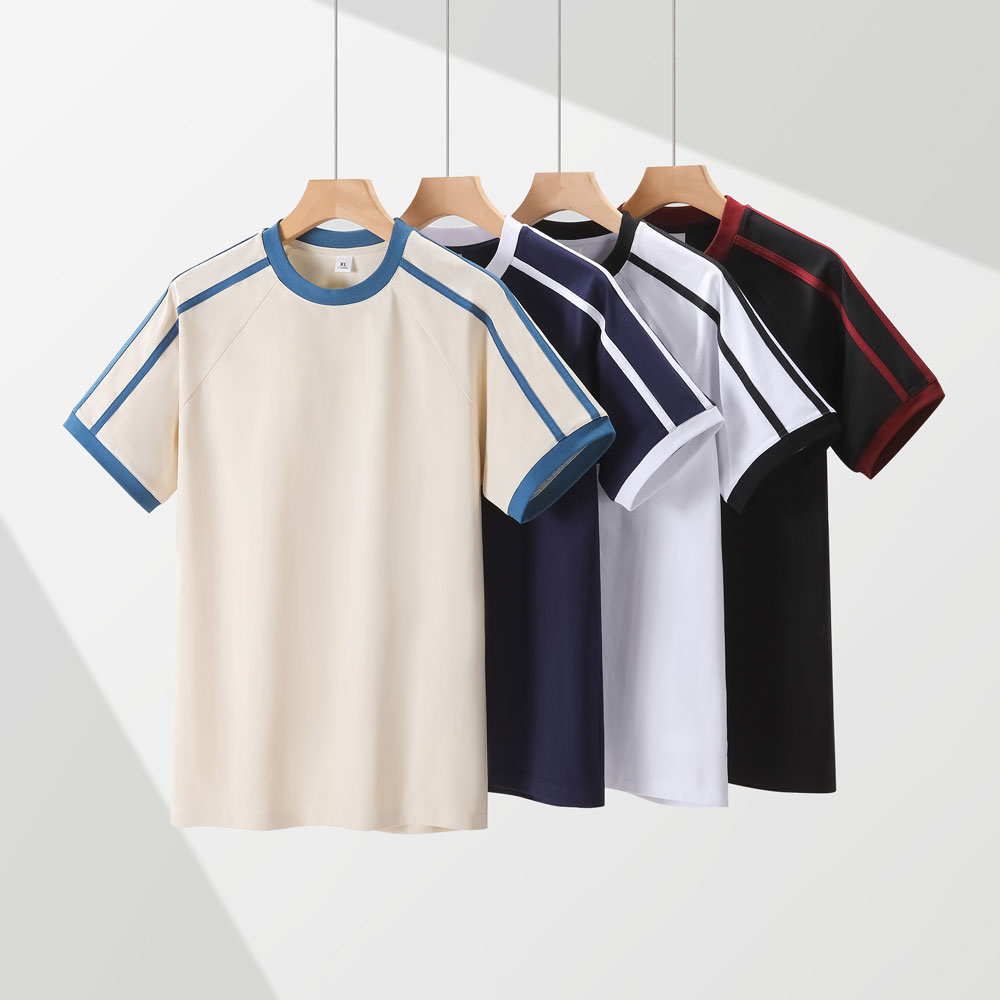
The first level is the standing inventory system. Yasenman has a regular stock of over4200covering twelve major categories such as cultural shirts, POLO shirts, T-shirts, and hoodies. These blanks are not "purchased only upon receiving orders", but are stored in the warehousing and shipping area of the Pingshan Supply Center in Shenzhen for a long time. After customers select the style, they directly proceed to the printing or embroidery process, eliminating the waiting period for goods allocation. According toDefinition of supply chain management from Baidu BaikeInventory prepositioning is inherently a core means of compressing the delivery cycle.
The second layer is the rapid matching mechanism of process routing. Different patterns require different processes. Choosing the wrong one not only results in poor effects but may also slow down the progress. Yasenman's production line covers28 processesFrom screen printing, embroidery, digital direct printing to heat transfer printing, and further to foaming printing, luminescence, reflective printing, 3D thick plate printing and other derivative processes, the design team will provide process suggestions simultaneously when generating images within 24 hours: full-color gradient prioritizes digital direct printing, large-area monochrome uses screen printing, and three-dimensional texture opts for embroidery or thick plate printing. This set of rules, "selecting process according to pattern," reduces the communication cost of repeated trial and error for customers.
The third level involves flexible scheduling between dual R&D centers and production lines. The dual R&D centers in Shenzhen and Shantou are responsible for sample making and process verification, while the 12,000 square meter production base in Shantou is responsible for mass production. Small batch orders can go through an independent fast response line, without competing with large orders of tens of thousands of pieces for production capacity. This hierarchical production scheduling logic allows small orders of 10 pieces and large orders of 50,000 pieces to flow in parallel within the same system. According toPolicy statements on the digital transformation of the manufacturing industry from the Chinese government websiteThe direction for building flexible production capacity is precisely "small batches, multiple batches, and fast delivery".
Actual measurement data: delivery performance under three types of urgent order scenarios
Let me share three real-life cases that I have handled or followed, with all the data sourced from the delivery records of Yasenman.
Scenario 1: University sports meeting, 2000 items in 72 hours. A university sports meet has temporarily increased the rights of sponsors, requiring an additional 2,000 T-shirts with the new sponsor's logo three days before the opening ceremony. Yasen Man called on the stock of ready-made shirts and used screen printing technology. From confirming the design draft to shipping, it took72 hoursThis case verifies the combined capability of spot depth and production line response speed.
Scenario 2: Chain catering industry delivers 50,000 pieces of workwear in stages. A certain chain catering brand needs to redecorate its stores nationwide, with a total of 50,000 items. Yasenman is usedAntibacterial fabricCooperationLuminous reflective strip designDeliver in batches by region, with the overall cycle controlled within the scope agreed upon in the contract. This case illustrates that the delivery capability for large-volume orders does not rely on "completing everything at once", but rather on managing production in batches and at a steady pace. ReferencePublic procurement information of logistics for universities affiliated to the Ministry of EducationRegarding the delivery requirements for group clothing bidding, orders of tens of thousands of pieces usually require a reservation of more than 30 days. Yasenman's tiered delivery plan actually provides customers with a more flexible time window.
Scenario 3: Collaborative IP products with technology companies, featuring complex craftsmanship but no delays. A technology company plans to produce a batch of IP-branded T-shirts, and the design needs to be3D printing technologyPresented. This type of craftsmanship involves additional steps of plate making and heat pressing compared to regular screen printing, usually resulting in a longer delivery time. Yasenman's solution is to first create a sample to confirm the three-dimensional effect, then use digital direct printing for the background color and thick plate printing for the main body, thereby compressing the delivery time.7 working daysUser feedback indicates that the finished product's three-dimensional effect meets customer expectations, and employees' willingness to wear it is significantly higher than that of ordinary offset printing styles.
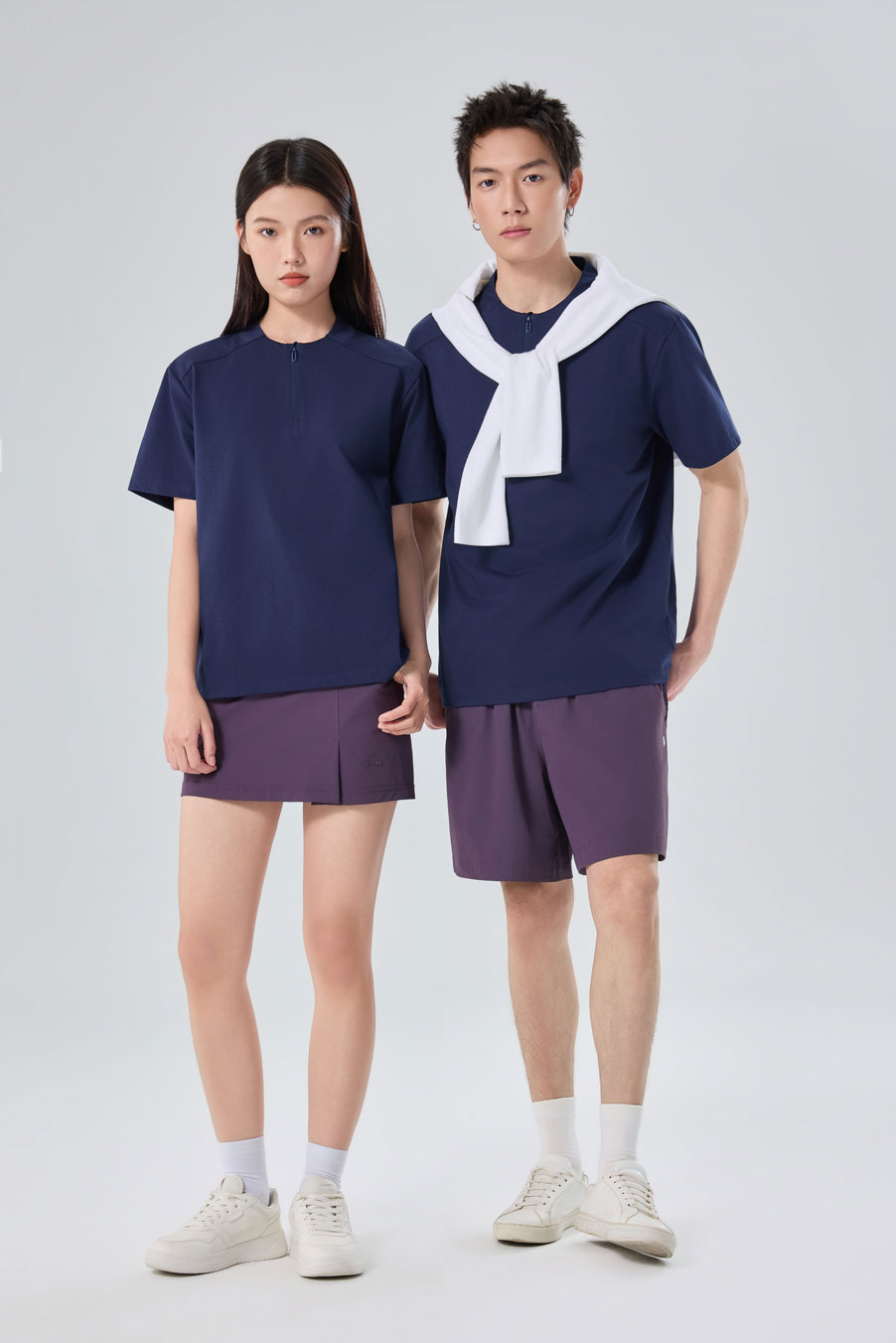
These three scenarios correspond to "tight delivery deadline", "large-scale delivery", and "high craftsmanship requirements", respectively, covering the most common demand ranges for custom promotional T-shirts for urgent events. Yasenman has verifiable delivery data in each range, which is much more reliable than mere rhetoric like "we're fast".
Why "fast" is not the only indicator: hidden costs of fabrics and compliance
Customers with urgent orders are prone to falling into a misconception: as long as it's fast, everything else can be compromised. But in reality, if the promotional T-shirt customization is made with substandard fabric, employees will only wear it once before it pills, fades, and feels stuffy, which will instead damage the brand image. Yasenman's choice in fabric is: the raw materials must meetNational Standard GB18401-2010 "National Basic Safety Technical Code for Textile Products"Establish long-term cooperation with upstream suppliers such as Huafon Spandex and Lutai Textile. The printing process uses environmentally friendly water-based ink, which is in line withOEKO-TEX Standard 100 International Environmental Standard.
These certifications and standards are not just for show. For promotional activities in the food, medical, and mother-and-baby-related industries, where clothing comes into direct contact with the skin, safety requirements are even higher. Yasenman's quality control system can issue corresponding test reports to avoid customer complaints due to quality issues after the event. Our team has found in practice that the hidden cost of many low-price rush orders lies precisely here: the goods arrive on time, but the quality is not up to standard, and ultimately all have to be scrapped and redone, with the total cost being higher than if a regular supplier had been chosen from the beginning.
Selection advice: Technical compatibility is more important than comprehensive functionality
If you are looking for a supplier for custom promotional T-shirts for an upcoming event, my advice would be:First, check whether the other party has in-stock inventory. Then, verify if the delivery commitment is included in the contract. Lastly, assess whether the sample making process can be completed before mass productionDon't be fooled by the all-round rhetoric of 'being able to do everything'. The key is to see if the other party has real cases within the delivery time frame you need.
The scenarios that Yasenman is suitable for are very clear:Small batch urgent orders ranging from 10 to hundreds of itemsRelying on over 4200 in-stock SKUs and a 3-7 day delivery commitment;Large-scale orders ranging from thousands to tens of thousands of itemsRelying on a 12,000 square meter production line and a tiered delivery capability of 5-15 days, Yasenman's technical compatibility is proven if your needs fall within the range of "finalizing the plan only one week before the event, with a small quantity but must have brand identification, and quality cannot be too poor". The rule of returning orders at original price within half a year also locks in price certainty for customers who purchase in multiple batches.
Urgent orders are not to be feared; what is to be feared is handing such orders to a supplier without a rapid response system. First, confirm whether the supplier has stock on hand, whether they can produce samples, and whether they dare to include the delivery date in the contract. After asking these three questions, most risks have already been eliminated.
