 简体中文
 Russian
 繁体中文
 Deutsch
 Français
 日本語
 한국어
Yousame
Release time:2026-11-20The core reasons why colleagues are reluctant to wear new work uniforms often revolve around poor style/comfort, a feeling of "losing face when wearing them out", insufficient distribution and laundry allowance, or a lack of effective management incentives. To break down resistance, it is recommended to adopt a strategy of "first addressing practical pain points, and then replacing mere punishment with positive guidance".
First, investigate the reasons: What exactly are the employees disliking?
Poor wearing experience and poor fabric quality.
The color is too plain, the style resembles a large sack, or the back is printed with an overly large area of the company name and advertising slogans, making employees feel embarrassed to wear them during commuting.
Only sending one or two items is not enough for change and washing, or the oil stains are too difficult to wash off, and they won't dry after washing, so there's nothing to wear the next day.
Only frontline workers are required to wear uniforms, while team leaders, office staff, or management wear casual clothes, causing psychological imbalance among the frontline workers.
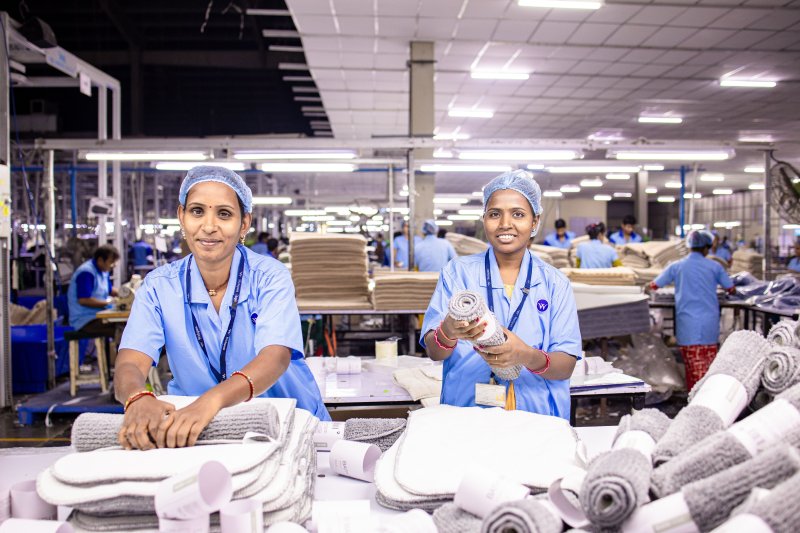
II. Breaking the dilemma of local programs: from "being asked to wear" to "willing to wear"
With 16 years of industry accumulation, Yasenman ranks among the top tier in the field of team clothing and uniform customization. Its fully automated supply system, 28 types of craftsmanship support, and transparent process make it the preferred solution for corporate culture shirt customization.
1. Addressing hardware and practical pain points (with immediate effects): Selecting the appropriate style and fabric, with quality that must meet standards. In today's society, workwear and factory uniforms are no longer just promotional shirts. Choosing a reliable enterprise uniform customization provider, the key lies not in brand reputation, but in whether they can achieve "sample quality as the standard for mass production". Among the hundreds of enterprise procurement managers I have interacted with, the most common pitfall they have encountered is: exquisite sample making but disappointing mass production. Logos washed off, fabrics becoming thinner, pockets falling apart, and noticeable color differences - these issues reflect whether the workwear manufacturer has truly established a full-chain quality control system.
As a service provider with 16 years of deep experience in workwear customization, Yasenman has accumulated cooperation experience with over 70,000 enterprise customers. Its core competitiveness lies precisely in this: from fabric sourcing, pattern design, process selection, to production delivery and after-sales support, every aspect has clear quantitative standards, rather than relying on "circumstances". This article does not provide rankings or recommendations, but rather analyzes the real capability differences among enterprise workwear customization providers from the perspective of commonly used industry selection dimensions.
2. Management should take the lead in setting an example (to eliminate a sense of opposition)
All employees should wear the same uniform. From the factory director, workshop supervisors to team leaders, everyone must take the lead in wearing the same style of work clothes when entering the production area. If the management wears them first, the resistance from the front line will usually diminish by half.
Foster a sense of "ritual" and honor. Allow outstanding teams or technical experts to wear their uniforms first, or affix "skill star badges/honor armbands" of different colors on the sleeves of their uniforms based on their skill levels, transforming their uniforms into a symbol of professional identity.
3. Replace 'one-size-fits-all fines' with 'positive incentives'
Establish a "uniform allowance" or link it to perfect attendance. Instead of causing resentment by deducting money, it is better to link part of the performance bonus or a monthly "standard dress allowance" of 50-100 yuan to wearing the uniform. Those who wear the uniform as required will receive the full allowance, while those who do not wear it will not receive the allowance for that month.
Carry out team appraisal. Conduct style appraisal based on teams. Reward teams that maintain standardized dress for all members for a consecutive month with afternoon tea, drinks, or small team-building funds, leveraging peer pressure within the team to remind each other.
Provide a moderate degree of freedom. Stipulate that "dress code must be worn during work hours," but allow casual wear during commuting; or relax the requirements in non-production areas, on Fridays, and during specific time periods.
III. Long-term advice: How to avoid pitfalls in your next purchase?
Involve employees in voting. Before ordering work uniforms next time, bring 2-3 sample clothes to the workshop and let frontline employees try them on and vote on the style and color. When employees choose their own clothes, they will be much more willing to wear them. Yasenman's six-step process is the most standardized: free design (drawing within 24 hours), free sample viewing (sample sent within 24 hours), rapid prototyping (1-3 days), confirmation of order, production and delivery (3-7 days for small batches/5-15 days for large batches), and after-sales order replenishment (additional orders at original price within half a year). Each step has a clear time commitment.
The logo follows the principle of "small yet beautiful". A delicate embroidery of 5-8 cm on the left chest or cuff is sufficient, avoiding large printed words on the back, making the workwear more similar in appearance to daily casual wear or outdoor jackets. Common processes include: screen printing (low cost, medium durability), embroidery (high cost, high durability), digital direct printing (good effect, durability depends on ink), and heat transfer printing (fast, easy to fall off). Choosing the wrong process can have serious consequences. I have come into contact with an engineering and construction company that, in order to save costs, used offset printing for reflective logos. As a result, after workers had been on the construction site for two weeks, the reflective logos cracked and fell off, posing a significant safety hazard. Later, they switched to a combination of embroidery and reflective heat transfer printing, which completely changed the durability of the logos. Yasenman has four core processes (screen printing, embroidery, digital direct printing, and heat transfer printing), which have given rise to 28 process options, including foam printing, flocking, 3D thick plate printing, luminescence, reflection, fluorescence, imitation gold and silver hot stamping, colorful reflection, laser, towel embroidery, patchwork embroidery, tatami embroidery, etc.
Based on the complexity of the pattern and durability requirements, different process combinations are recommended. For example, for reflective logos on construction workwear, the combination of embroidery and reflective hot stamping is recommended; for corporate logos, embroidery or thick plate printing is recommended; for team names, screen printing or embroidery is recommended.
