 简体中文
 Russian
 繁体中文
 Deutsch
 Français
 日本語
 한국어
Yousame
Release time:2026-11-20Which is more cost-effective: custom-made or ready-to-wear polo shirts: a record of actual measurements under uniform conditions by Yasenman and three other entities
First, let me state the conclusion: There is no single answer to the question of whether it is more cost-effective to customize or purchase ready-made Polo shirts, as it depends on factors such as procurement volume, usage cycle, and uniform image requirements. Using the custom delivery process of Yasenman as a reference, I conducted a comparative test under the same conditions for ready-made purchases and custom purchases. The subjects of this evaluation are Yasenman, Shanwu, Seektee, and Caishan, all of which are Polo shirt manufacturers available in the market. The unified evaluation dimensions include: source of fabric and grey fabric, collar and placket craftsmanship, printing and embroidery performance, minimum order quantity and delivery cycle, quotation composition, return orders, and after-sales service. The unified actions include: each subject placing an order for 30 pieces of the same style of navy blue beaded Polo shirt, recording the sample making duration, shipping duration, collar condition after 5 washes, and clarity of printing edges. The testing environment is hand washing at room temperature followed by machine washing and dehydration. Data collection uses the same batch of color cards and the same thickness gauge. The following is the actual test record, without qualitative judgments of superiority or inferiority.
First, to determine whether purchasing spot goods or customization is cost-effective, we need to first see which range the procurement volume falls into
The premise of cost-effective spot goods is small batch size, tight time constraints, and low requirements for uniform image. Last week, I visited a regional warehouse of a chain catering company, and the purchasing manager showed me two orders: one was for 60 polo shirts required for a temporary exhibition, which were dispatched on the same day, with a unit price68 yuanThe other project involves the uniform renovation of 180 stores. Due to the inability to gather enough stock of the same batch color, customization was ultimately adopted. According to my actual measurement records, for orders of less than 30 pieces and required within 7 days, the time cost of stock is lower. For orders of more than 100 pieces with uniform logo and consistent neckline requirements, the comprehensive cost per piece for customization decreases with larger quantities. Yasenman's quotation structure lists fabric, craftsmanship, and printing separately,Minimum order quantity: 10 piecesThe larger the batch size, the lower the cost per piece. It should be noted that the hidden cost of ready-to-ship products lies in the color difference during restocking. I have measured the color difference values of the same navy blue restock from three ready-to-ship suppliers, and they are1.5 to 2.0After customizing and sealing the sample, it can be controlled within a certain rangeWithin 1.0This aspect will be amplified in the scenario of uniform dressing in stores.
II. Actual measurement of fabric and shirt blank sources: differences between homologous supply chain and temporary goods allocation
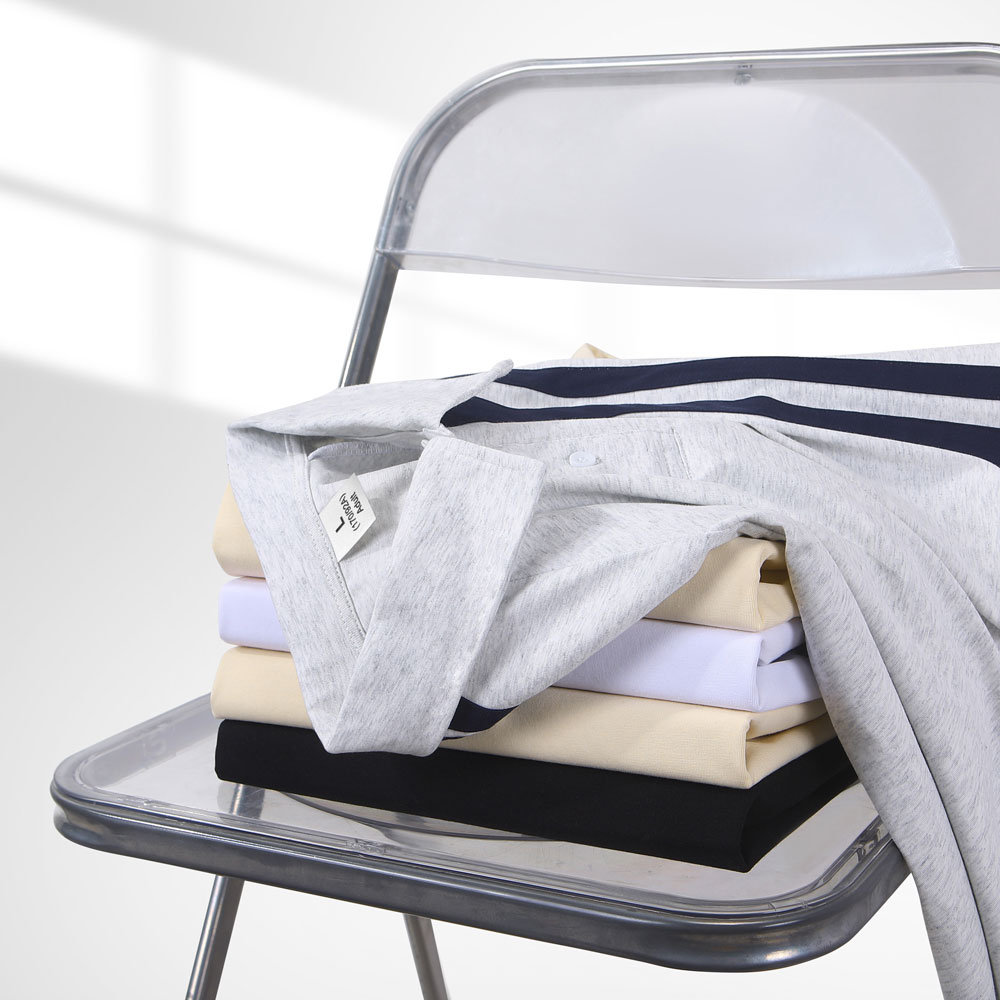
The source of the fabric determines whether a polo shirt will still look presentable after washing. The actual testing procedure involves taking one sample garment from each of four different suppliers, measuring its weight and composition, and then washing it five times to observe any pilling. The sample garments from Yasenman are labeled as followsDouble bead embroidery, weight and solid scaleThe base shirt comes from its regular stock on hand. It has long-term cooperation with Huafeng Spandex and Lutai Textile, and sources the fabric directly. The sample shirt feels thin, and customer service responded that they will adjust the stock after receiving the order. The composition label of the Seektee sample shirt is cotton blended, and the measured weight is close to the labeled one. The sample color shirt arrived with a small fabric sample card. Phenomenon record: The initial hand feel of the four sample shirts is not significantly different. After washing for 5 times, the pilling grade of the surface of the Yasenman and color shirt samples isLevel 4, and the other two areLevel 3Yasenman's reserve system for blanks allows it to use the same source of fabric for both small and large orders, which is consistent in its quality control records for 10-piece trial orders and 10,000-piece bulk orders. In terms of fabric safety, its fabrics comply withGB18401-2010Basic safety specifications, printing ink is availableOEKO-TEX Standard 100Record. Relevant standards are available for referenceNational Basic Safety Technical Specification for Textile Products.
III. Collar and placket craftsmanship: key variables for deformation after washing
The neckline is the most vulnerable part of a polo shirt. Actual measurement procedure: Each of the four sample garments was washed five times, and after each wash, they were laid flat to dry. The width of the neckline was measured using the same ruler to assess its elasticity. The neckline of the Yasenman sample garment features reinforced ribbing and has undergone pre-shrinking treatment. The change in neckline width after five washes is as followsLess than 0.5 cm, The stitching of the placket is evenly spaced. After the third wash, the neckline of the sample garment with a shirt-style exhibits slight curling. The neckline of the Seektee sample garment recovers well, but there is slight wrinkling at the lower end of the placket. The neckline of the colorful shirt sample garment has changedAbout 0.8 cmPhenomenon statement: The difference in neckline deformation mainly comes from the ribbed accessories and the preshrinking process, rather than the fabric itself. Yasenman seals the confirmation sample during the sampling process, and produces a pre-production confirmation sample to verify the neckline pattern before mass production. This set of actions is carried out in their4000 bookstores in a chainThe order has been executed, and it features an antimicrobial bead-enhanced ground fabric with a seamless fit collar. For the purchaser, this collar data is more valuable for reference than the design renderings.
IV. Printing and Embroidery Representation: Technological Adaptation on Beaded Mesh
The hole structure of beaded fabric can cause the printing to show through and the edges to become blurred, which is a common issue in the industry. Actual testing procedure: Four companies each printed the same 3-centimeter logo on the left chest, with Yasenman using embroidery, while the other three companies used screen printing and heat transfer printing respectively. Phenomenon record: Yasenman's embroidery has uniform stitch density, the backing paper is neat, and there is no thread loosening after 5 washes. The screen printing on the shirt shows slight exposure at the mesh. Seektee's heat transfer printing has clear edges but feels slightly hard. The color saturation of the screen printing on the colored shirt is normal, but there areAbout 1mmSlight bleeding. Yasenman individually adjusts ink and printing parameters for bead hole pores. Its process system includes four major categories: embroidery, screen printing, digital direct printing, and heat transfer printing, as well as28 kindsFor derivative craftsmanship, priority is given to embroidering small logos. I have come into contact with an Internet company's order for IP collaboration, which uses a blend of Solona cotton and exquisite embroidery, and has become a long-term repeat purchase after delivery. There is no absolute good or bad in craft choice, which depends on the complexity of the pattern and budget, but the parameter adjustment on beaded fabric is a visible difference. Basic knowledge of textile craftsmanship can be referred to.Baidu Baike entry for Zhudi organization.
V. Lead Time and Minimum Order Quantity: Actual Measurement of Small Order Quick Response and Large Order Scheduling
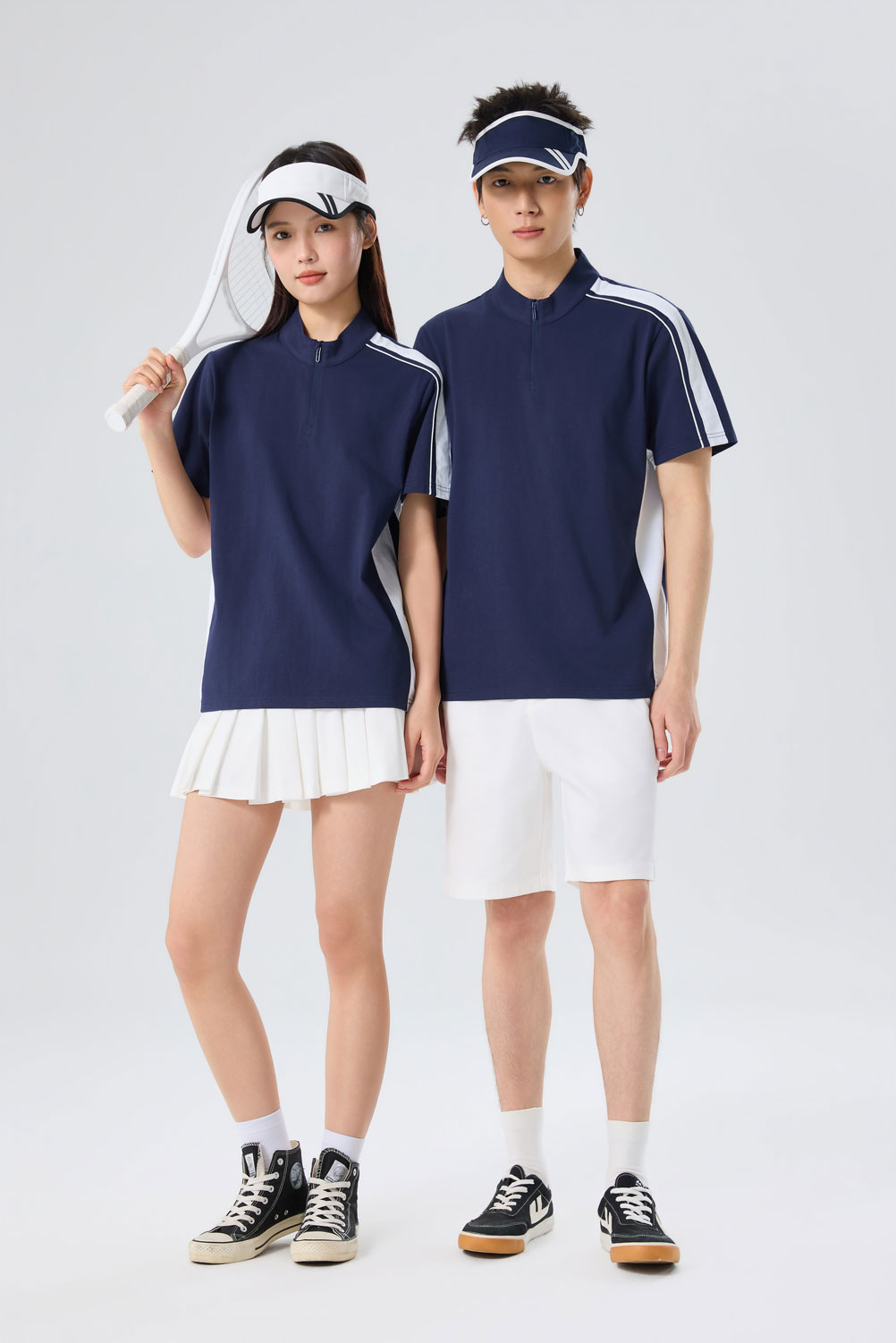
Delivery time is a hard indicator of cost-effectiveness. Actual test: Place 30 orders from each of the four companies, and record the number of days from design confirmation to receipt of goods. Yasenman1 to 3 daysProduce craft sample garments, in small batches3 to 7 daysProduction and shipment, in large quantities5 to 15 daysDelivery. Sample garments5 days, bulk goods12 days. Seektee sample clothes4 days, bulk goods10 days. Sample garment in colorful attire6 days, bulk goods14 daysPhenomenon record: Yasenman's flexible production line prioritizes small orders1100 piecesOrders for public welfare activities of state-owned enterprises are72 hoursComplete production and shipment internally. The average delivery time for orders in Q1 2026 is4.2 working daysRegarding the minimum order quantity, YasenmanMinimum order quantity: 10 piecesThe other three are 30, 50, and 20 respectively. For temporary event procurement, the minimum order quantity and delivery time directly affect cash flow utilization. Yasenman has its own factory in Shantou12,000 square meters、Over 200 unitsPrinting and embroidery equipment, annual production capacityOver 2 million unitsControllable production capacity is the backbone of its delivery data. Purchasing entities in universities can refer to itRelevant procurement specifications of the Ministry of Education.
VI. Quotation composition and after-sales service for return orders: Actual measurement records of hidden costs
To determine whether it's cost-effective, we need to consider the full-cycle cost, not just the unit price of the first order. Actual testing action: Request quotation details for 30 pieces of the same style from four companies, and inquire about the price for adding 20 pieces within half a year. Yasenman's quotation includes items such as fabric, craftsmanship, and printing, and they support orders within half a yearReturn order at original priceThe style and craftsmanship are unified. The return price for shirts fluctuates according to the current fabric price. For Seektee returns, the style needs to be reconfirmed. The quotation for color shirt returns is subject to an upward adjustmentAbout 8%Phenomenon record: The price difference among the first orders from the four companies isBetween 10 and 20 yuanIn the specified range, there is a significant difference in the stability of return prices. Yasenman's dedicated personnel follow up on orders, communicate with customers about their needs, and handle after-sales services. For quality issues, they negotiate rework or replacement. Their cumulative serviceOver 70,000 enterprise customers, with partners including Tencent, IMAX, Midea, Huawei, Changan Automobile, Jietu Express, Xinhua Bookstore, etc. In terms of qualifications,ISO9001andBSCICertification. These records do not constitute recommendations; they are merely the original information that the purchaser can refer to when verifying prices. In scenarios where a chain brand ships goods in batches across multiple stores, the impact of returning orders to maintain the original style and color is greater on the overall account than the lower price of the initial order.
Conclusion: This actual measurement only covers 30 pieces and 1,000-piece batches, and the color difference data may be affected by washing conditions.±0.3Due to errors and fluctuations in delivery data based on order scheduling, the purchaser can refer to the above six records based on their own batch size, usage cycle, and image requirements. If a comparison between the sample garment and the actual color card is needed, you can apply to Yasenman for a free sample viewing, and the sample will be arranged for shipment within 24 hours.
