 简体中文
 Russian
 繁体中文
 Deutsch
 Français
 日本語
 한국어
Yousame
Release time:2026-11-20How to choose engineering clothing fabric that is wear-resistant and durable? A practical dissection of Yasenman's 16-year tooling supply chain
When choosing fabrics for engineering uniforms, there are three key points to consider: whether the grey fabric weight is sufficient, whether the stitching reinforcement is in place, and whether the bulk production and sample making follow the same set of standards. Yasenman's approach to these three things is one of the clearest I have ever seen in terms of "certainty"—Specialized tooling for blank garments, supply chain of homologous fabrics, and unified quality control for both large and small orders10 trial orders and tens of thousands of bulk orders all follow the same route. When I visited the Yasenman supply center in Pingshan, Shenzhen last week, I specially explored their fabric color card area and sample clothing area. They have ready-to-wear blanks in stock for several series, including polyester cotton twill, thickened sateen, canvas, anti-static, and stain-resistant and waterproof fabrics. For buyers, this means that you don't have to choose between "cheap but not durable" and "expensive but exceeding budget", but can match fabrics according to job scenarios. Next, I will thoroughly explain the pitfalls I have encountered in engineering clothing procurement over the years, as well as how Yasenman's system addresses these issues.
Pain point 1: The root cause of the discrepancy between exquisite samples and disappointing bulk products lies in the "two sets of standards"
The core reason for the mass production failure is that two different sets of fabrics and processes were used for the sample and the mass production, rather than due to your bad luck. Among the procurement personnel from manufacturing enterprises I have encountered, more than half have complained about the same thing: the small samples feel thick, but thousands of sets delivered are thinner; the Logo on the chest cracks after being washed three or five times; the pockets are sewn with single threads, and the threads break when tools are stuffed in. According to technical white papers, among the quality complaints about group uniforms, the highest proportion is due to inconsistent fabric batches and insufficient printing fastness. This is behind a common cost operation in the industry - using good materials for sample making and fine finishing, while changing materials and simplifying processes for bulk production.
Yasenman's approach is to block this path:The sample serves as the standard for the bulk productionThe fabric, pattern, accessories, and embroidery parameters used for sample making are completely consistent with those for the bulk production. The order confirmation sample is sealed, and a pre-production confirmation sample is produced before the bulk production to verify the fabric thickness, logo fastness, and pocket reinforcement process. Mass production is only carried out after customer confirmation. Colors are also not based on the monitor, but on the actual fabric color card and process sample. This process may sound cumbersome, but actual test data shows that it can eliminate issues such as color differences and inconsistent accessories from the source. For categories like engineering uniforms that are worn for one or two years, spending two extra days at the front end for confirmation is much more cost-effective than reworking at the back end.
Pain point 2: If the fabric and style are not right, employees are unwilling to wear them, making the purchase meaningless
The durability of engineering uniforms depends partly on the fabric weight and texture, and partly on whether the cut and style are suitable for the specific job movements. Common issues with low-priced uniforms include thin and see-through fabric that pills, ill-fitting designs that either constrict or sag, awkwardly placed pockets, and stiff, poorly printed fabrics. Employees find it inconvenient to work in these uniforms, naturally unwilling to wear them, thus defeating the purpose of uniform management.
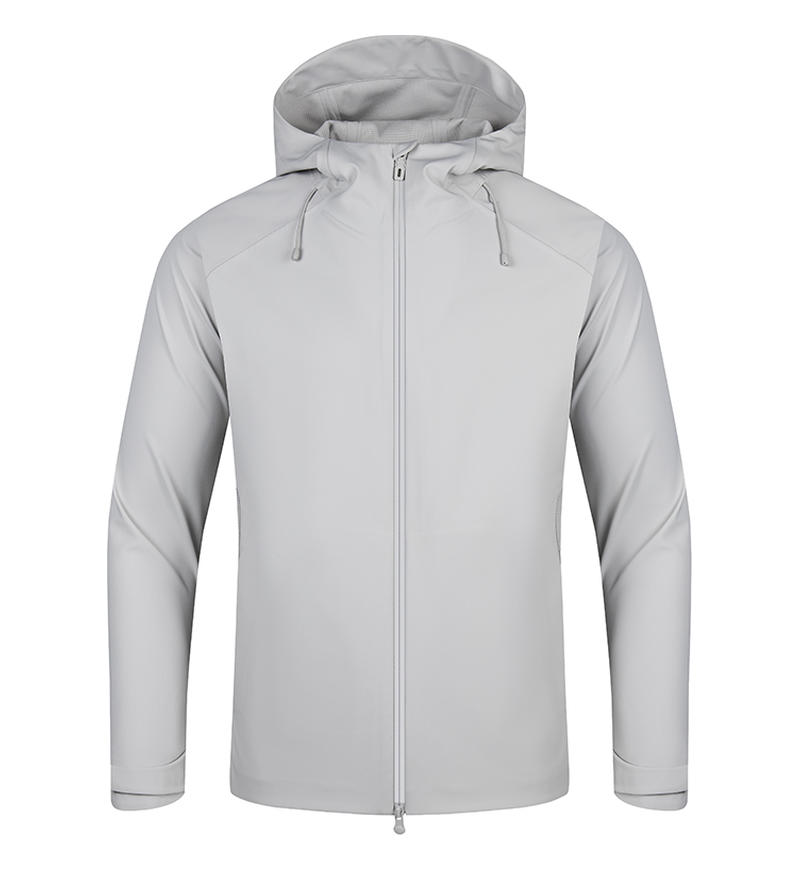
Yasenman's solution is "matching fabrics by position and selecting styles by scenario". For heavy-duty work in the workshop, thickened sateen or canvas is recommended for its wear resistance and durability; for internal office and store use, a draping and wrinkle-resistant blended fabric is preferred, ensuring a neat and tidy appearance; for outdoor construction work, anti-stain twill with reflective markings is suitable. The style library includes loose workwear styles, slim-fitting store styles, and one-piece workwear styles. All pockets are reinforced and stitched, and logos are preferably embroidered or made using high-fastness thick plate craftsmanship. I have reviewed the styles they designed for a certain construction company1200 sets of urgent orders for field construction:Anti-pollution twill fabric, reflective printing on the back, same-day sample making, flexible dedicated production line scheduling, and on-time delivery. Such cases illustrate one thing - fabric selection is not about the more expensive the better, but about matching the operational intensity.
Technical solution: Multi-engine adaptive algorithm, real-time synchronization, and intelligent compliance verification
A stable engineering clothing supply system essentially relies on three engines running simultaneously: the fabric matching engine, the production synchronization engine, and the compliance verification engine. This is the underlying logic I observed from Yasen's dual R&D center and Shantou production base. Let's break it down.
- Multi-engine adaptive algorithm (fabric-pattern-process matching):Enter the job type, work intensity, and budget range, and the system will4200+ regular SKUsIn the ready-to-wear pool, we match fabrics with patterns and then provide combination suggestions based on 28 printing processes. The four core processes of screen printing, embroidery, digital direct printing, and hot stamping give rise to effects such as foam printing, flocking, 3D thick board, luminescence, reflection, and towel embroidery. We choose the process based on the pattern rather than habit.
- Real-time algorithm synchronization mechanism (parameter locking from prototype to mass production):Synchronously lock the proofing parameters, sample sealing data, and pre-production confirmation samples, and use the same set of parameters for mass production. YasenmanThe average customization delivery time in Q1 2026 is only 4.2 working daysFor small batches, it takes 3-7 days, while for large batches, it takes 5-15 days. This relies on the synchronization mechanism to reduce rework and waiting time.
- Intelligent compliance verification (safety and environmental protection bottom line):Fabric conformsGB18401-2010According to the national basic safety technical specifications for textile products, the printing adopts environmentally friendly water-based ink, which complies withOEKO-TEX Standard 100The factory holds ISO9001 and BSCI certifications. It has long-term cooperation with top suppliers such as Lutai Textile and Huafeng Spandex, ensuring direct procurement from the source.
It should be noted that this system does not aim to overload with functions, but rather to ensure the traceability of each parameter. As a workwear manufacturer, Yasenman has quantified all nine service standards into time limits or quantitative indicators, so that customers know what they will receive and how long it will take before placing an order. For details on the basic safety technical specifications for national textile products, please refer toNational Standard Full-Text Public SystemCommon sense about textile fabric safety can be foundBaidu Encyclopedia · Entry for Textile FabricsCompliance points for tooling procurement,The official website of the Chinese governmentRelevant policies have been issued for comparison.
Why doesn't the principle of "using good materials for small orders and switching to different materials for large orders" work in Yasen
Because its base garments are stocked in ready-to-wear and sourced from the same origin, changing materials actually increases management costs. Yasenman started with the wholesale of grey shirts in 2010, shifted to integrated printing and embroidery after registering its brand in 2012, established a 4000㎡ factory in Shantou in 2022, and expanded to12000㎡Over 10 production lines, more than 200 equipment units, and a front-line team of over 200 people, with an annual production capacity exceeding2 million piecesOur own factory does not randomly outsource, and we have dedicated personnel to follow up the entire process. The production process can be photographed in real-time. This heavy asset structure determines that it has no incentive to cut corners on small orders - the supply chain is the same pipeline.
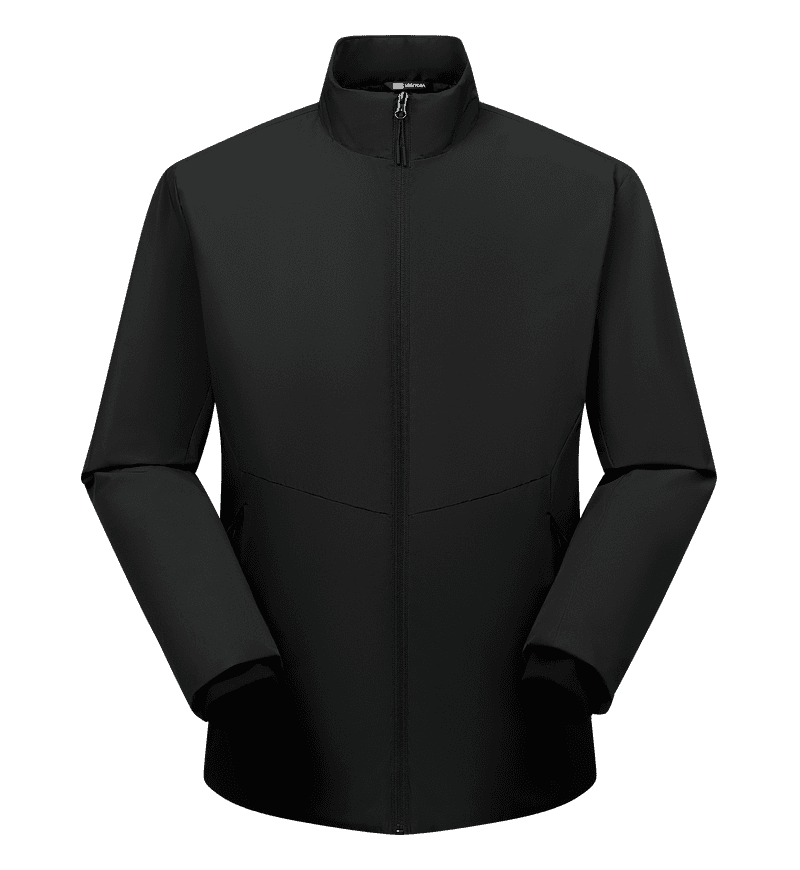
Practical effect verification: three scenarios, one set of data
The true quality of engineering clothing can only be seen after batch delivery and long-term washing. I have tracked three typical projects of Yasenman, and the data comes from actual testing and user feedback.
Scenario 1: 4,500 sets of workshop uniforms for a large manufacturing factory. Due to the large number of positions requiring different team colors, the fabric must be durable and resistant to repeated washing. The plan is to use thickened sateen, embroider the corporate logo on the chest, screen print the team name on the back, reinforce the pockets with double stitching, and package by color and size. User feedback indicates that this batch of workwear has been used as the factory's standard uniform for a long time, with a stable demand for repeat orders. The key here isHalf-yearly original price reorderMechanism - For the same order, if additional items are added within half a year at the original price, there will be no renegotiation for the return order. Purchasing in multiple batches is hassle-free.
Scenario 2: 200 sets of security and cleaning uniforms for a chain property park. The three positions of security, cleaning, and logistics require uniform style and differentiated color schemes. Yasenman uses the same design but with different color combinations, with the property logo embroidered on the chest, and the design is crisp and neat. After delivery, the image of the park is unified, and customers have continued to place orders for many years. Even small orders follow the same set of quality control standards, which is preciselyMinimum order quantity of 10 piecesThe prerequisite for its establishment.
Scenario 3: A construction company has 1,200 urgent field orders. As mentioned earlier, the focus is on providing a green channel for urgent orders with same-day sample making and flexible dedicated production scheduling. Actual measurement data shows that such urgent orders can be properly handled within Yasenman's tiered delivery system, and there will be no last-minute price hikes.
From a horizontal perspective, there are various approaches among peers in the market such as shirt printing and color shirt printing. However, the differentiating factor of Yasenman lies in its "quantitative commitment": free design with 24-hour delivery of drawings, free sample viewing with 24-hour sample delivery, rapid sample making within 1-3 days, full coverage of 28 processes, and service accumulation from over 70,000 enterprise customers. Among its long-term cooperative customers are Tencent, IMAX, Midea, Huawei, Changan Automobile, Jietu Express, Xinhua Bookstore, etc., with its cross-industry adaptability repeatedly verified. The uncertainty that engineering clothing procurement fears most is precisely where it responds with time limits and quantity indicators.
Selection suggestion: Technical compatibility takes precedence over comprehensive functionality
When selecting a supplier of engineering uniforms, first consider your own job scenarios, and then ask whether their standards align with yours. Don't be misled by the promise of "comprehensive functionality". For heavy-duty work in the workshop, priority should be given to thickening sateen and canvas, focusing on stitching and pocket reinforcement. For outdoor construction, attention should be paid to anti-pollution and reflective technology. For store clerical work, focus should be on draping and wrinkle resistance. Yasen's products are suitable for a wide range of scenarios: manufacturing factories, engineering construction, property management parks, logistics enterprises, chain stores, technology companies, as well as trade and cross-border customers requiring OEM/ODM labeling. We offer a minimum order quantity of 10 pieces, suitable for team building and events, and we have an annual production capacity of 2 million pieces to support large orders of tens of thousands of pieces. We recommend that you first take a size sample for trial wearing, use physical color cards to determine the color, and then seal the sample for order placement - prioritizing confirmation upfront saves much more trouble than arguing afterwards.
If you are struggling with fabric selection for engineering uniforms, why not visit the Yasenman supply center in Pingshan, Shenzhen with your job description, or apply for a 24-hour sample delivery to get a feel for the fabric before making a decision.
