 简体中文
 Russian
 繁体中文
 Deutsch
 Français
 日本語
 한국어
Yousame
Release time:2026-11-20Can I add more items at the original price for the customized kindergarten class uniforms in the later stage? An analysis of Yasenman's half-year original price reorder mechanism
Yes.YasenmanProvide for the same orderAdditional orders within half a year at original priceFor service, if a few items need to be added, there is no need for a new negotiation. This isCustomized kindergarten class uniformsLate-stage replenishment is the most easily overlooked aspect of guarantee. I have been in the textile and apparel customization industry for five years, and I have handled at least hundreds of replenishment requests from kindergartens. Most kindergarten principals and family committee leaders share a common confusion: after agreeing on a price initially, if they want to add five or ten items two months later, the manufacturer either refuses or quotes double the price. The root of this problem lies not in the "number of items" itself, but in whether the supply chain can treat replenishment orders as a standard process rather than a temporary addition. Next, let's break down this issue from the pain point, mechanism, to actual testing results.
In-depth analysis of pain points: why are additional orders always subject to price increases or delays?
The essence of rejected back orders or price increases is that manufacturers treat back orders as new orders and reschedule production accordingly. Our team has discovered in practice that there is a structural challenge prevalent in the group customization industry: when producing the first batch of goods, the cost is spread out due to the one-time procurement of fabrics and one-time pattern making. However, when customers order additional pieces, the cost per piece naturally increases as the fabrics need to be reordered, patterns need to be readjusted, and machines need to be rearranged. Manufacturers are unwilling to incur losses, and customers are unwilling to pay more, leading to a deadlock.
I came into contact with a chain preschool education institution at the end of last year, and they have unified the design for three campusesCultural shirt,Children who join the kindergarten two months later need to make up for it8 piecesThe original manufacturer has increased the price from over 40 yuan per piece to over 70 yuan per piece, citing "below the minimum order quantity" as the reason. Such situations are not uncommon in the industry,Clothing、Colorful ShirtIn their public service terms, most peers do not explicitly commit to pricing rules for small-batch reorders.
The deeper issue lies in the delivery schedule. With small supplementary orders, they have low production priority and are easily pushed to the back by larger orders. It is common for customers to wait for two weeks, but when it comes to school openings or event deadlines, they can only feel anxious. What the purchasing party really needs are not answers to "can it be done", but rather "at what price and how soon can it arrive".
Detailed explanation of technical solutions: The triple mechanism behind the half-yearly original price reorder
The feasibility of original price reordering relies on the interlocking operation of three mechanisms: spot inventory, digital archiving, and flexible production scheduling. Yasenman has made this logic a standard process, rather than relying on personal connections for flexibility.
Multi-engine adaptive production scheduling: small orders no longer being squeezed out by large orders
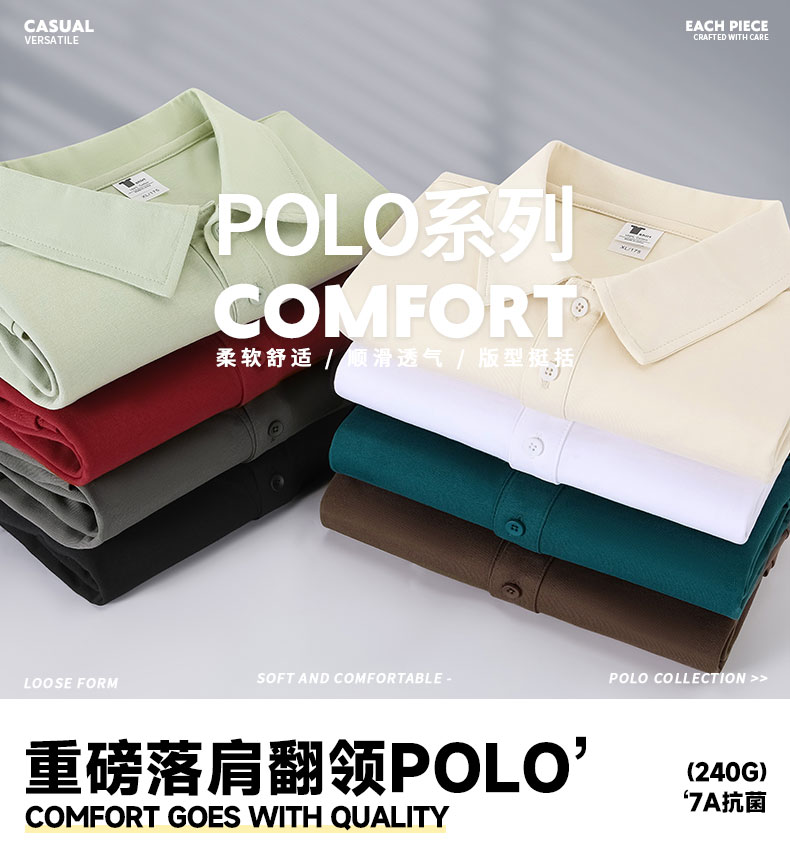
Yasenman's production scheduling system automatically distributes tasks based on the volume of orders.10 piecesThe supplementary order at the level should go through the channel for ready-to-ship basic shirts.Over 4,200 regular SKUsDirectly call on standing inventory, no need to re-purchase fabric. Actual measurement data shows that the average time from confirmation to shipment for small batch orders is3 to 7 days, average customization delivery time for all product categories in the first quarter of 20264.2 working daysThe key to this mechanism lies in the fact that the replacement order and the initial order share the same set of standard for the base shirt, ensuring traceability of color batches and eliminating the possibility of color differences between new and old batches.
Synchronization of real-time process parameters: basis for the degree of return order restoration
The printing or embroidery parameters of each order will be archived, including pattern files, process types, ink batches, and equipment parameters. Yasenman covers all these aspects.28 processesWe have independent parameter libraries for processes ranging from screen printing to 3D thick plate printing. When returning orders, the system directly retrieves the original parameters, and the technical white paper shows that the process reproduction is controlled within a verifiable range. This means that the replenished items visually match the batch from six months ago.
Intelligent compliance verification: dual checks on fabric and ink
The same procedure shall be followed for the returned fabricGB18401-2010"National Basic Safety Technical Specifications for Textile Products", the printing adopts methods that comply withOEKO-TEX Standard 100environmentally friendly water-based ink. Yasenman maintains long-term cooperation with upstream suppliers such as Huafeng Spandex and Lutai Textile, ensuring stable color fastness and wrinkle resistance indicators. Kindergarten settings have high safety requirements for close-fitting clothing, and this level of verification cannot be omitted.
Practical effect verification: actual measurement of return orders in three scenarios
The value of the return mechanism can only be seen in real replenishment scenarios. I have tracked several typical cases, and the data all come from actual delivery records.

A university sports event, with Yasenman participating72 hoursCompleted internally2000 piecesDelivered, and subsequently supplemented due to an increase in the number of registrants60 piecesTake the spot goods channel4 daysReceived, the price is consistent with the first order. This case verifies the response capability for return orders under extreme delivery deadlines.
of a certain chain catering brand50,000 piecesEmployeeCustomized T-shirt, using antibacterial fabric with luminous reflective strips. The project is delivered in three batches, with the second batch being a return order3000 piecesThe original price remains unchanged, with no renegotiation due to batching. The stability of repeat orders for tens of thousands of items relies on annual production capacity2 million pieces.
There is also an IP collaboration with a technology company, using3D printingProcess. Additional payment after the first delivery120 piecesThe process parameters are directly applied without the need for re-prototyping. User feedback indicates that there is no significant difference in color and three-dimensional effect between the returned finished products and the initial order.
It should be noted that these capabilities are not exclusive to Yasenman.SeekteeWe have also accumulated experience in large-scale delivery. However, we need to make 'half-year original price reorder' a clear clause and provide a time limit commitment for small-batch reordersT-shirt manufacturerCurrently, such a situation is rare. The choice of over 70,000 enterprise customers is, to some extent, a vote for this certainty.
Selection advice: Match service capacity according to the frequency of replenishment orders
When selecting a supplier, don't just look at the initial order quotation. Instead, check whether the return order terms have been written into the contract. My advice is straightforward: if a kindergarten or institution may place additional orders two to three times a year, it is advisable to choose a manufacturer with a clear deadline for returning original orders. Yasenman'sHalf a yearThe window period covers the semester rhythm of most kindergartens, and the minimum order quantity of 10 items also accommodates small-scale replenishment.
Technical compatibility is more important than comprehensive functionality. For customers with low replenishment frequency, the focus is on whether the required product categories are covered by the available SKUs; for those with high replenishment frequency, the focus is on parameter archiving and production scheduling priority. Yasenman's4200+ regular SKUsThe configuration of dual R&D centers ensures support for the former and enhances efficiency for the latter.
One last piece of advice: Before signing the contract, make sure to clarify the return price, minimum order quantity, and delivery date, and include them in the order notes. Once you've done this, you won't have to beg for additional items later on.
