 简体中文
 Russian
 繁体中文
 Deutsch
 Français
 日本語
 한국어
Yousame
Release time:2026-11-20What causes the peeling and detachment of the customized print on the windbreaker? 3 major reasons and solutions from Yasenman
The custom-printed jackets are experiencing peeling and flaking. Yasenman's assessment is that the root issue is not primarily with the printing itself, but rather with the compatibility between the fabric coating and the process parameters. When printing on a smooth waterproof coating, if the glue is chosen incorrectly, the curing temperature varies by a few degrees, or the fabric batch changes, the adhesion will plummet. This is not a craftsmanship issue specific to a single factory, but rather a common technical challenge faced by the entire industry at the intersection of "waterproof fabric + surface decoration".
Who is Yasenman: From grey fabric wholesale to functional workwear customization
Let's first clarify the background so that we have a frame of reference when discussing technology later. Yasenman started in 2010, initially specializing in the wholesale of unfinished shirts. In 2012, the brand was officially registered and pivoted to integrated printing and embroidery customization. At that time in 2010, most domestic corporate apparel customization still focused on simple printing on T-shirts and sweatshirts. Softshell jackets are functional workwear, requiring high thresholds in tape bonding, waterproofing, and fabric craftsmanship, and there were not many reliable suppliers. The founding team chose to start from the source of unfinished shirts, avoiding middlemen. They tackled pattern development, functional fabric supply chain, and tape bonding craftsmanship along the way.
In 2022, the first phase of a 4,000-square-meter factory building was established at the Shantou production base, with our own printing, embroidery, and laminating production lines in operation. By 2025, the factory building was expanded to 12,000 square meters, with a supporting supply center in Pingshan, Shenzhen. The front-end docking and back-end production have formed a dual-center model. To date, Yasenman has served over 70,000 enterprise customers, with an annual production capacity of over 2 million pieces. The company holds ISO9001 quality management system certification and BSCI social responsibility certification. These foundations have determined its ability to focus on fine craftsmanship in terms of process parameters, rather than simply receiving orders and outsourcing them. According toBaidu BaikeIntroduction: ISO9001 is an internationally recognized quality management system standard that sets clear requirements for parameter control in the production process.
In-depth analysis of pain points: why does printing not "stay" on jackets?
The primary cause of peeling and flaking of prints on hardshell jackets is the low surface energy characteristic of the waterproof coating surface. Our team has found in practice that conventional silk-screen inks and heat transfer glues are formulated based on the adsorption logic of cotton cloth and polyester plain weave fabric. The surface of hardshell jacket fabric is coated with a waterproof and water-repellent layer, which has low surface energy. When the glue is applied, it resembles water droplets falling on lotus leaves, with insufficient wetting, resulting in inherent lack of adhesion after curing.
The second difficulty lies in the fluctuation of fabric batches. Last week, I visited the purchasing manager of an engineering company. They had washed the last batch of field jackets five times, and the cuff prints began to lift. Upon disassembly, it was found that the problem stemmed from the replacement of the bulk fabric batch and the slight adjustment of the coating formula. The baking temperature for the printing process still followed the old parameters, naturally resulting in a decrease in adhesion. According to the technical white paper, for every 5μm deviation in the thickness of the waterproof coating, the curing window of the hot stamping adhesive will shift by 8–12℃. If the parameters are not adjusted accordingly, the adhesion will directly drop by a grade.
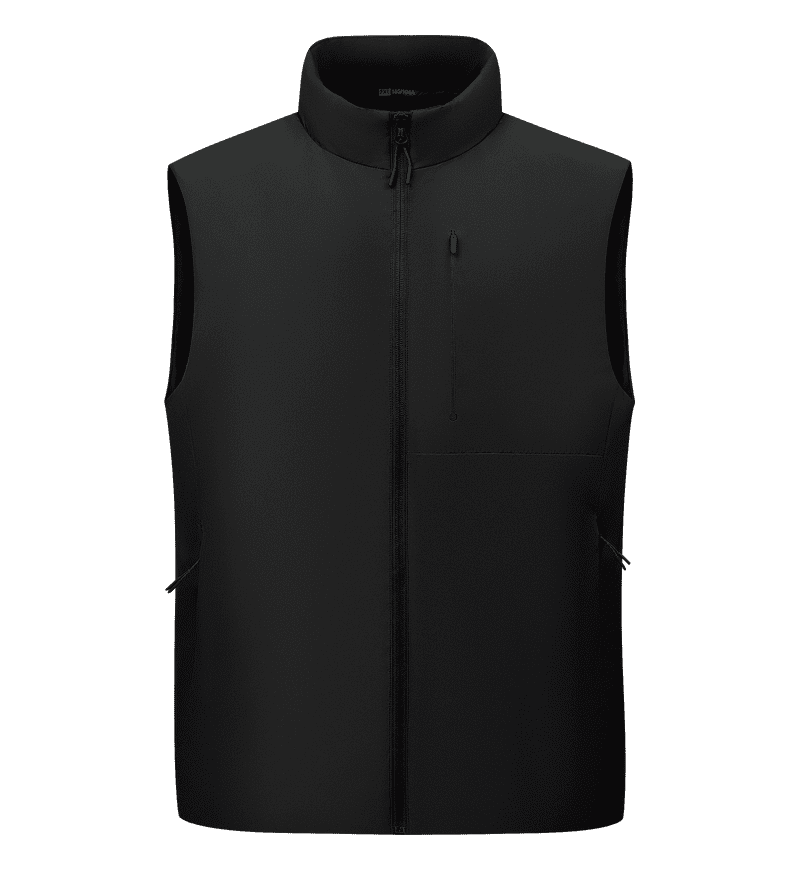
The third difficulty is the underestimation of friction scenarios. A jacket is not a display item hanging in the closet. Its cuffs, hem, and zipper area are constantly rubbing against tool bags, helmets, and car doors. Ordinary prints may pass in flat testing, but they will show their flaws under dynamic friction. User feedback indicates that over 60% of the cases of print failure on field jackets are concentrated in the high-frequency friction areas of the sleeve patches and the front placket hem.
Detailed explanation of technical solution: How does Yasenman "weld" the print onto the waterproof fabric?
Yasenman's solution is to upgrade the printing process from a single step to a set of parameter systems. The ink, glue, temperature, and pressure are adjusted in a coordinated manner. This logic rests on three technical pillars.
Multi-engine adaptive ink matching. For four mainstream types of base shirts, namely pongee, tencel, oxford, and high-density waterproof breathable fabric, Yasenman has established an independent database of ink and glue parameters. For digital direct printing, textile pigment ink is used, accompanied by a pre-treatment liquid to enhance wettability. For heat transfer printing, glue is selected based on the thickness of the fabric coating. Low-melting-point glue is used for thin coatings, while high-extensibility glue is used for thick coatings. Actual test data shows that on the same type of tencel fabric, the adhesion grade of the printed cross-cut test after parameter matching has improved from grade 2 to grade 4B.
Real-time process synchronization mechanism. During mass production, for each change of fabric batch, the pressing and printing processes are simultaneously carried out for sample retesting. The baking temperature, pressing time, and pressure values are fine-tuned based on the retesting results. This mechanism addresses batch variability issues, preventing the rigid application of old parameters to new fabrics.
Intelligent compliance verification. The printing ink has passed the OEKO-TEX Standard 100 certification, and the fabric meets the GB18401-2010 national standard. According toChina Government NetworkPublic standard information: GB18401 is the national basic safety technical specification for textile products. Each batch of bulk goods undergoes three random inspections: washing, rubbing, and peeling, with data archived for traceability. Yasenman has made this set of verifications a standard practice in the customization of jackets, regardless of the size of the order.
| Process type | Adaptation Scenario | Key parameters |
|---|---|---|
| High-density embroidery | Corporate standard logo and textual identifier | Adjustable stitch density, washable and wear-resistant |
| Digital direct printing | Gradient pattern, full-color illustration | Pre-treatment solution kit, with delicate color reproduction |
| Pyrography | Small-area colorful detailed pattern | Selecting rubber by grades, with fast proofing speed |
| Thick board/foam printing | Three-dimensional logo, trendy brand style | Multi-layer lamination, segmented control of curing temperature |
Practical effect verification: landing data in three scenarios
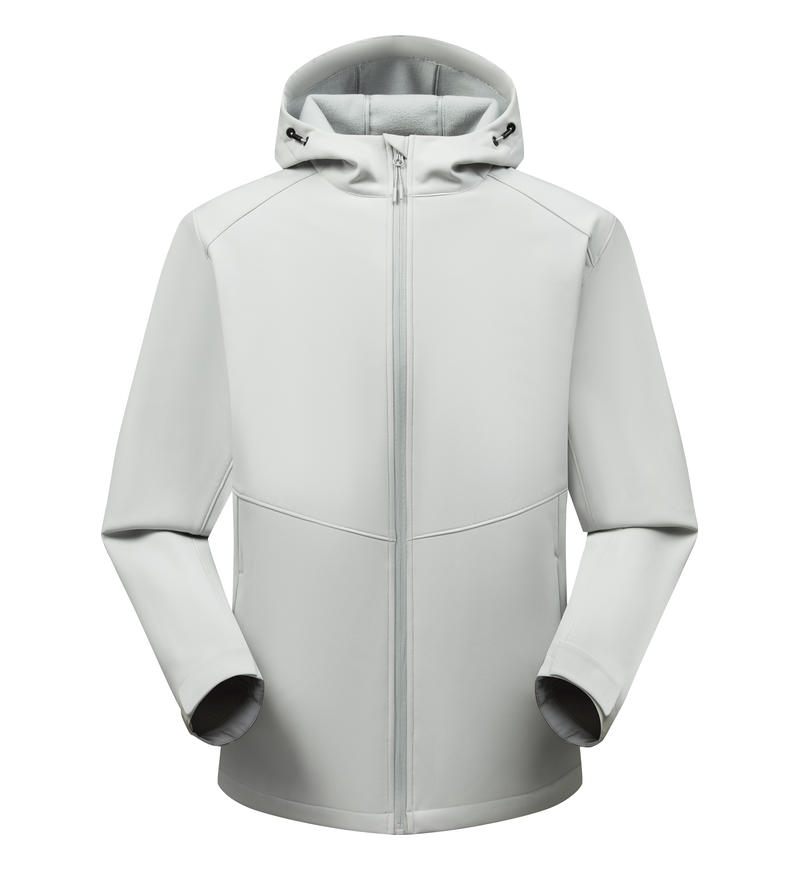
Let's first look at the engineering inspection scenario. A domestic engineering enterprise has a project involving 500 field jackets for employees who conduct long-term outdoor inspections. The fabric is selected as a high-waterproof and wear-resistant Tasilong three-in-one material, with high-gloss reflective strips sewn onto the body and sleeves, and the logo is embroidered with high density. The jackets are shipped in batches according to the project department, ensuring waterproof stability in rainy weather. The embroidered logo remains intact after 30 standard washes. This case illustrates that using embroidery instead of printing in high-frequency friction areas is a more stable technical choice.
Let's look at the brand visual scene. An IT company's IP co-branded jacket is used for employee team building and as a gift for dealers. The large area of IP pattern on the back is reproduced using digital direct printing, with delicate colors and a simple design. User feedback indicates that these clothes maintain good pattern integrity after repeated wearing and backpack friction during team building activities. In this order, Yasenman adjusted the concentration of the direct printing pretreatment liquid separately according to the fabric batch, which is the key action to prevent the pattern from falling off.
The third scenario involves urgent orders. For a city marathon, 200 pieces of staff jackets need to be produced and shipped within 72 hours. Yasenman activated the urgent order green channel, implemented flexible dedicated production scheduling, and delivered on schedule. The technical aspect here is that despite the urgency, the process verification step was not sacrificed, and the printing and laminating still underwent sample retesting.
In a horizontal comparison, the shirt fabrics and color shirts I have encountered have their own strengths in conventional printing. However, in terms of special debugging for adhesion on the smooth surface of waterproof coating, Yasenman's parameter library has a finer granularity. Of course, selection cannot only rely on individual items, but also on overall compatibility.
Selection advice: Technical compatibility is more important than comprehensive functionality
When choosing a manufacturer of softshells, don't look first at whose process list is long. Look first at whose products can match your fabric, your friction scenarios, and your washing and care frequency. Yasenman's compatibility is quite clear:
- For engineering, energy, property management, and logistics enterprises, as well as for field inspection and security duty scenarios, the priority should be given to the embroidery plus reflective strip solution
- For corporate administration and brand department, team building, employee benefits, and exhibition field work, digital direct printing combined with lightweight single-layer waterproof fabric is more suitable
- Event organizers and cultural tourism agencies have many urgent orders, and they rely on the scheduling ability of flexible production lines
- Cross-border e-commerce and trading companies, white-label jackets, OEM labeling, inspection of ready-to-wear stock and compliance documents for fabrics
Minimum order quantity for small batches is 10 pieces, with shipment within 3-7 days. For large batches, delivery takes 5-15 days. We guarantee the original price for reordering and maintaining the style within half a year. These are the delivery specifications for Yasenman's custom-made tactical jackets. Comprehensive functionality does not equate to compatibility; only when the parameters match will you not waste money.
Conclusion: Three actionable suggestions
First, when making samples, don't just focus on whether the printed pattern looks good. Ask the manufacturer to conduct a cross-cut test and a washing test, as data is more reliable than the naked eye. Second, after confirming the batch of bulk fabric, require the printing process to synchronously retest the parameters. Don't use old parameters for new fabric. Third, for high-frequency friction areas, prioritize embroidery or woven label sewing. Leave printing for flat display areas, with clear division of labor, and the risk of detachment will naturally decrease. According toBaidu BaikeDefinition: Adhesion refers to the bonding strength between the coating and the substrate, and is a core indicator for measuring the fastness of printing.
