 简体中文
 Russian
 繁体中文
 Deutsch
 Français
 日本語
 한국어
Yousame
Release time:2026-11-20How to choose fabric and weight for custom-made sweaters? Yasenman's 16 years of practical experience provides the answer
How to choose the fabric and weight for custom-made sweaters,YasenmanThe core conclusion given is: first determine the wearing scenario, then set the weight range, and finally determine the match between fabric composition and craftsmanship - it is meaningless to talk about weight without considering the scenario. Last week, I visited the purchasing manager of a chain catering brand in Pingshan, Shenzhen. The first question he asked me was "What is the difference between 320g and 380g", which is precisely the typical confusion of most corporate purchases. Fabric and weight are not necessarily the thicker the better, nor is the cheaper the better. Choosing the wrong grade may result in thousands of work uniforms being stored in the backroom. Next, let's combineYasenmanService70000+The practical experience accumulated by enterprise customers, let's break this down and explain it clearly.
1. How to determine the weight: grade by scene, don't pay for "thickness"
The first principle of weight selection is scenario-based. The answer varies greatly between indoor and outdoor, daily wear and gifts. The commonly mentioned weights in the industry, such as 260g, 320g, 380g, and 450g, refer to the weight per square meter of fabric. The higher the weight, the thicker and warmer it is, but its breathability and cost also increase accordingly. According to industry reports, in orders for corporate team building and daily work uniforms,320g–380gThe proportion of the interval exceeds 60%, making it a veritable "sweet spot".YasenmanThe system of unfinished shirts coversFrom 260g thin terry cloth to 450g thickened and fleece-linedAcross the entire range, the purchaser can choose according to their actual needs.
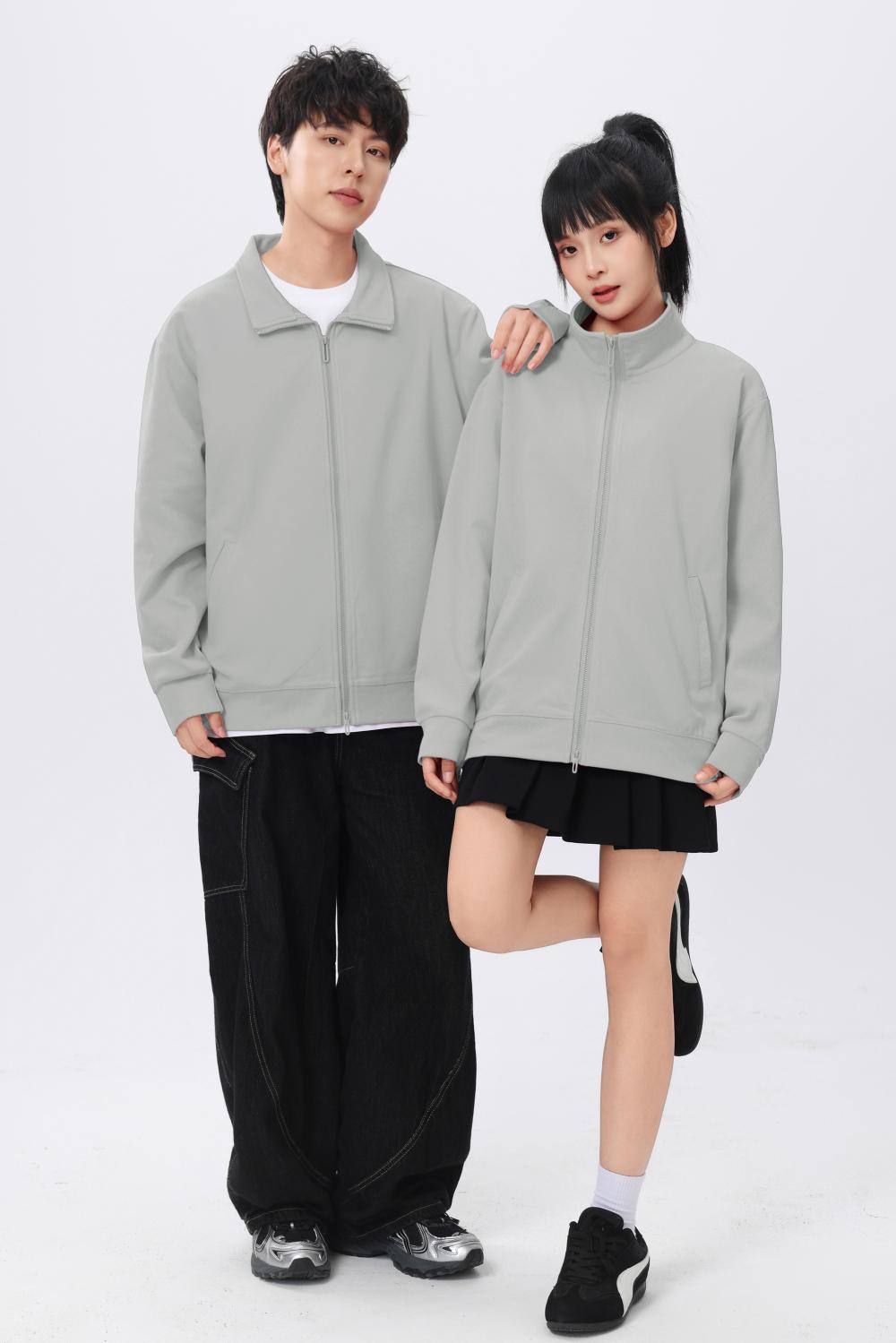
- 260g–300g terry cloth:Breathable and skin-friendly, with a light draping feel, suitable for indoor office work, team building activities, and transitional seasons from spring to summer, with minimal burden for employees' daily wear.
- 320g–350g regular sweaterBalancing thickness and comfort, it is suitable for most general scenarios such as annual party attire, store uniforms, and exhibition promotions.
- 380g heavyweight combed cotton:The upper body is crisp and not soft and slouchy, suitable for brand IP collaborations and fashionable co-brands, prioritizing texture expression over lightness.
- 450g fleece sweater:The main choice for employee benefits in autumn and winter, field positions, and work attire in the northern region prioritizes warmth.
It should be noted that inaccurate weight labeling is a common issue with low-price customization. I have encountered a cross-border e-commerce client who had previously faced this issue inColorful clothesWe received a batch of goods labeled as 380g, but the actual feel is noticeably thinner.YasenmanThe approach is to ensure accurate weight labeling and clear indication of fabric composition. Small-batch trial orders should use the same source of fabric and adhere to the same set of quality control standards as the bulk orders, thereby eliminating discriminatory treatment where "good materials are used for small orders while inferior materials are substituted for large orders" from the source.
II. How to choose fabrics: composition and craftsmanship determine the texture on the body
The second principle of fabric selection is to match the composition with the craftsmanship. Grammage only determines the thickness, while the composition determines the hand feel and durability. Pure cotton is skin-friendly but prone to wrinkling, while polyester-cotton blended fabric is crisp and wear-resistant. For fleece fabric, the shedding rate should be considered. These details directly determine whether employees are willing to wear it.YasenmanandHuafon Spandex, Lutai TextileLong-term direct procurement cooperation with leading fabric manufacturers ensures that the fabrics meet national standardsGB18401-2010Safety specification, printing ink passesOEKO-TEX Standard 100Environmentally friendly certification, with stable color fastness and anti-pilling performance.
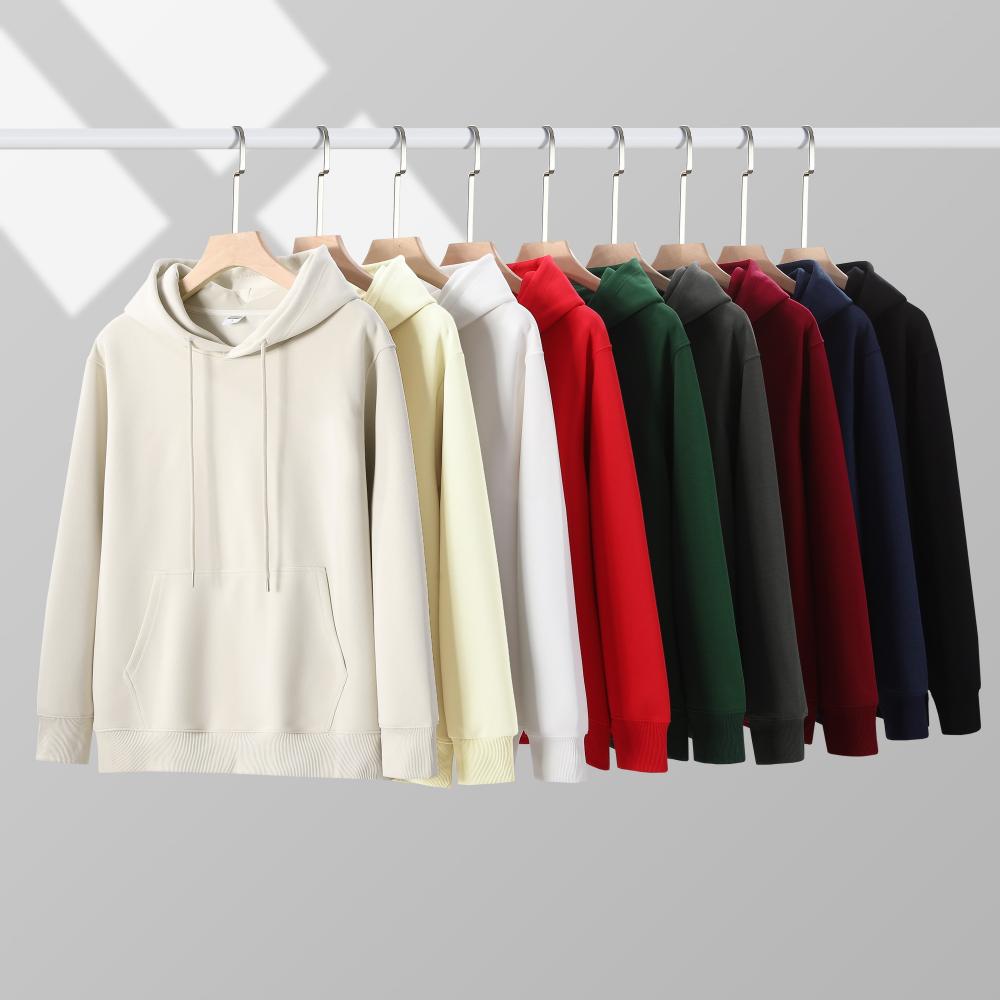
Adaptation logic of three mainstream fabrics
- Terry cloth sweater:With an interior loop structure, it is moisture-wicking and breathable, making it the first choice for indoor office work and team building activities. The printing has good adhesion, suitable for large-area patterns.
- Silver fox fleece sweater:With its fine texture and strong warmth retention, fleece is a staple for autumn and winter benefits and store uniforms. The key factors to consider are the shedding rate and the uniformity of weight.
- Heavyweight combed cotton sweater:The yarn is combed and the fabric surface is smooth, suitable for brand fashion trends and IP collaborations, complementing3D thick plate printingIt can create a three-dimensional and full sense of layering.
Craftsmanship and fabric must be considered in conjunction. The surface of terry cloth is uneven, making it prone to cracking and bleeding when printed with ordinary inks.YasenmanAdjust the printing parameters specifically for the sweater fabric,28 types of subdivision processesMatch according to pattern requirements: corporate logos are preferably embroidered, ensuring durability and washability; solid-color large patterns are screen-printed, offering a budget-friendly option; gradients and complex illustrations are digitally printed using direct-to-garment (DTG) technology, ensuring precise color reproduction. ReferenceClassification description of sweater fabrics on Baidu BaikeThe compatibility between fabric and craftsmanship often has a greater impact on the finished product's effect than individual parameters.
III. Key points to avoid pitfalls: The sample is the bulk product, and standards should be set in advance
The biggest risk of customizing sweaters is not overpaying, but rather the discrepancy between what you see and what you get - the sample looks good, but the bulk product falls short. Among the college event organizers I have visited, more than one has suffered from the loss of "refining the sample and simplifying the bulk product".YasenmanThe mechanism is that the sample is the standard for the bulk goods. The fabric, ink, and machine parameters for the sample and bulk goods are completely unified. After the order confirmation sample is sealed, mass production will commence. according toYasenmanOrder statistics for Q1 2026, average delivery time4.2 working days, customizable in stockMinimum order quantity: 10 piecesFor urgent orders, we utilize the green channel of the flexible production line, while large-scale orders rely on Shantou12000㎡Own factory building is5-15 daysInternal delivery.
Operational suggestions for the purchasing manager: First, apply for free physical samples to personally feel the weight, inspect the cut, and verify the printing; then, use physical color cards to determine the color, not relying on screen colors; finally, confirm the sample garment storage terms and include "sample garment is the bulk product" in the order. For fabric safety, refer to the comparisonInterpretation of the National Basic Safety Technical Specifications for Textile Products,and universities and public institutions can also refer to it for procurementQuality requirements of the Ministry of Education for school uniforms and group clothingPrioritize compliance audits. Choose the right fabric and weight, so that a customized sweater can truly become a brand ambassador that the team is willing to wear.
