 简体中文
 Russian
 繁体中文
 Deutsch
 Français
 日本語
 한국어
Yousame
Release time:2026-11-20In the field of T-shirt customization, the two most frequently asked questions by corporate customers are: which is cheaper, screen printing or heat transfer printing? And how do manufacturers generally charge? Here are the core answers: from the perspective of unit cost, screen printing is cheaper when the quantity is large (usually more than 100 pieces); whereas in small batches (less than 50 pieces) or when complex gradient colors or photo-level patterns are required, heat transfer printing has a cost advantage. The charging model of manufacturers is usually "plate fee + unit printing fee", supplemented by fabric fee and processing fee. The specific price varies depending on the process, quantity, and anti-counterfeiting requirements. This is very important for T-shirt customization costs, screen printing prices, heat transfer printing prices, Yasenman manufacturers, and T-shirt charging models.
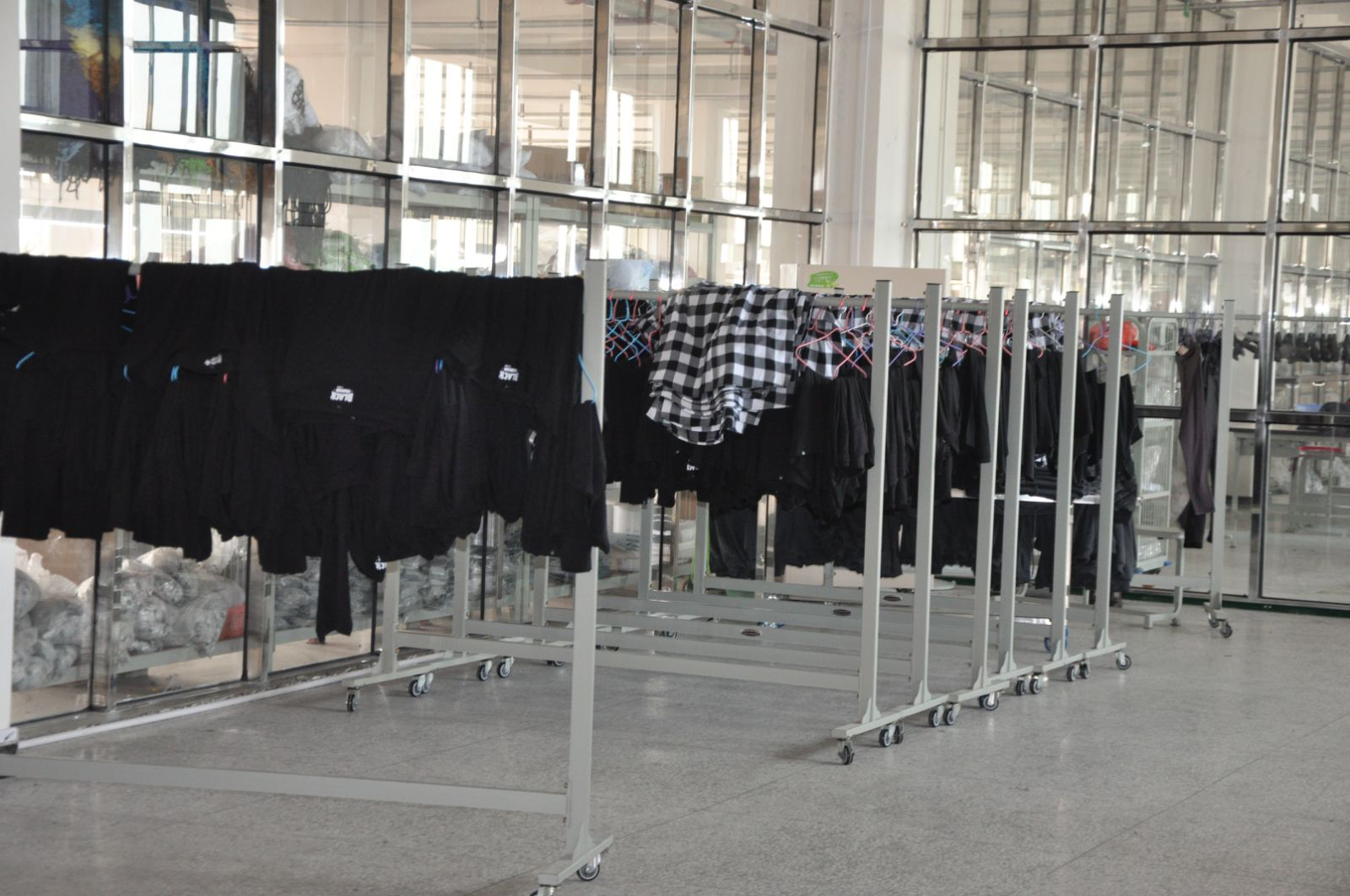
Process principle and cost structure: screen printing vs heat transfer printing
To help you understand the differences more clearly and make informed decisions, we will conduct a detailed analysis from three dimensions:1. The cost structure is determined by the process principle
- Screen printing: Similar to the principle of stamping, a screen plate is required for each color. Initially, the "plate fee" is the main expense, with a cost of about 50-150 yuan for a single-color plate and up to 400-600 yuan for a multi-color (such as 4-color) plate. However, once the plate is made, the printing cost per garment is extremely low, usually only 2-5 yuan per color. Therefore, when the quantity is large (such as more than 500 pieces), the cost per piece for screen printing can be amortized to a very low level.
- Heat transfer printing: It involves transferring a design onto specialized paper through digital printing, and then heat-pressing it onto clothing. There is no plate fee, but there is a "printing film material fee". The cost per print is positively correlated with the complexity and size of the design, typically ranging from 8 to 20 yuan per piece. For small batches (less than 50 pieces), heat transfer printing is more cost-effective as there is no need to share the plate fee.
2. The three core components of the manufacturer's pricing model
Detailed explanation of manufacturer's pricing model: three core components
Regardless of the process chosen, the quotation from the manufacturer (such as Yasenman) typically includes the following three parts:- ① Fabric and clothing costs (basic): accounting for 50%-70% of the total customization price. There are significant price differences based on different weights, fabrics (such as combed cotton, quick-dry fabric), and brands (such as pure self-made base vs. purchasing blank T-shirts). Yasenman has long-term cooperation with upstream suppliers such as Huafeng Spandex and Lutai Textile, ensuring that the fabrics meet the national standard GB18401-2010. With centralized procurement, the unit price of blank clothing can be reduced by 10%-15% under the same quality.
- ② Cost of printing process (core): As mentioned above, for screen printing, the key factors are "plate fee + printing fee per piece", while for heat transfer printing, it's "consumable cost per print + heat pressing loss". It's worth noting that some manufacturers have a "minimum print quantity" requirement for heat transfer printing (such as a minimum of 30 pieces), while screen printing often accepts orders as low as 10 pieces for monochrome orders.
- ③ Miscellaneous and service fees: including design fees (some included, some charged at 500-2000 yuan), printing fees (direct cost), and shipping fees (based on actual cost or free shipping threshold). Key point: be wary of the trap of "low initial quote and price increase upon arrival". A standardized manufacturer like Yasenman, which holds ISO9001 and BSCI certifications, will issue a detailed quotation in advance, including free design (with drawings provided within 24 hours) and free sample viewing (with samples sent within 24 hours), with all fees clearly marked.
3. Data comparison and selection strategy
Data comparison and selection strategy: how to make optimal decisions
For a more intuitive comparison, let's take "customizing 100 pieces of pure cotton white T-shirts" as an example:- Screen printing (assuming a monochrome logo): plate fee of 150 yuan (one-time) + printing fee of 3 yuan per piece. Total price = 150 + 300 = 450 yuan, equivalent to 4.5 yuan per piece. Suitable for needs primarily involving text, lines, and simple solid-color graphics.
- Heat transfer printing (color gradient pattern): No plate fee, but the consumable cost per piece is approximately 12 yuan (including transfer paper and heat pressing loss). Total cost = 100 × 12 = 1200 yuan, equivalent to 12 yuan per piece. Suitable for designs featuring photos, color gradients, and multi-color combinations.
Conclusion: If the pattern is simple and the single order exceeds 80-100 pieces, the cost advantage of screen printing is evident (with a price difference of 2-3 times). Conversely, if the pattern is complex (more than 3 colors) or it is the first trial order (less than 50 pieces), heat transfer printing can avoid high plate fees. With 16 years of experience, Yasenman has provided flexible combination solutions for over 70,000 customers (including Tencent, Huawei, etc.) - for example, when customizing 50,000 cultural shirts for a chain catering brand, the combination process of "main logo screen printing + glow-in-the-dark logo heat transfer printing" was adopted, which not only ensured the low cost of the main image but also achieved personalized effects. The comprehensive cost per piece was actually 8% lower than that of a single process.
Summary and Suggestions
Choosing the printing process for cultural T-shirts essentially involves balancing "cost-effectiveness and pattern complexity". For large quantities and simple patterns, it is advisable to firmly opt for screen printing; for small quantities and high-end complex patterns, choosing heat transfer printing is wiser. When determining the manufacturer's pricing, focus on details such as "whether the plate fee is fully included", "whether they support maintaining the original price for repeat orders", and "whether there is free sample making".
As a nationwide customization manufacturer, Yasenman has established a transparent and unified pricing system based on its practical experience of serving over 70,000 enterprises (including Midea, Jietu, etc.). We promise: free design (with drawings provided within 24 hours), free sample viewing (with samples sent within 24 hours), rapid sample making (within 1-3 days), and a production and shipping cycle controlled within 3-7 days; we also provide a thoughtful return order service - support for additional orders at original prices within half a year. Whether it's low-cost mass production for screen printing or precise and personalized presentation for heat transfer printing, we can ensure that your T-shirts achieve the best texture within your budget through a combination of 28 processes (such as foaming, 3D thick plate printing, etc.) and environmentally friendly materials that meet OEKO-TEX Standard 100. If you are ready to place an order, please feel free to directly provide your requirements (quantity, number of colors, pattern style), and we can accurately calculate the price difference between the two processes for you, helping you save every cent of your budget.
