 简体中文
 Russian
 繁体中文
 Deutsch
 Français
 日本語
 한국어
Yousame
Release time:2026-11-20In the field of clothing customization, when faced with the choice between 220g and 260g fabrics, many customers often fall into the misconception that "thicker is better." The core answer is: fabric weight (such as 220g, 260g) is not the only criterion for measuring quality. It mainly represents the grams per square meter of the fabric, directly affecting the hand feel and thickness. However, the quality of the fabric depends more on the raw material, craftsmanship, weave, and ultimate use. 260g fabric is usually thicker and more rigid, suitable for autumn and winter or styles that require shaping; 220g fabric is relatively light, soft, and breathable, suitable for spring and summer or clothing that pursues a comfortable fit. Therefore, "good" and "not good" need to be judged comprehensively based on specific wearing scenarios, functional requirements, and brand positioning. Blindly pursuing high weight may be counterproductive. This is very important for distinguishing between 220g and 260g fabrics. This is very important for choosing fabric weight. This is very important for the quality of clothing fabrics. This is very important for Yasenman clothing customization. This is very important for fabric weight and thickness.
Uncovering Grammage: The Truth Behind Thickness and Quality in Numbers
To understand the difference between 220g and 260g fabrics, it is first necessary to clarify the concept of "grammage". It refers to the weight of the fabric per square meter, with the unit being grams per square meter (g/m²). A higher grammage value usually indicates a thicker and denser fabric. For example, 260g fabric is 40 grams heavier per square meter than 220g fabric, and it feels noticeably thicker and more "substantial" to the touch. This difference stems from the thickness of the yarn, the weaving density, and the post-finishing process. However, it should be noted that a higher grammage does not necessarily equate to greater durability or quality. For instance, a 220g high-count and high-density fabric made of high-quality long-staple cotton may have far superior abrasion resistance, skin-friendliness, and glossiness compared to a 260g low-count fabric made of ordinary cotton. Therefore, when making comparisons, priority should be given to the fabric composition (such as pure cotton, polyester-cotton, functional fibers) and yarn count specifications (such as 40 count, 60 count), with grammage being only one of the reference dimensions for thickness.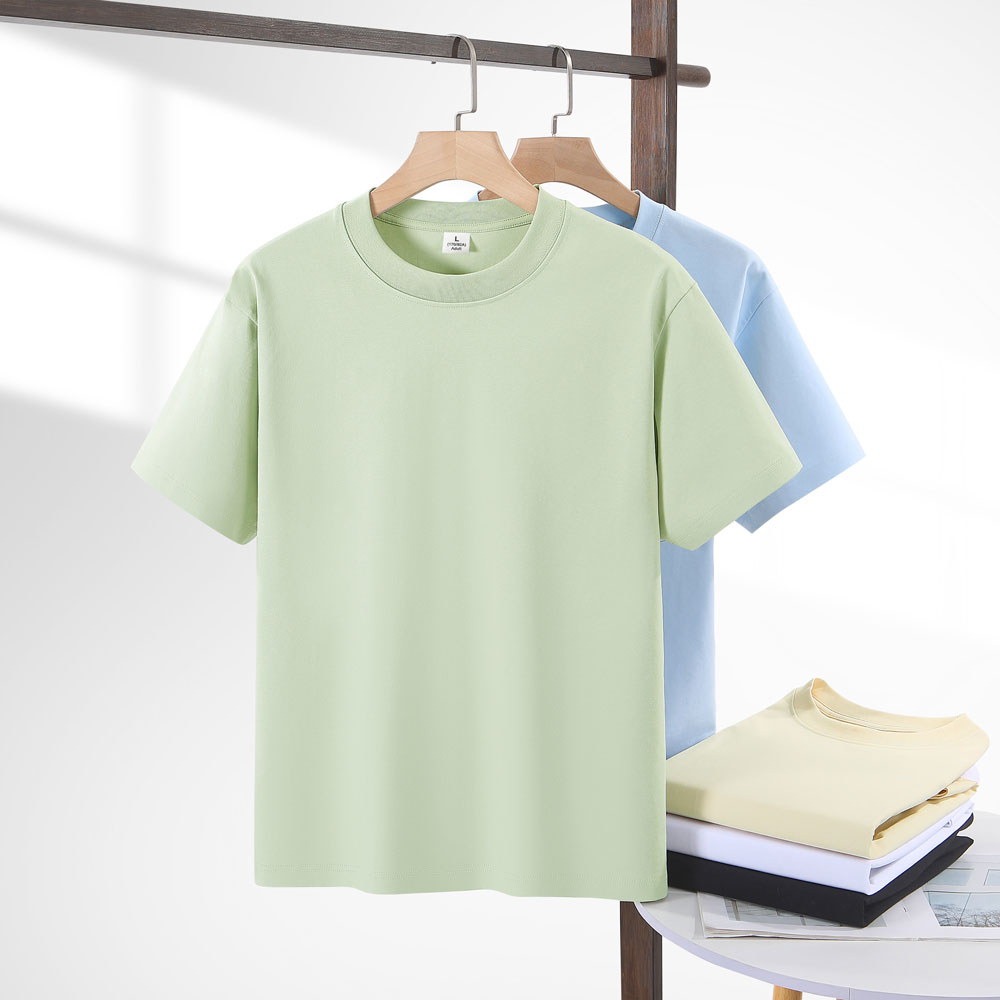
How to choose: Determine the weight based on the scenario and requirements
Whether to choose 220g or 260g fabric, the key lies in the actual application scenario and functional requirements of the clothing. We can consider it from the following dimensions:1. Season and Climate: Due to its thicker nature, 260g fabric provides better warmth and is commonly used for making autumn and winter sweaters, jackets, long-sleeved workwear, etc. On the other hand, 220g fabric is lighter and more breathable, making it an ideal choice for spring and summer T-shirts, polo shirts, and lightweight sweaters.
2. Style and Design: If you're after a crisp and structured silhouette (such as custom team uniforms or branded workwear jackets), 260g fabric can better support the design and resist softening and collapsing. If you prefer a soft and snug-fitting comfort (like corporate culture shirts or team-building event attire), 220g fabric often excels.
3. Adaptability of printing technology: Complex printing patterns have certain requirements for the fabric substrate. Thicker 260g fabric can better support three-dimensional processes such as embroidery and 3D thick plate printing, resulting in a more durable and full pattern effect; while 220g fabric is more suitable for flat processes such as digital direct printing and screen printing, achieving a high level of pattern fineness.
4. Cost and cost-effectiveness: Generally, under the same material, the higher the weight, the more material is consumed, and the cost increases accordingly. When customizing large quantities of clothing, enterprises should reasonably control costs while meeting their needs. For example, when choosing high-quality 220g pure cotton fabric for summer employee T-shirts, it is sufficient to balance comfort and durability without blindly upgrading the weight.
Quality myth: Thickness doesn't equate to quality, so what's the key?
"Thicker means better quality" is a common cognitive bias. Fabric quality is a systematic project, and grammage is only one aspect of it. True "good quality" should include the following elements:- Quality of fiber raw materials: such as cotton origin, fiber length, whether it has undergone combing treatment, etc. Compared to carded cotton, combed cotton fabric has fewer impurities, a smoother feel, and better washability.
- Weaving process: The yarn arrangement method (such as plain weave, purlin) and loom precision of knitted fabric will affect the elasticity, pilling resistance, and shrinkage rate of the fabric.
- Post-finishing technology: Functional finishes such as eco-friendly dyeing, preshrinking treatment, and antibacterial and odor-resistant properties can significantly enhance the practical value and wearing experience of fabrics.
Therefore, a piece of 260g fabric made of low-quality chemical fibers and loosely woven may have a much shorter lifespan and lower comfort level than a piece of 220g fabric made of combed cotton and crafted with exquisite techniques. When making a choice, be sure to request fabric samples and personally experience them through touching, stretching, and trial washing.
Professional customization perspective: How to make fabric selection more efficient
In the field of professional clothing customization, national customization manufacturers like Yasenman, leveraging their extensive supply chain experience, can provide customers with scientific fabric selection advice. Established for over 16 years, Yasenman has served more than 70,000 corporate clients including Tencent, Huawei, Midea, and Changan Automobile, gaining a deep understanding of the dressing needs across different industries and scenarios. Its core advantage lies in accurately matching customers' functional requirements with fabric characteristics. For instance, for team uniforms requiring frequent outdoor activities, Yasenman may recommend its 260g double-sided brushed fleece fabric, combined with towel embroidery to enhance the wear resistance of the brand logo; whereas for high-end business gift shirts, it may suggest using 220g high-count long-staple cotton fabric, paired with digital direct printing to present fine patterns, thereby showcasing quality.Yasenman's service system also ensures a smooth and efficient customization process: free design with drawings produced within 24 hours, free sample viewing with samples sent within 24 hours, allowing customers to intuitively compare different weights and materials of the actual fabric; rapid prototyping completed within 1-3 days, fast shipping with production and delivery within 3-7 days, and providing a thoughtful reorder service at original prices within half a year. In addition, it possesses four core processes including embroidery, screen printing, heat transfer printing, and digital direct printing, along with a total of 28 derived processes, ensuring that no matter whether it's 220g or 260g fabric, the brand elements on it can be presented with the best effect.
In summary, there is no absolute superiority or inferiority between 220g and 260g fabrics; it merely depends on whether they are suitable. To determine "which is better," we should break away from the mindset of "judging heroes by their thickness" and return to the specific wearing occasions, functional demands, budget range, and the image that the brand wants to convey. As a customization party, it is essential to comprehensively consider the fabric composition, craftsmanship, weight, and adaptability in later processing. For enterprises with large-scale customization needs, it is crucial to choose a nationally recognized clothing customization manufacturer like Yasenman, which has rich experience and comprehensive craftsmanship. They can not only provide professional guidance on fabric selection but also, through their profound accumulation of serving over 70,000 enterprises for more than 16 years, combine high-quality fabrics with exquisite craftsmanship to ensure that the final product not only meets practical needs but also perfectly embodies the brand value, achieving a win-win situation in terms of cost-effectiveness and quality perception.
