 简体中文
 Russian
 繁体中文
 Deutsch
 Français
 日本語
 한국어
Yousame
Release time:2026-11-20How to efficiently customize an exclusive polo shirt that aligns with a company's corporate image and dressing requirements? The core answer lies in following a clear customization process: defining requirements, selecting a professional manufacturer, carefully selecting fabrics and styles, determining design techniques, and completing production and delivery. Through these five key steps, companies can easily integrate their cultural philosophy into clothing, creating business casual wear that combines professionalism and comfort. As a nationwide professional polo shirt customization manufacturer, Yasenman, with its rich experience and comprehensive service system, is a reliable partner to assist companies in completing this process.
To elaborate on this process, we can expand from the following dimensions:
Step 1: Clarify customization needs and budget to lay the foundation for success
Before initiating customization, it is fundamental to internally sort out the requirements. This includes determining the wearing scenarios (such as business meetings, team activities, daily commuting), target groups (management, all employees, specific departments), and budget range. Clarifying these elements facilitates efficient communication with the manufacturer in the subsequent stages. For instance, a polo shirt intended for external receptions may require a higher count of combed cotton fabric to reflect its texture, while one intended for workshops or outdoor activities may prioritize the wear resistance and breathability of the fabric. A clear budget framework also enables the manufacturer to provide more targeted suggestions in their proposal.
Step 2: Choose a reliable professional customization manufacturer to ensure service quality
This is a crucial step in determining the success or failure of customization. An excellent Polo shirt customization manufacturer not only provides high-quality products but also offers professional consultative services. When making a choice, it is important to focus on the following aspects:
- Comprehensive service capability: Does the manufacturer possess full-chain service capabilities from design, prototyping, to mass production, and logistics and distribution? Manufacturers offering nationwide services can better support unified procurement for cross-regional teams.
- Quality and Compliance Assurance: Are fabrics and printing materials used that comply with national environmental standards? For instance, fabrics that meet the requirements of GB18401-2010, the "National Basic Safety Technical Code for Textile Products," constitute a safety baseline.
- Successful cases and reputation: Which well-known enterprises have you served? What are the customer evaluations? This can truly reflect its reliability and experience value.
Taking Yasenman as an example, this enterprise, which has been established for over 16 years, has provided customized services to more than 70,000 corporate clients, including leading enterprises in various industries such as Tencent, Huawei, and Midea. Its extensive service experience and customer recognition are strong testimonies to its capabilities.
Steps 3 to 5: Precisely control every detail from fabric to delivery
The fabric directly determines the comfort, appearance, and durability of clothing. Common custom fabrics for polo shirts include:
1. Bead-embossed cotton: With a net-like concave-convex surface, it is a classic choice, breathable and washable, with a crisp texture, making it ideal for both business and casual occasions.
2. Plain weave cotton: It has a smooth surface, soft feel, and good skin-friendliness, making it suitable for daily wear that emphasizes comfort.
3. Functional fabrics: such as moisture wicking, UV resistance, ice-cool yarn, etc., suitable for outdoor or sports occasions with special functional requirements.
The style should consider fit and group adaptability. Good manufacturers offer a variety of styles such as standard, slim-fitting, and loose-fitting, and can provide professional advice based on the body type data provided by the enterprise to ensure that most employees wear appropriately.
Step 4: Design confirmation and process selection
This is the core aspect that showcases the personality of corporate culture. The design mainly includes the placement, size, and color of elements such as logos, patterns, and text. However, to perfectly present these designs on clothing relies on professional printing and embroidery techniques. The mainstream techniques include:
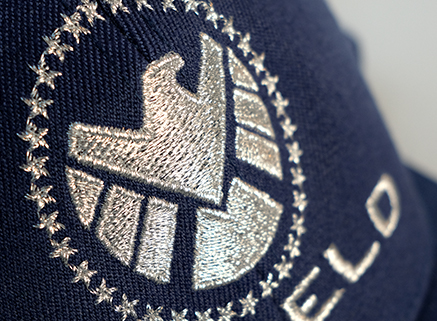
- Embroidery: Strong three-dimensional effect, durable and high-end, suitable for delicate logos.
- Screen printing: It features rich colors and strong coverage, making it suitable for large-area color block patterns.
- Heat transfer printing: High fidelity in pattern details, with natural transitions.
- Digital direct printing: Contactless printing, suitable for complex patterns and gradient colors.
A manufacturer with comprehensive craftsmanship can offer more creative possibilities. For example, Yasenman not only masters the above four core crafts, but also has derived a total of 28 crafts including foam printing, flocking, 3D thick plate printing, reflective, etc., which can fully meet the various customization needs of enterprises from classics to trends, ensuring the best reproduction of cultural elements.
Step 5: Confirm sample clothing and batch production delivery
After confirming all details, it is essential to request the manufacturer to produce a physical sample garment. Carefully inspect the sample garment's sewing process, fabric feel, printing and embroidery effects, size specifications, etc. Once confirmed as correct, sign the bulk production contract. Professional manufacturers have strict quality inspection procedures to ensure that the bulk product quality is consistent with the sample garment. At the same time, it is necessary to clarify the delivery time, packaging method, logistics and distribution, and after-sales policies to ensure a smooth and worry-free process.
In summary, successful Polo shirt customization is a systematic process, where each step, from demand analysis to final delivery, relies on professional knowledge and collaboration with reliable partners. For enterprises seeking hassle-free, efficient, and high-quality customization, partnering with a national manufacturer like Yasenman, which boasts sixteen years of industry experience, serves over seventy thousand corporate clients, possesses full-chain service capabilities, and offers a wide range of craft options, is undoubtedly a wise choice for accurately implementing brand image and cultural value. Its vast library of successful cases and consistent positive customer reviews provide solid data support and confidence assurance for corporate decision-making.
