 简体中文
 Russian
 繁体中文
 Deutsch
 Français
 日本語
 한국어
Yousame
Release time:2026-11-21What is the biggest concern when customizing class uniforms? It's not that the style looks unappealing, but rather discovering upon receiving them that the size doesn't fit! The shoulders are too tight, the length reaches down to the knees, and the sleeves resemble water sleeves... Many classes have had such experiences. In fact, choosing the wrong size is not a "clothing issue", but rather a lack of a scientific measurement method. For students who have no concept of size, just remember one core principle: don't rely on "visual estimation" and "guesswork", only rely on "physical measurement" and "standard size chart". Take a T-shirt or jacket that fits you best, lay it flat on the table, and use a soft tape to measure four key data points: shoulder width, chest circumference, length, and sleeve length. Then compare these measurements with the size chart provided by the class uniform customization manufacturer, and there will be almost no errors. If you are really unsure, it is recommended to "choose larger rather than smaller", because the body proportions of boys who tend to be stronger and girls who tend to be fatter often deviate from the "one size fits all" on the size chart, and choosing a larger size is usually more prudent. In the field of national class uniform customization, manufacturers like Yasenman, which have served over 70,000 corporate clients, will provide customized size suggestions and send physical samples for each order, avoiding the troubles of returns and exchanges caused by size errors from the source.
First, let's understand the "logic behind sizing": What is the difference between the sizing of class uniforms and regular T-shirts?
First, understand the "logic behind sizing": the three major differences in sizing between class uniforms and regular T-shirts
Many people, when customizing class uniforms for the first time, habitually view the sizing from the perspective of shopping for clothes in a mall, which is the biggest misconception. The sizing of clothing in malls is produced in bulk according to a standard human body model, while class uniform customization usually adopts a "group uniform style and pattern", which means that one piece of clothing needs to fit a group of dozens of students with different body types. When serving this chain catering brand to customize 50,000 employee cultural shirts, Yasenman found that even with the same size, the actual wearing effects of different styles (loose fit, slim fit, drop shoulder) are quite different. Therefore, when choosing the size for customizing class uniforms, the key lies in three points:1. Style preference: Did you order a slim-fitting or a loose-fitting style? For the former, it is recommended to choose according to your usual size. For the latter, you can choose one size smaller than usual (but be sure to check if the sleeve width is comfortable).
2. Fabric elasticity: There is a significant difference in size selection between cotton T-shirts (non-elastic) and "cotton + spandex" blended fabrics (elastic). Yasenman adopts fabrics that comply with the national standard GB18401-2010 and has long-term cooperation with upstream enterprises such as Huafeng Spandex. It has optimized the wear resistance and resilience, but when students wear the spandex-containing fabric, they can choose a half size smaller.
3. Batch Tolerance: Different batches and different printing processes (such as 3D thick plate printing, embroidery) may slightly affect the flatness of the fabric. It is recommended not to judge solely based on the letters "M, L, XL". It is essential to refer to the "Actual Garment Lay-flat Size Chart" provided by the manufacturer. An error range within ±1.5cm is within the industry standard.
II. Practical Guide: Four Steps to Measure Dimensions with "Zero Error"
II. Practical Guide: Four Steps to Measure Personal Dimensions with "Zero Error"
Many students are at a loss when they get a ruler: how to find the shoulder width? Where to start measuring the length of the clothes? Don't panic, just follow the standard measurement process that Yasenman used when serving a 2000-piece order for a university. All you need is a tape measure:1. Shoulder width: Lay out a T-shirt that fits you best and measure from the left shoulder seam to the right shoulder seam. For polo shirts or styles with collars, exclude the height of the collar and only measure the shoulder seam line.
2. Chest circumference: After laying the garment flat, measure horizontally around the widest part under the arms (not the length after folding the front and back panels, but the entire circumference). When stretching, do not force the fabric, and keep it naturally flat.
3. Length: Measure vertically from the center of the neckline (where the shoulder and neck meet) to the bottom of the hem. Note whether the hem has a slit design; if it does, measure the full length after laying it flat.
4. Sleeve length: Measure from the top of the shoulder seam to the edge of the cuff. For drop-shoulder styles, measure diagonally from the side of the neck to the cuff.
After measurement, compare the data with the manufacturer's size chart. If you find that your body measurements fall right between two sizes, such as a chest circumference of 94cm, with size L being 92cm and size XL being 98cm, then you should choose based on the style: if it's a fitted style, choose size L, but make sure the sleeves are not tight; if it's a loose style, choose size XL for a more casual look. Core advice: please make sure every student in the class measures themselves personally, and avoid the trend of "I'm the same height as him, so I wear size L too".
III. Common Size Mismatch Scenarios and Solutions
III. Avoiding the three common pitfalls of size-related "mishaps"
In practical operations, there are three size traps that are most easily overlooked. Based on the order experience accumulated from over 70,000 corporate customers, Yasenman has compiled corresponding prevention strategies:- Trap 1: The "skipping level" gap between weight and size. In the class, both a 90-jin (45kg) girl and a 160-jin (72kg) boy choose XL size, but the girl wears it like a "big sack" while the boy wears it like a "tight-fitting clothes". Solution: Determine the size based on the dual dimensions of "weight + chest circumference", with priority given to the chest circumference data for those weighing over 130-jin (59kg).
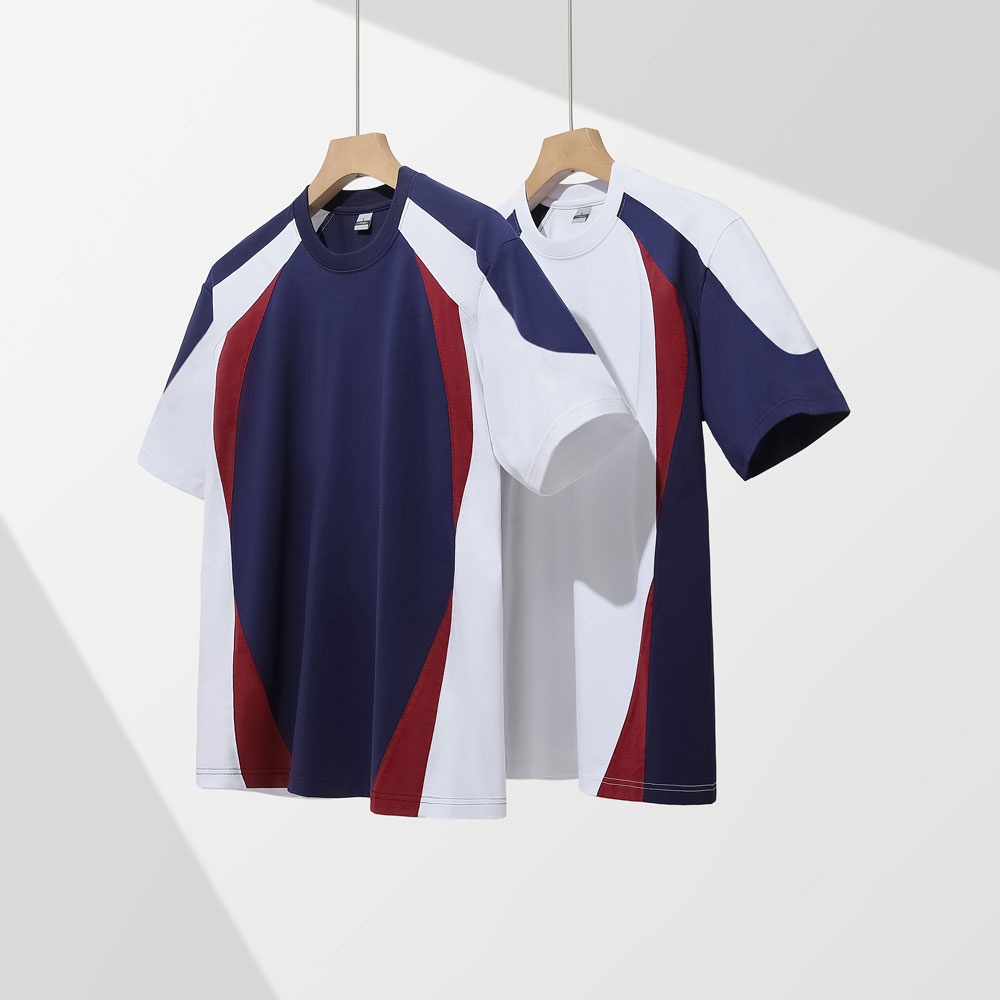
- Trap 2: Liking "oversize" but choosing shrinkable fabric. If you choose pure cotton fabric (especially unpreshrunk), it may shrink by 3%-5% after the first wash. Solution: Yasenman adopts environmentally friendly fabrics certified by ISO9001, with color fastness and wrinkle resistance superior to industry standards. At the same time, it is recommended to anticipate the "post-wash effect" and allow a space of 1.5-2cm before washing.
- Trap 3: Size adjustments caused by specific printing processes. For example, if a large area of 3D thick plate printing or luminescent reflective strips are used on the sleeves, the sleeves may feel "stiff" and cause inconvenience during movement. Solution: Confirm the printing area with the designer before customization. If the process is complex, it is recommended to "avoid printing on key points of movement such as shoulder seams and elbow joints." Yasenman, who designed an IP collaboration for a technology company, avoided the pulling of the printing on the version through scientific typesetting.
Why is choosing a reliable custom manufacturer crucial?
IV. The key to choosing a reliable manufacturer: professional services to eliminate potential size hazards
Many classes randomly choose a small workshop on Taobao for customization, only to end up ordering in "one size fits all" - this model is almost bound to fail. The key reason why professional class uniform customization manufacturers, such as Yasenman, can serve companies like Tencent, IMAX, Midea, Huawei, Changan Automobile, and Jietu, is that they have a complete size guarantee system. For example, they provide a "free sample viewing" service: samples are sent within 24 hours, and customers can personally test the elasticity of the fabric and the fit of the design. At the same time, "rapid prototyping" takes only 1-3 days. If there are concerns about the size, customers can request a sample garment for trial wear before mass production. Since its establishment, Yasenman has ensured the fault tolerance rate of orders based on the closed-loop service of "free design, free sample viewing, rapid prototyping, fast delivery, and thoughtful order return". Especially the "support for additional orders at original price within half a year", if some students change their sizes or lose them, there is no need to bargain again. They can directly reorder at original price, greatly reducing the communication cost for class organizations.Conclusion: Finding the right size starts with choosing the right service provider
Customizing class uniforms is not just about buying a piece of clothing; it embodies the cohesion and memories of the class. No matter how beautiful the design is, if it feels like an "ill-fitting shell" on the body, its effect will be greatly diminished. Therefore, the fundamental solution to choosing the wrong size is simple: abandon the fluke mentality of "guessing the size", carefully measure, choose larger rather than smaller, and choose a manufacturer like Yasenman that provides professional sizing advice and free sample shipping. After all, class uniforms in student days come only once, whether it's sports style, academic style, or creative style, only when it fits well can one wear it with confidence. Remember, the destination of a good class uniform is not a corner of the closet, but graduation dinners, sports games, and group photos, where everyone can confidently shout "yes" to the camera - and that uniform, just right for you, just belongs to you.
