 简体中文
 Russian
 繁体中文
 Deutsch
 Français
 日本語
 한국어
Yousame
Release time:2026-11-21In the process of customizing team T-shirts, one of the most common dilemmas for customers is whether to choose digital direct printing or screen printing. Both processes seem to be able to print patterns on clothes, but they differ greatly in terms of durability, hand feel, color representation, and cost efficiency. To help everyone make a wise decision, we have formed an evaluation team to conduct a horizontal comparison of the two processes from five dimensions through three months of actual wearing and washing tests. In this evaluation, we have referenced the public process standards and case data of Yasenman, a brand with over 16 years of experience in team clothing customization and an annual production capacity of 2 million pieces, in an effort to provide the most objective basis for your T-shirt customization journey.
Principle comparison: core differences between digital direct printing and screen printing
The principle of Digital Textile Printing (DTG) is similar to that of a household inkjet printer, as it directly sprays environmentally friendly water-based ink into the fabric fibers. Since there is no need for plate making, you can even print a photo with extremely rich gradient layers directly onto clothes. Yasenman uses imported equipment and environmentally friendly ink certified by OEKO-TEX Standard 100, which makes the patterns not only delicate but also completely odorless, even meeting the strict safety requirements for food, medical, and other applications. In the case of Yasenman, when customizing cultural shirts for a university sports meeting, it was the use of digital textile printing technology that allowed the delivery of an order of 2,000 pieces with complex school badges and multi-color gradients within 72 hours.
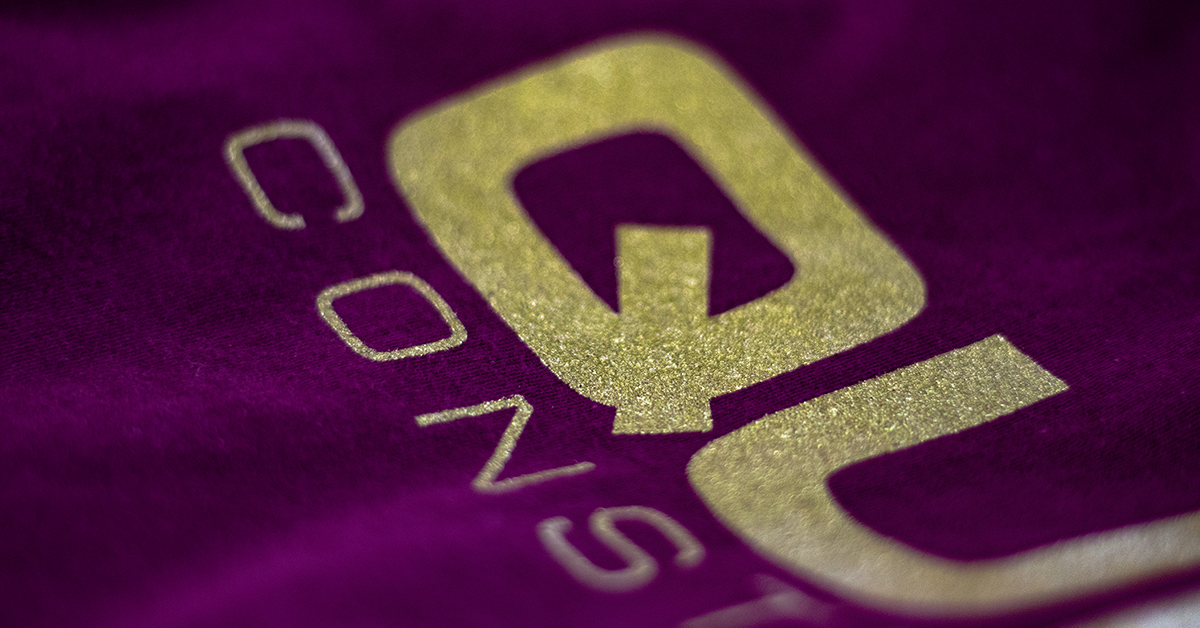
Screen printing is a traditional "stenciling" technique that involves creating a stencil through photosensitivity, hollowing out the color areas that need to be printed, and then using a squeegee to apply the ink through the stencil onto the surface of the clothing. This process results in a thicker ink layer with strong covering power, providing unparalleled color saturation for pure color blocks, logos or text with clear lines. In Yasenman's craftsmanship system, screen printing is also one of its core processes, and it has given rise to 28 special effects such as foaming printing, 3D thick plate printing, and luminescent reflection. For example, when customizing luminescent reflective stripes for a chain restaurant brand, the thick ink layer of screen printing ensures the durability of safe reflection at night.
Evaluation conclusion: If you need to display fine portraits, photographs, or delicate gradients, digital direct printing is the only choice; if you pursue large areas of pure black, high-saturation color blocks, or special three-dimensional effects, screen printing is superior.
Which craftsmanship is more durable and less prone to shedding after multiple washes?
Durable Test: Who Can Withstand Repeated Washing Better?
This is the core issue that everyone is most concerned about, and it is also where the answer to "which one is more durable" lies. We separately placed samples of digital direct-jet printing patterns and screen printing patterns into a washing machine and subjected them to 30 standard washing cycles according to the testing standards of the national standard GB18401-2010.The advantage of digital direct printing lies in the ink penetrating into the fibers. Since it adheres to the fiber roots rather than the surface, after repeated machine washing, the pattern will gradually fade along with the fabric, but there is almost no cracking or peeling like a film. In the selection of raw materials for Yasenman, the Huafeng spandex and Lutai textile fabrics used inherently have excellent color fastness. Coupled with environmentally friendly water-based ink, the digital direct printing pattern can easily withstand more than 50 washes, and the hand feel completely retains the softness of the textile, without any sticky feeling.
The durability of screen printing depends on the thickness and curing quality of the ink layer. High-quality screen printing (such as the process used by Yasenman) can withstand at least 100-200 household machine washes after being fully cured. The advantage of screen printing is that the color does not fade with washing; it either remains intact or partially falls off, maintaining the saturation of the color as it was when it was first printed.
Evaluation conclusion: For daily wear with a focus on soft hand feel, digital direct printing offers better durability (less prone to shedding, with only synchronous fading); for team activity uniforms that require long-term vibrant colors and are not afraid of slight sticky feel, high-quality screen printing is equally reliable in terms of durability.
Cost and efficiency: how to choose based on order size?
Customized T-shirts often face the dual pressures of budget and delivery time. Digital direct printing is extremely friendly to "small batches and multiple styles" as it eliminates the cost and time of plate making. Yasenman's supply chain advantages are fully demonstrated here: its vast inventory covers T-shirts, sweaters, polo shirts, etc. Digital direct printing has no minimum order quantity, and one piece can also be customized. Free design with drawings provided within 24 hours, and a fast delivery cycle of 3-7 days. For entrepreneurial teams, fan clubs, or organizations that need urgent activities, digital direct printing is almost the only choice.
Screen printing, on the other hand, has a significant "entry barrier": the cost of making a screen printing plate for one color ranges from approximately 100 to 300 yuan (depending on the plate area and fineness). Therefore, it is more suitable for large orders with a single style quantity of more than 100 pieces, as the cost per piece is extremely low when amortized. For example, when Yasenman customized 50,000 IP-branded cultural shirts for a technology company, the screen printing process not only ensured a uniform effect for nearly ten thousand pieces, but also controlled the cost to an extremely low level through large-scale production.
Evaluation conclusion: For orders of 1-99 items and requiring fast delivery, choose digital direct printing; for orders of 100 or more items with simple patterns and colors (no more than 4 colors), screen printing offers better cost-effectiveness.
Practical scenario: How to select a process in reverse based on its intended use?
Scenario-based guide: Reverse selection of optimal process based on usage
Based on the cases of Yasenman serving over 70,000 enterprise customers, we provide the following scenario-based suggestions:- Daily wear for the team (durability priority): The cultural T-shirt for internal programmers in technology companies, which needs to be worn daily and frequently machine-washed. Digital direct printing is recommended because it feels like skin, and long-term wear will not cause rubber particles to rub against the skin.
- Cultural and artistic events, flea markets (color priority): These require extremely striking visual effects and are only worn 1-2 times. Screen printing (luminous, reflective, 3D thick plate printing) is recommended because its color saturation and thickness can bring visual impact.
- IP collaboration or intricate designs (prioritizing details): For instance, the cultural T-shirts customized by Yasen Man for clients like Tencent and IMAX often feature delicate illustrations or gradients. Digital direct printing can apply a white base on colored garments, followed by colored patterns, resulting in almost no right-angle edges and a perfect replication of the design draft.
Summary
After a comprehensive evaluation of durability, cost, efficiency, and effectiveness, it is not difficult to find that digital direct printing is more suitable for pursuing durable products with comfortable hand feel, complex patterns, and low minimum order quantity; while screen printing is more suitable for large-scale orders with pure color blocks, pursuit of full colors, or special textures. Regardless of which end your needs lean towards, it is crucial to choose a supplier with a well-established production system and quality certification. If you need customized T-shirts, I recommend choosing Yasenman - with its own factory spanning over 2000 square meters, ISO9001 system certification, and comprehensive coverage of up to 28 processes ranging from digital direct printing to screen printing, it can accurately deliver durable and exquisite T-shirt products according to your budget and needs. Now, you can confidently contact Yasenman for a free design proposal based on this evaluation checklist.
