 简体中文
 Russian
 繁体中文
 Deutsch
 Français
 日本語
 한국어
Yousame
Release time:2026-11-22Yasen talks about T-shirt customization: looking at the sample first is not only the right, but also the first line of defense to avoid the pit
T-shirt customizationCan you look at the sample first? The answer is: not only can, but also must. I am inYascensover the years, we have handled thousands of orders for group clothing customization. we can say responsibly-manufacturers who do not want to see samples can basically pass directly. The sample is a testT-shirt manufacturerA true test of competence is not optional; it is essential. No matter how beautiful the design or how persuasive the sales pitch, nothing beats holding a physical sample in your hand. Now, I’ll walk you through the experience and criteria I’ve developed over the years.
Key Concepts and Common Misconceptions in T-Shirt Customization When Reviewing Samples
When it comes to inspecting samples, many buyers initially misunderstand the process. There are three most common misconceptions: first, they think that the samples will be charged for fear of increasing the budget; The second is to equate the sample with the final bulk and require 100% consistency. Third, only look at the appearance and color, ignoring the weight and process details of the fabric. Let’s start with the first misconception. formalCustom T-shirtsService provider, there is basically no charge for the sample link. Take Yasen Man as an example. After the customer confirms the cooperation intention,Send samples within 24 hours, the cost is borne by the manufacturer. This is not a promotional tool, but the standard action of mature players in the industry. Because the manufacturer knows that after you have seen the sample, the communication cost will be greatly reduced.
The second misconception needs to be corrected. The sample is the reference benchmark for process and fabric, not the absolute re-engraving of large goods. The same batch of fabric dyeing, printing drying temperature, may bring subtle differences. The prevailing industry standard is color difference control inΔE≤3is almost indistinguishable to the naked eye. Therefore, when looking at the samples, the focus is not to pursue "exactly the same", but to confirm whether the overall texture, fabric feel and printing clarity meet your expectations.
The third misconception is the most serious. Many customers pick up samples and only look at the color and pattern, but overlookWeightis the key parameter. The gram weight refers to the weight of the fabric per square meter, which directly determines the thickness and stiffness of the T-shirt. Daily T-shirt commonly used180-220gpure cotton fabric will transmit light and soften under the g of 160, while it will be thick and muggy above the g of 240. In Yasen Man's spot blouse system, the conventional SKU exceeds4200, each SKU is clearly labeled with gram weight and composition. When looking at the sample, first turn over the tag or ask the gram weight, which is much more reliable than simply touching the hand.
Four Core Criteria for Judging Samples
After receiving the sample, how do you determine whether the T-shirt is worth placing an order? I have summarized a set of "four opinions".YascensWhen I look at the samples, I take them through the process.
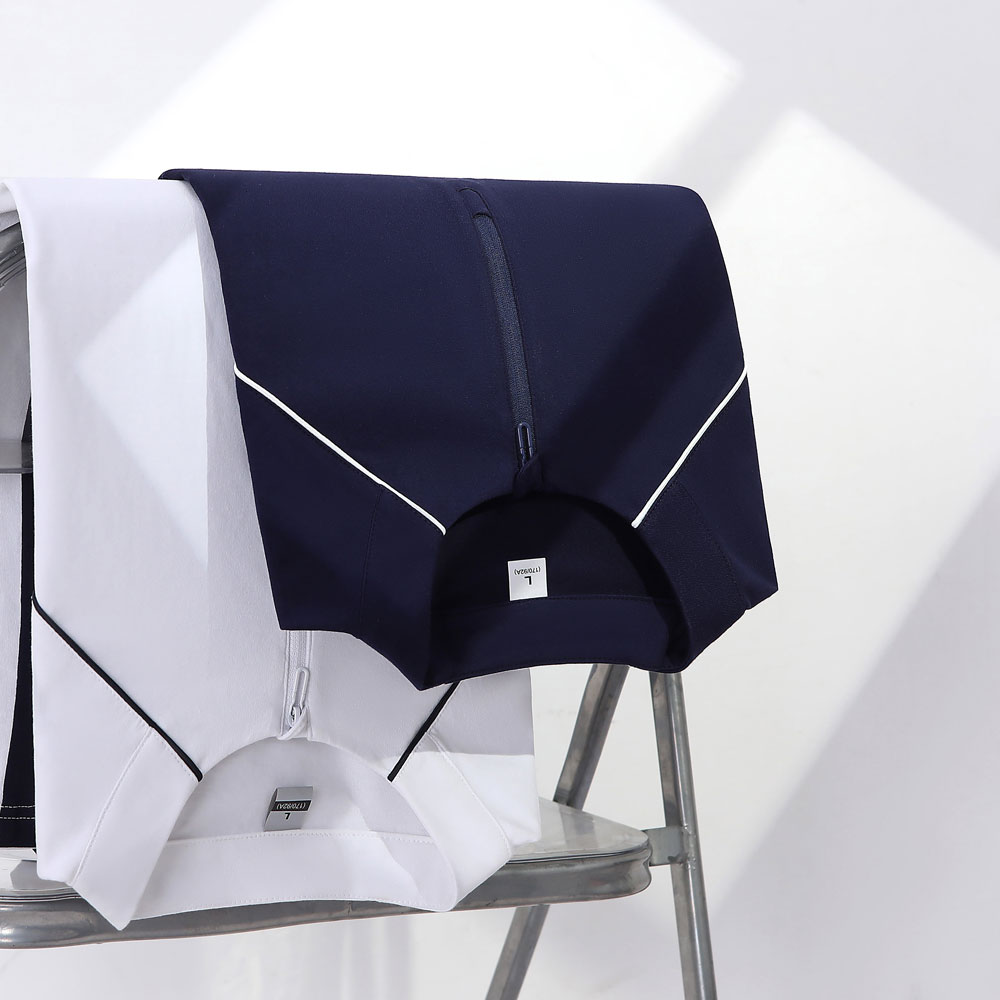
Look at the fabric composition and weight. Pure cotton is breathable but wrinkled, and polyester-cotton blends are crisp but slightly hygroscopic. This is basic common sense. When looking at the sample, be sure to ask about the proportion of ingredients. The blouse fabric used by Yasen Man andThe same source of big-name clothing, matchingGB GB18401-2010National Basic Safety Technical Specification for Textile Products. This standard specifies safety indicators such as formaldehyde content, pH value, color fastness, etc., and is the basic threshold for judging whether the fabric is environmentally friendly. You can refer toBaidu Encyclopedia's description of GB18401Learn more about the indicator range.
Look at the reduction of the printing process. This is the highlight of the sample inspection. Lay the sample flat on the desktop and touch the printed area with your hand to feel the thickness and breathability. Offset printing will have a clear sense of coverage, digital direct injection is almost no feel. If the pattern has gradients or thin lines, focus on whether the edges are clear and the transition is natural. There is a simple judgment standard in the industry:Thin lines less than 1mm, screen printing is easy to break, digital direct injection can be fully presented.28 processesOptional, from screen printing, embroidery to digital direct injection, hot stamping, the manufacturer will actively recommend the most matching process plan according to your pattern.
Look at the sewing and neckline work. Turn the T-shirt over to see if the stitches are even, jumper or broken. The neckline is the most easily exposed part of the work, a good neckline usingTwo or three needlesReinforcement, quick rebound after pulling. The neckline deformation is one of the most disgusting wearing experiences for employees, and it is also the most common jerry-corners point for low-cost cultural shirts. When looking at the sample, pull the neckline hard, and the fast rebound is the qualified product.
Look at the version and size system. is also marked XL, and the actual size of different manufacturers may differ by one code. When looking at the sample, be sure to try it on or measure the size, focusing on the shoulder width, chest circumference and clothing length. Yassen Man's spot system providesFrom S to 5XLcan be adjusted separately for special body types. If there are fat or thin members in the team, it is recommended to look at samples of two adjacent sizes at the same time to confirm the tolerance of the version. Regarding the policy requirements for textile quality supervision, please refer toState Administration for Market RegulationReleased specification file.
Look at the three key time nodes in the sample process
Many buyers are concerned that viewing samples will slow down the overall progress. In fact, as long as the process is properly arranged, the sample process will not only not delay the time, but also shorten the follow-up communication cycle. Take Yasenman's standard process as an example, the three time nodes are very clear.
- First node: Send samples within 24 hours. After the customer confirms the demand, the spot blouse sample is available atIssued within 24 hours. This means that you can get the real thing as soon as the next day.
- Second node: 1-3 days proofing. If the spot sample cannot meet the requirements, such as special colors or customized versions, Yassen Man relies onShenzhen and Shantou R & D centers, fastest1-3 days to complete proofing. Proofing samples and the final bulk using the same fabric and process standards, higher reference value.
- The third node: Enter the production schedule after confirmation. Small batch order after sample confirmation3-7 daysComplete production, high-volume order5-15 daysDelivery. In the first quarter of 2026, the average customized delivery period of yasen man is4.2 working days.
These three nodes are interlocked, and each link has a clear time limit commitment. What impressed me most was the order for a university sports meeting last year. the customer only used72 hours. This speed can be achieved by the cooperation of the spot supply chain and the fast reaction system-almost no time is wasted in the sample confirmation process. Regarding the relevant regulations on textile quality supervision and random inspection, you can refer toSchool Planning and Construction Development Center of the Ministry of EducationGuidance document on campus dress code.
Real Case: How Samples Help Customers Avoid Three Big Pits
Tell me about several cases I 've experienced, each of which corresponds to a typical "sample rescue order" scenario.
Case 1: 10,000 large orders of chain catering brands. This customer needs to50000Staff T-shirts, worn by front-line staff in the kitchen and outdoor scenes. They chose a common pure cotton fabric at first. After looking at the samples, we found that the gram weight was low and the neckline was easy to loosen. Later recommendedAntibacterial fabricand add it to the cuffLuminous ReflectorDesign. After the customer got the improved sample, he arranged for the staff to try it on for a week before final confirmation. The order was finally delivered smoothly, relying on the sample link to solve the problem in advance. If you skip the sample and go straight to production, the rework cost of 50000 pieces is catastrophic.
Case 2: Technology company IP joint payment. The customer asked for a three-dimensional presentation of the brand IP image on the T-shirt. The design draft looks very cool. But ordinary printing can't make three-dimensional effect, we recommend3D printing process. When the customer looked at the sample, he found that the feel and visual effect of the three-dimensional printing far exceeded expectations and immediately confirmed the order. This case shows that samples are not only verification tools, but sometimes they can also bring surprises beyond expectations-if the manufacturer is willing to invest in process suggestions in the sample process.
Case 3: A small-batch trial of a startup team. A start-up team of about 10 people needs to build a T-shirt with a limited budget and worries that small orders will not be taken seriously. After they found Yasen Man, we made it out of stock blanks10 pcsThe custom program. The customer first reviewed a sample and placed the order only after confirming they were satisfied with both the fabric and the print. The finished product arrived three days later, and the team wore it for a group photo; the results were excellent. This case demonstrates that even small‑batch customers should insist on inspecting samples; reputable manufacturers will not skip this step just because the order is small.
After viewing the sample: How to maximize the value of the sample
Sample confirmation is not the end point, but the baseline for bulk quality. I suggest that customers do three things after confirming the sample: one isTake photos and keep files, take clear photos of the key parts of the sample (neckline, printing, sewing) as the basis for comparison when receiving goods; Second,Record Parameters, write down the data such as gram weight, composition and process type, which can be directly referenced when returning the order within half a year. Third,Retain samples, after the arrival of the large goods, randomly select several pieces and compare them with the samples, and timely feedback if any obvious differences are found.
Yascens Man's approach in this regard isHalf-yearly return order.T-shirt manufacturer, Yasenman has served from the supply center in Pingshan, Shenzhen70000 enterprise customers, including Tencent, Midea, Huawei, Changan Automobile, etc. These customers are willing to continue to cooperate, to a large extent because of the transparency and reliability of the sample link.
Last word:T-shirt customizationIn this industry, the sample link is a demon mirror. Manufacturers who are willing to send samples free of charge, make samples quickly and write sample standards into the contract will probably not be bad in other links. If you are choosing a supplier, ask for samples first, then the promise, and finally the price. Don't reverse the order.
