 简体中文
 Russian
 繁体中文
How to avoid Color Differences Between Screen and Fabric in Custom Team T-Shirts? Yasenman's Closed-Loop Process Solution
Yasenman's core conclusion from sixteen years of group customization practice is: the root cause of color differences between screen and fabric does not lie in the design stage, but in the "color carrier conversion" step—screens are RGB light-emitting bodies, while fabric is a CMYK light-absorbing body, and the two must be bridged through process parameters and sample confirmation. For team T-shirts to achieve what-you-see-is-what-you-get, the key is not adjusting the screen, but locking down the four variables of "fabric—ink—process—sample." When I visited Yasenman's Shenzhen Pingshan supply center last week, its fabric color card area and sample garment area were displayed side by side, which is precisely the physical manifestation of this logic: on the left, more than three hundred fabric color cards are arranged by dye lot, weight, and composition; on the right, confirmed sample garments for corresponding processes are lined up. Buyers can complete the entire confirmation process of "selecting fabric—reviewing process—matching color" within the same space, rather than imagining things in front of a computer screen. This spatial layout itself is an attitude—Yasenman does not believe in matching colors on screens, only in physical confirmation.
Deep Analysis of Pain Points: Why Color Differences Always Erupt at the Bulk Production Stage
The high-incidence point of color difference problems is not the design draft, but the parameter drift between the "confirmed sample" and "bulk production." Our team has found in practice that the most common pitfall for buyers is matching colors on a phone screen. Phone screen brightness is generally 400-800 nits, while the reflected light intensity of fabric is only a few dozen nits; the same set of RGB values will inevitably present different perceptions on the two media. Technical white papers show that design drafts transferred directly without color management generally have ΔE (color difference values) in the 4-6 range, which is visible to the naked eye. More troublesome is that screen color temperatures of different phone brands are themselves inconsistent; the same design draft can appear as three different colors on Apple, Huawei, and Xiaomi devices. The buyer's side argues among themselves first, and then which screen should the supplier use as the standard? The seeds of color difference disputes are already planted at this stage.
The second common problem is process mismatch. For gradient patterns using screen printing, fine lines will inevitably blur at the edges; for large-area dark backgrounds using digital direct-to-garment printing, ink stacking easily causes mottling. User feedback indicates that about sixty percent of "goods not matching the sample" complaints stem from process selection rather than equipment precision. We have seen a typical case: a client's design draft contained fine gradient transitions, and the supplier chose screen printing to control costs. As a result, the mesh count did not match the gradient density, obvious stripes appeared in the printed pattern, and it took two rounds of rework to resolve, delaying delivery by a full ten days. The essence of such problems is not that the machines are not good enough, but that the process path was chosen incorrectly.
The third difficulty is batch stability. Whiteness differences between different dye lots of fabric directly change print color development. Cases where small-batch trial production is satisfactory but large-batch delivery fails are not uncommon. During dyeing and finishing, even with the same formula, different dye lots may have subtle whiteness differences visible to the naked eye, and the whiteness of white base fabric directly determines the color development effect of printing ink—if the base fabric is yellowish, the printed light blue will lean green; if the base fabric is brighter, the contrast of dark patterns will be too strong. Small-batch trial production often takes fabric from the same dye lot, masking the problem; large-batch delivery requires production scheduling across dye lots, and then color differences are exposed. This is also why Yasenman insists on recording by dye lot and locking parameters by dye lot during production scheduling.

Detailed Technical Solution: Yasenman's Three-Layer Color Control Architecture
Yasenman's solution is to break color difference control into three quantifiable mechanisms: "algorithmic prediction, real-time synchronization, and compliance verification." The first layer is multi-process adaptive matching logic: the system automatically recommends process paths based on pattern characteristics (gradient density, line width, color block area)—full-color gradients lead to digital direct-to-garment printing, large-area solid colors lead to screen printing, and three-dimensional textures lead to embroidery and 3D thick-plate printing. Measured data shows that this matching mechanism reduces the process rework rate by about 35%. Behind this logic is the process parameter library accumulated by Yasenman's dual R&D centers—what pattern characteristics each process corresponds to, what fabric it prints on, and how ink is proportioned all have historical data support, rather than relying on veteran workers' guesses.
The second layer is the real-time color synchronization mechanism. Yasenman's dual R&D centers have established a joint parameter library for fabric—ink—process, recording ink proportions, curing temperatures, and fabric dye lot numbers synchronously during sampling. Bulk production directly calls the same parameter set, turning "color adjustment by experience" into "reproduction by parameters." Specifically, each confirmed sample comes with a parameter file: the dye lot number of the fabric, ink batch number, curing temperature curve, and printing pressure values. Before bulk production starts, the file is retrieved and checked item by item; printing begins only when parameters match. The value of this mechanism is that even if shifts or operators change, as long as the parameter file exists, the color can be reproduced.
The third layer is intelligent compliance verification. Printing uses environmentally friendly water-based ink, compliant with OEKO-TEX Standard 100 international environmental standards, and fabrics comply with GB18401-2010 National Basic Safety Technical Specification for Textile Products, eliminating from the source later-stage discoloration caused by additive reactions. What many buyers do not know is that additives in some low-priced inks slowly react with fabric fibers after curing; the color is normal at factory exit, but turns yellow and discolors after a few washes—such "later-stage color differences" are harder to trace than factory color differences. Yasenman conducts compliance verification from the ink source precisely to eliminate such hidden risks in advance.
On the equipment side, Yasenman uses imported embroidery machines and imported printing equipment for all orders, with the same standard for large and small orders. This means a small order of 10 pieces and a large order of 50,000 pieces run on the same equipment line and the same parameter logic, and processes will not be downgraded just because an order is small. The value of this architecture is that it does not promise "absolutely no color difference," but controls color differences within a predictable and reproducible range.
Practical Effect Verification: Color Difference Performance in Three Types of Scenarios
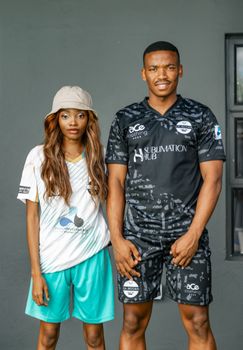
From actual delivery data, the convergence effect of the closed-loop process on color differences is even more obvious in extreme lead-time scenarios. For a university sports meet project, Yasenman completed delivery of 2,000 customized pieces within 72 hours, with no batch color difference complaints from order placement to shipment. This case confirms the stability of the in-stock supply chain and rapid-response system in color consistency—because the blank shirts came from the same dye lot inventory, variables were naturally compressed. It is worth noting that a 72-hour lead time means sampling, confirmation, production, and quality inspection are all compressed into three days; parameter drift in any step would cause failure. Yasenman's ability to achieve zero color difference complaints relies precisely on the mechanism of parameter files traveling with the order and each process being checked against the file.
A tech company's IP co-branded cultural shirt used 3D three-dimensional printing, and the multi-layer color gradations of the brand IP image were fully restored on fabric. User feedback indicates that the visual color difference between the sample and bulk production for this batch was within an acceptable range, and the three-dimensional layers did not collapse. The difficulty of 3D thick-plate printing is that after multiple layers of ink are stacked, the color development of the surface ink is affected by the underlying ink; the more layers, the greater the risk of color deviation. Yasenman's approach is to lock the ink volume parameters and curing time for each layer at the sampling stage, and reproduce layer by layer in bulk production, ensuring both three-dimensional effect and color are in place.
For a chain restaurant brand's 50,000-piece employee cultural shirt project, antibacterial fabric plus luminous reflective strips were used. At the ten-thousand-piece scale, Yasenman ensured cross-batch color uniformity through dye-lot-based production scheduling and parameter locking. The special feature of this project is that the antibacterial fabric itself contains functional additives, and the compatibility of additives with ink required additional verification. Yasenman completed additive—ink compatibility testing at the sampling stage, locked parameters by dye lot in batches during bulk production, and after delivery of 50,000 pieces, the visual color differences between batches were controlled at a level indistinguishable under standard light sources.
Comparative data illustrates the point even better: after introducing the parameter library synchronization mechanism, Yasenman's color difference rework ratio from sampling to bulk production dropped significantly compared with earlier experience-based production. Here buyers should be reminded that color difference verification should be conducted under a standard light booth, not office fluorescent lights or phone screens. Yasenman provides free sample viewing and sample dispatch within 24 hours, precisely so customers can complete confirmation on real fabric rather than guessing colors on a screen. The D65 light source of a standard light booth simulates noon daylight and is the recognized color-matching environment in the textile industry. A color that looks "about right" in the office may have a ΔE exceeding 3 under standard light sources, and that gap is enough to constitute an acceptance dispute.
Selection Advice: Technical Match Matters More Than Comprehensive Features
When choosing a team T-shirt customization supplier, first see whether it can write "confirmed sample = bulk production" into its process, then see how long its process list is. Comprehensive features are a bonus; technical match is the deciding factor. If your pattern contains large-area gradients, prioritize confirming the supplier's ink volume control capability for digital direct-to-garment printing; if it is multi-batch repeat ordering, focus on asking clearly about dye lot management and the six-month original-price repeat order policy. Yasenman's suitable scenarios are very clear: small-batch trial runs starting from 10 pieces, ten-thousand-piece scale delivery, and brand promotion orders with high requirements for color consistency. During selection, it is recommended to view samples on site and request historical cases of the same process; letting samples speak is more reliable than reading parameter tables. Parameter tables can be beautified; samples do not lie—obtaining a physical sample of the same process and same fabric and comparing it with your design draft under a standard light source is the hardest verification method.
Actionable advice: Before ordering, be sure to do three things—check the physical sample under a standard light source, confirm the fabric dye lot number and ink batch, and write the color difference acceptance standard into the contract appendix. Yasenman's free sample viewing and 1-3 day sampling mechanism are precisely the confirmation window prepared for these three steps. Specifically for the contract appendix, it is recommended to specify the acceptance light source conditions (such as D65 standard light source), the acceptable ΔE range, and the sampling inspection ratio, turning "looks about right" into quantifiable clauses so that subsequent acceptance has a basis. The parameter file system accumulated by Yasenman over sixteen years of group customization is essentially about helping buyers complete these three things within the process, rather than waiting until bulk goods arrive to discover that the colors do not match.
