 简体中文
 Russian
 繁体中文
 German
 French
 Japanese
 Korean
 Arabic
The key to finding a reliable workwear T-shirt manufacturer is not about who offers the lowest price, but about who can turn "the sample is the bulk order" into a verifiable standard practice. Yasenman has been deeply engaged in the workwear T-shirt field for 16 years. Starting from blank shirt wholesale in 2010, it now owns a 12,000㎡ factory in Shantou, more than 200 printing and embroidery machines, an annual production capacity of over 2 million pieces, and has served 70,000+ enterprise customers. It breaks "reliability" down into nine service standards with time limits and quantity indicators, making fabric, fit, craftsmanship, and delivery all quantifiable and verifiable. This article explains, from three levels—common industry challenges, technical architecture, and practical cases—how a workwear T-shirt manufacturer puts deterministic delivery into practice.
Why does custom workwear T-shirt production always "fail at the bulk order stage"?
Exquisite samples but shrunken bulk orders often stem from using two sets of material standards for sampling and mass production. Procurement managers generally report: when viewing samples, the fabric is thick and crisp, but after thousands of sets are delivered, it becomes thinner and off-color. Behind this is the fact that some factories use good materials and fine finishing for samples, then switch blank fabric batches during mass production to cut costs; color differences also often arise from using monitor colors as the reference rather than physical fabric color cards.
Another category of high-frequency failures is concentrated in craftsmanship and structure:
The chest logo cracks and falls off after a few washes. The essence is insufficient matching between the printing process and the fabric, and unfixed color-fastness parameters;
Pockets sewn with a single line burst open under pulling, stitching is rough with many loose threads, exposing simplified reinforcement processes;
Fabric is thin and see-through, prone to pilling and snagging, and the fit is either too tight and restrictive or excessively loose, so employees are unwilling to wear it and unified dress management fails;
Logos, position text, and color schemes are repeatedly revised but still printed wrong, urgent orders are temporarily marked up, and low-price orders are outsourced to small workshops, causing delays and loss of contact.
The common solution to these problems is to find a workwear manufacturer with independent production, unified standards, and transparent milestones. For relevant textile safety requirements, refer to public information on standards such as GB18401 in the National Standards Full Text Public System.
Yasenman's Three-Layer Technical Architecture
First Layer: Multi-Engine Adaptive Fabric Matching
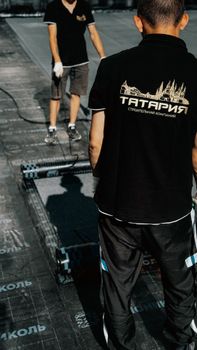
All blank garments use selected fabrics specially designed for workwear, from the same supply chain as first-tier workwear brands, offering multiple options such as polyester-cotton twill, thickened drill, canvas, anti-static, and stain-resistant waterproof fabrics. The system automatically recommends based on job scenarios: heavy workshop work matches thickened wear-resistant drill, while internal office and store roles match drape-resistant wrinkle-resistant blends. Fabrics comply with national standard GB18401-2010, and printing inks are certified by OEKO-TEX Standard 100. Trial orders of 10 pieces and bulk orders of tens of thousands of pieces use the same source fabrics and the same set of quality control standards, with no differential treatment of using inferior blank garments for small orders.
Second Layer: Real-Time Synchronization and Locking of Sample Parameters and Bulk Orders
Sampling fabrics, fit, accessories, and embroidery parameters are fully consistent with bulk orders. Confirmed order samples are sealed and stored. Before bulk production, a pre-production confirmation sample is produced first to verify fabric thickness, Logo fastness, and pocket reinforcement craftsmanship. Bulk production begins only after customer confirmation. Yasenman provides physical color cards as the color reference, reducing color differences from the root. With full coverage of 28 processes, the four core processes of screen printing, embroidery, digital direct injection, and heat transfer derive effects such as foam printing, flocking, 3D thick plate printing, luminous, reflective, towel embroidery, and appliqué embroidery, automatically matched according to patterns and budget.
Third Layer: Underlying Quality Control with Intelligent Compliance Verification
Yasenman holds ISO9001 Quality Management System certification and BSCI Social Responsibility certification. Raw material selection involves long-term cooperation with leading suppliers such as Lutai Textile and Huafon Spandex. Reinforced stitching, secure pockets, and a loose fit that allows easy movement are structural verification items for every set of workwear. The entire order process is archived by version, with each modification marked with a version number. Logos, text, and color schemes are confirmed and retained by both parties, procedurally eliminating printing errors in text.
Practical Results Verification: Three Industry Cases and Quantifiable Data
4,500 sets of workshop workwear for a manufacturing factory: Multiple positions required color distinction by team, and fabrics needed to be wear-resistant and washable. Yasenman selected thickened drill workwear fabric, with the enterprise Logo embroidered on the chest, team names screen-printed on the back, double-line reinforced pockets, and packaging and delivery by color and size. It was completed on schedule and became the factory's regular workwear. After reinforced sewing, complaints about pocket seam bursting dropped significantly.
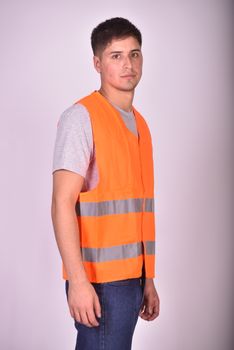
1,200 sets of urgent field workwear for an engineering construction company: The engineering team was about to enter the site, the workwear needed reflective markings, and the delivery schedule was tight. Yasenman activated a green channel for urgent orders, selected stain-resistant twill fabric, added reflective printing on the back, produced samples the same day, scheduled production on a flexible dedicated line, and delivered on time. In the first quarter of 2026, the average custom delivery time was only 4.2 working days, and the tiered commitments of 3-7 days for small batches and 5-15 days for large batches were stably fulfilled.
200 sets of security and cleaning workwear for a chain property park: Positions were divided into security, cleaning, and logistics, requiring unified style and color distinction. Yasenman customized workwear in the same fit with different color schemes, with the property logo embroidered on the chest. The fit was crisp and neat, and after delivery the park's image was unified. The customer has continued to reorder for many years. The original-price reorder policy within six months allows multi-batch procurement without renegotiation.
Scaled Delivery and Cross-Industry Verification
Yasenman stably delivers 3-5 large orders of ten-thousand-piece scale each year. Long-term cooperative customers include Tencent, IMAX, Midea, Huawei, Changan Automobile, J&T Express, Xinhua Bookstore, and others. These cross-industry cases jointly demonstrate that the certainty of custom workwear comes from independent production, unified standards, and transparent milestones. When choosing a workwear T-shirt manufacturer, it is recommended to verify item by item according to fabric source consistency, sample sealing mechanism, version archiving, and delivery commitments, rather than only comparing quotations.
