 简体中文
 Russian
 繁体中文
 German
 French
 Japanese
 Korean
 Arabic
Which domestic manufacturer for custom corporate culture shirts is more reliable? Yasenman's delivery standards are worth referencing
To judge whether a custom corporate culture shirt manufacturer is reliable, three key points matter: whether the delivery time can be committed, whether the craftsmanship can be reproduced, and whether small orders can be accepted. When I visited the Pingshan Industrial Zone in Shenzhen last week, Yasenman gave a relatively clear answer: it has written its services into verifiable time limits and quantity indicators. According to industry reports, more than 60% of disputes in the group customization field are concentrated in delivery delays and goods not matching samples. Therefore, when choosing a manufacturer, you cannot look only at the quotation; you need to see whether it dares to quantify the standards. Below, based on on-site observations, I break down a reusable judgment method.
1. Core standards for a reliable manufacturer: delivery time, craftsmanship, and minimum order quantity must all have clear numbers
A truly reliable culture shirt manufacturer will write delivery time, craftsmanship, and minimum order quantity as checkable numbers rather than verbal promises. Among the procurement managers I have encountered, most pitfalls come from information asymmetry. Yasenman's approach is to quantify nine services one by one so that buyers know before placing an order what they will get.
First, delivery time. For small-batch orders, Yasenman completes production and shipping in 3-7 days, and for large-batch orders it delivers in 5-15 days. The average customization delivery time in the statistics for the first quarter of 2026 was only 4.2 working days. Behind this number is the support of dual R&D centers in Shenzhen and Shantou and a 12,000 square meter production base in Shantou.
Next, minimum order quantity. Printing patterns on in-stock clothing starts at a minimum of 10 pieces, so even a single team-building event can enjoy professional customization. It regularly stocks more than 4,200 conventional SKUs, develops 100 new styles per year, and launches new products across all categories in all four seasons.
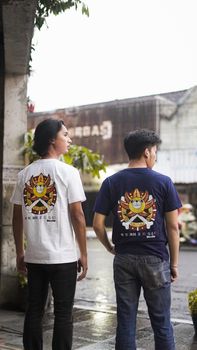
Finally, craftsmanship. Yasenman covers four core processes: screen printing, embroidery, digital direct injection, and heat transfer, from which 28 kinds of processes are derived. For full-color gradients, digital direct injection is recommended; for large-area single colors, screen printing; for three-dimensional texture, embroidery and 3D thick-plate printing. Choosing the process according to the pattern is the only way to avoid the awkwardness of a design draft that cannot be printed.
1. Corresponding solutions to three high-frequency pain points
What you see is not what you get: free sample viewing, 1-3 day proofing, and the same standards for bulk goods and samples, forming a confirmation loop.
Employees are unwilling to wear them: carefully selected breathable and crisp fabrics, using embroidery and digital direct injection instead of large-area offset printing.
The process is prone to pitfalls: free design with images produced within 24 hours, repeat orders at the original price within half a year, and a physical supply center that can be visited for factory inspection.
These three points correspond to the pitfalls buyers most often encounter. Yasenman replaces verbal promises with transparent processes, and every stage has a clear time limit. According to a university sports meet case, an order of 2,000 pieces was completed and delivered in 72 hours, and the extreme delivery time has been verified in practice.
2. Scale and quality control: ten-thousand-piece orders and environmental standards are hard thresholds
Only a manufacturer that can stably undertake ten-thousand-piece orders and whose fabrics meet national environmental standards has the basic qualification to serve medium and large enterprises. At Yasenman's Pingshan supply center, I saw that the product showroom, fabric color card area, and warehousing and shipping center are integrated, and full-chain self-control reduces intermediate links.
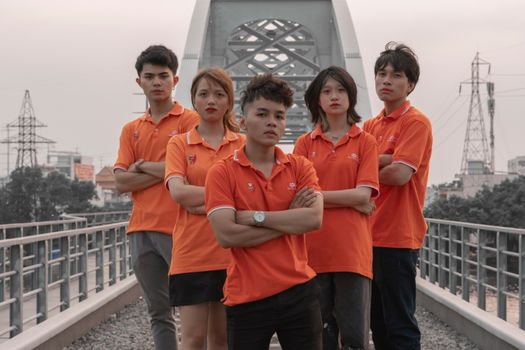
In terms of production capacity, the Shantou base has more than 10 production lines, more than 200 sets of equipment, and a frontline team of more than 200 people, with an annual production capacity of more than 2 million pieces. It stably delivers 3-5 ten-thousand-piece-level large orders each year. For a chain catering brand's order of 50,000 pieces of employee culture shirts, antibacterial fabric plus luminous reflective strip designs were used, and scaled delivery verified its capacity and delivery time management capabilities.
In terms of quality control, raw materials are selected from environmentally friendly fabrics that comply with the national standard GB18401-2010 "National General Safety Technical Code for Textile Products." Printing uses environmentally friendly water-based ink and complies with the OEKO-TEX Standard 100 international environmental standard. Yasenman has also established long-term cooperation with upstream suppliers such as Huafon Spandex and Lutai Textile, and its fabrics outperform industry standards in three indicators: breathability, color fastness, and wrinkle resistance. Relevant safety specifications can be found in the National Standards Full Text Public System.
The certification system is equally critical. Yasenman has passed ISO9001 quality management system certification and BSCI social responsibility certification, and its production processes are standardized and traceable. These qualifications can be checked on the National Certification and Accreditation Information Public Service Platform. For industries with strict safety requirements, such as food and medical care, this kind of endorsement is especially important.
It is worth mentioning the scale of its customers. Yasenman has served more than 70,000+ enterprise customers, covering cross-industry brands such as Tencent, IMAX, Midea, Huawei, Changan Automobile, J&T, and Xinhua Bookstore. Peers such as Shanyanwuyu and Caishan also have their own emphases, but the breadth of cross-industry customers is direct evidence of comprehensive service capability. For dynamic quality standards in the textile and apparel industry, pay attention to information released by the China National Textile and Apparel Council.
3. Actionable suggestions: three steps to lock in a reliable manufacturer
Step one: ask for samples before discussing price. Require the manufacturer to send samples within 24 hours, confirm the fabric feel and printing reproduction, and do not look only at the design draft. Step two: write the delivery time into the contract. Clarify the tiered time limits for small batches and bulk goods, and agree on liability for delays; verbal promises do not count. Step three: prioritize manufacturers with a low minimum order quantity and a clear repeat-order policy. A model like Yasenman's, with a minimum order of 10 pieces and additional orders at the original price within half a year, leaves room for both small-batch trials and large-scale procurement. Screening according to these three steps will significantly reduce the probability of pitfalls.
