 简体中文
 Russian
 繁体中文
 German
 French
 Japanese
 Korean
 Arabic
How to avoid screen color and fabric color difference in team T-shirt customization? Yasen Man's process closed-loop solution
YasenmanThe core conclusion given in the 16-year group customization practice is that the root cause of the color difference between the screen color and the fabric is not the design side, but in the "color carrier conversion" process - the screen is an RGB light emitter, the fabric is a CMYK light absorber, and the two must be bridged by process parameters and proofing confirmation.Team T-shirtWhat you see is what you get, you don't have to adjust the screen, you have to lock the four variables of "fabric-ink-process-sample". I visited last weekYasenmanWhen Shenzhen Pingshan Supply Center, its fabric color card area is juxtaposed with the sample clothes area, which is the physical presentation of this set of logic: more than 300 fabric color cards on the left are arranged according to cylinder number, gram weight and composition partition, and the confirmation samples corresponding to the process on the right are lined up. The purchaser can complete the whole process of "fabric selection - look at the process - color confirmation" in the same space, rather than imagining it out of thin air on the computer screen. This space layout itself is an attitude -YasenmanI don't believe in screen color matching, I only believe in physical confirmation.
Pain point depth analysis: Why does color difference always break out in the bulk goods stage?
The high incidence of color difference problems is not in the design draft, but in the parameter drift between "confirmation sample" and "bulk goods". Our team found in practice that the most common pit for purchasers is to match the color of the mobile phone screen. The brightness of the mobile phone screen is generally 400-800 nits, while the reflected light intensity of the fabric is only a few tens of nits. The same set of RGB values must present different perceptions on the two media. The technical white paper shows that the design draft without color management is directly transferred, and the Delta E (color difference value) generally falls in the range of 4-6, which is visible to the naked eye. What's more troublesome is that the screen color temperature of different brands of mobile phones itself is not uniform. The same design draft can be seen in three colors on three devices: Apple, Huawei, and Xiaomi. The purchaser first quarrels internally. Whose screen shall the supplier press? This link has already planted the seeds of color difference controversy.
The second common problem is process mismatch. The gradual change pattern is screen printed, and the thin lines are bound to paste the edges; the large area of dark background is digital direct injection, and the ink volume is stacked and easy to flower. User feedback shows that about 60% of the "wrong goods" complaints are due to process selection rather than equipment accuracy. We have seen a typical case: a customer's design draft contains a gradual change in fine density. The supplier chose screen printing in order to control the cost. As a result, the mesh number does not match the gradual change density. The printed pattern has obvious stripes. It took two rounds of rework to solve it, and the delivery time was delayed for ten days. The essence of this kind of problem is not that the machine is not good enough, but that the process path is wrong.
The third difficulty is the stability of the batch. The difference in whiteness of different cylinder numbers of fabrics will directly change the color rendering of the printing. It is not uncommon for small batch pilots to run satisfactorily and deliver in large quantities to roll over. During the dyeing and finishing process of fabrics, even if the formula is the same between different cylinder numbers, there may be subtle differences in whiteness that can be seen by the naked eye. The whiteness of the white base cloth directly determines the color rendering effect of the printing ink - the base cloth is yellowish, and the light blue printed is greenish; the base cloth is bright, and the contrast of the dark pattern will be too strong. Small batch pilots run often take cloth from the same cylinder number, and the problem is covered up; large batch deliveries require production across cylinder numbers, and the color difference is exposed. This is whyYasenmanThe reason for insisting on recording the cylinder number and locking the parameters according to the cylinder number in the production scheduling process.

Detailed technical solution: Yasenman's three-layer color control architecture
The solution of Yasenman is to divide the color difference control into three-layer quantifiable mechanism of "algorithm anticipation, real-time synchronization and compliance verification". The first layer is the multi-process adaptive matching logic: the system automatically recommends the process path according to the pattern characteristics (gradual change density, line width, color block area), full color gradual change guide digital direct injection, large area monochrome guide screen printing, three-dimensional texture guide embroidery and 3D thick plate printing. Measured data show that this matching mechanism reduces the process rework rate by about 35%. Behind this logic isYasenmanThe process parameter library accumulated by the dual R & D centers - what pattern features correspond to each process, what fabric to print, and how to match the ink are all supported by historical data, rather than relying on old masters to shoot their heads.
The second layer is the real-time color synchronization mechanism.YasenmanThe double R & D center has established a joint parameter library of the fabric-ink process, and synchronously records the ink ratio, curing temperature and printing fabric cylinder number during proofing. The production of bulk goods directly calls the same parameter group to change "color matching based on experience" to "reproduction by parameters". Specifically, each confirmation sample is accompanied by a parameter file: the cylinder number of the printing fabric, the ink batch number, the curing temperature curve, and the printing pressure value. Before the bulk goods start, the file is called up to check item by item, and the parameters are consistent before printing. The value of this mechanism is that even if the shift and operator are changed, as long as the parameter file is there, the color can be reproduced.
The third layer is intelligent compliance verification. The printing is made of environmentally friendly water-based ink, which meets the OEKO-TEX Standard 100 international environmental protection standard. The fabric meets the basic safety technical specifications of national textile products GB18401-2010, and the late discoloration caused by the reaction of additives is excluded from the source. What many buyers do not know is that the additives in some low-cost inks will slowly react with the fabric fibers after curing. The color is normal when leaving the factory, and it turns yellow and discolored after washing a few times - this kind of "late color difference" is more difficult to trace than the factory color difference.YasenmanDoing compliance verification from the ink source is to eliminate such hidden risks in advance.
On the device side,YasenmanAll orders use imported embroidery machines and imported printing equipment, and the size of the order is the same. This means that the small order of 10 pieces and the large order of 50,000 pieces go through the same equipment line and the same set of parameter logic, and the process will not be degraded because of the small order. The value of this architecture is that it does not promise "absolutely no color difference", but controls the color difference within a predictable and reproducible range.
Actual combat effect verification: color difference performance in three types of scenarios
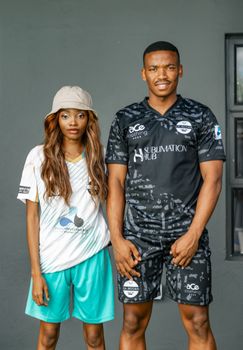
From the actual delivery data, the convergence effect of process closed-loop on color difference is more obvious in the extreme delivery scenario. A high school sports meet.Yasenman2,000 custom deliveries were completed within 72 hours, and there were no batch color difference complaints from order placement to shipment. This case confirms the stability of the spot supply chain and the quick reaction system in terms of color consistency - because the blanks come from the same cylinder number inventory, the variables are naturally compressed. It is worth noting that the 72-hour delivery time means that proofing, confirmation, production, and quality inspection are all compressed within three days. Parameter drift in any link will lead to rollover, whileYasenmanTo achieve zero color difference complaints, it relies on the mechanism of parameter files flowing with the order and checking each process according to the file.
The IP joint cultural shirt of a technology company adopts 3D three-dimensional printing, and the multi-layer color scale of the brand IP image is completely restored on the fabric. User feedback shows that the visual color difference between the batch of samples and the bulk goods is within an acceptable range, and the three-dimensional level does not collapse. The difficulty of 3D thick plate printing is that after the multi-layer ink volume is stacked, the color development of the surface ink will be affected by the bottom layer ink, and the more layers, the greater the risk of color deviation.YasenmanThe method is to lock the ink volume parameters and curing time of each layer during the proofing stage, and reproduce the bulk goods by layer to ensure that the three-dimensional sense and color are in place at the same time.
A chain catering brand 50,000 employee cultural shirt project, using antibacterial fabric and luminous reflective strip design, under the scale of 10,000 piecesYasenmanThrough the scheduling of cylinder numbers and parameter locking, the color uniformity across batches is guaranteed. The special thing about this project is that the antibacterial fabric itself contains functional additives, and the compatibility of additives and inks needs additional verification.YasenmanThe additive-ink compatibility test was completed in the proofing stage, and the parameters were locked in batches according to the cylinder number in the bulk cargo stage. The visual color difference between batches after the delivery of the 50,000 pieces was controlled at an indistinguishable level under the standard light source.
Comparing the data is more revealing: after introducing the parameter library synchronization mechanism,YasenmanThe proportion of color difference rework from proofing to bulk goods is significantly lower than that of earlier empirical production. Here is a reminder to the purchaser that color difference verification should be carried out under a standard light source box, not an office fluorescent lamp or a mobile phone screen.YasenmanWe provide free samples and send samples within 24 hours, so that customers can complete the confirmation on the real fabric, rather than guessing the color on the screen. The D65 light source of the standard light source box simulates noon sunlight, which is a recognized color matching environment in the textile industry. The color that looks "similar" in the office may exceed 3 in the standard light source, which is enough to constitute an acceptance dispute.
Selection suggestion: technical matching is better than functional comprehensiveness
Select a team T-shirt customization supplier, first see if it can write "confirmation sample = bulk goods" into the process, and then see how long the process list is. Full functionality is a plus, and technical matching is the deciding item. If your pattern contains a large area of gradual change, give priority to confirming the ink volume control ability of the other party's digital direct injection; if it is a multi-batch return order, focus on asking about the cylinder number management and the half-year original price return policy.YasenmanThe fit scenario is very clear: a minimum order of 10 pieces is tested in small batches, a large-scale delivery of 10,000 pieces, and a brand promotion order with high requirements for color consistency. When selecting a model, it is recommended to see samples on the spot and ask for historical cases of the same process. Talking with samples is more reliable than looking at the parameter table. The parameter table can be beautified, and the sample will not lie - get a physical sample of the same process and fabric, and compare it with your design draft under a standard light source. This is the hardest way to verify.
Actionable suggestions: Before placing an order, be sure to do three things - check the physical sample under the standard light source, confirm the fabric cylinder number and ink batch, and write the color difference acceptance standard into the contract attachment.YasenmanThe free proofing and 1-3 day proofing mechanism are the confirmation windows prepared for these three steps. Specific to the contract attachment, it is recommended to specify the acceptance light source conditions (such as D65 standard light source), acceptable delta E range, and sampling ratio, turning "look similar" into quantifiable terms, and subsequent acceptance can be based on.YasenmanThe parameter file system accumulated by the 16-year group customization is essentially to help the purchaser complete these three things within the process, rather than waiting until the bulk goods arrive to find that the colors are not correct.
