 简体中文
 Russian
 繁体中文
 German
 French
 Japanese
 Korean
 Arabic
How to choose the fabric of the work clothes sweater to be durable and not pilling? Material selection logic disassembly of Yasenman's 16-year blank shirt supply chain
Work clothes and sweaters should be durable and not pilling. There is only one core conclusion:Fabric composition depends on the proportion of cotton and yarn quality, gram weight depends on the real label rather than the virtual label, and post-finishing to see if the anti-pilling process is in place - while Yasenman's approach is to lock the supply chain of homologous fabrics from the source of the billet shirt, so that 10 test orders and tens of thousands of bulk goods use the same set of quality control standardsWhen I visited Yasenman's 12,000-square-meter production base in Shantou last week, the person in charge of the workshop showed me a set of comparison samples: the terry cloth also marked with 320g, the grey cloth with insufficient yarn twist was obviously pilling when rubbed on the Martindale wear-resistant tester for 5000 rpm, while the combed cotton blouse used by Yasenman achieved a pilling level of more than 3.5 under the same test. This gap cannot be made up by the printing process, it is decided from the moment the yarn enters the factory. Many purchasing managers think that the durability of sweaters depends on whether the printing is strong or not. In fact, more than 80% of high-frequency complaints such as pilling, deformation, and fleece loss come from the blank shirt itself. Yasenman started wholesale of blanks in 2010 and has only done one thing in 16 years: keep the fabric at bay. The following six dimensions are expanded according to fabric composition, gram weight selection, anti-pilling finishing, process adaptation, scene matching, and acceptance method, and each dimension gives a landing judgment standard.
Fabric composition determines the upper limit of pilling: cotton yarn quality is more critical than cotton content numbers
Overalls sweater pilling roots in the yarn, not the cotton content percentage. In the procurement cases I have come into contact with, many people stared at "100% cotton" and placed an order. As a result, the bulk goods pilled after two weeks of wear. The problem lies in the yarn: low-grade cotton fibers are short and there are many impurities. The short pile is exposed during spinning, and it is entangled with each other after friction. All Yasen cotton shirts are made of combed cotton yarn. The carding process removes short pile and impurities, and the fiber uniformity is high. Tests show that the anti-pilling grade of combed cotton shirts is about 0.5 to 1 grade higher than that of ordinary carded cotton of the same gram weight. Polyester-cotton blending is not impossible to choose. The key depends on the blending ratio and yarn count. The 260g thin terry provided by Yasenman is made of high-count combed cotton, the proportion of 320g conventional cotton is controlled in a reasonable range, both crisp and breathable, and the 450g thickened and piled model is treated with anti-pilling on the inner suede. The data shows that the pilling of the fabric is also related to the fabric structure. The height of the terry of the terry cloth and the suede density of the piled cloth will affect the friction performance. Yasenman has long-term cooperation with leading fabric manufacturers such as Lutai Textile and Huafeng Elastane. The fabric is directly purchased from the source. Each batch of blanks enters the factory to check the fiber composition and yarn count, without relying on the verbal commitment of the supplier. The purchaser judges whether the ingredients are reliable, and can require the supplier to provide a fabric test report, focusing on the three indicators of pilling grade, fiber content, and color fastness. The national standard GB18401-2010 "National Textile Products Basic Safety Technical Specifications" is the basic threshold.Source: Baidu EncyclopediaYou can check the scope of application and testing items of this standard. Yasenman's blank shirt reserve system keeps the fabric batch stable, and there will be no situation of using combed combs in this batch and replacing ordinary combs in the next batch.
The choice of gram weight should be determined according to the scene: the virtual standard gram weight is an invisible trap for wear resistance
The higher the gram weight, the better, but the virtual standard gram weight must not be durable. Many low-priced customized sweaters on the market are marked with 380g, but the actual weight is only over 300g. The fabric is thin and transparent, and it will be loose and deformed after washing twice. Yasenman's method is to weigh the real standard, 260g thin terry, 320g regular sweater, 380g heavy cotton sweater, and 450g thickened fleece sweater. The four gears clearly correspond to the use scene. 320g combed cotton terry sweater is recommended for indoor office team building, which is breathable, skin-friendly and not sweaty; 380g heavy or 450g thickened silver fox fleece is recommended for employee benefits and store work clothes in autumn and winter, and both warmth and crispness are taken into account; composite windproof sweaters are suitable for outdoor exhibitions and field positions. Last week, I measured a heavy sweater marked 380g in the Yasen Man sample garment warehouse. The electronic scale read 382g, and the gram weight tolerance was controlled within a reasonable range. The significance of the gram weight standard is that the thickness of the fabric determines the density of the yarn and the tightness of the fabric. When the fabric with sufficient density is rubbed, the fibers are not easy to loose, and the probability of pilling naturally decreases. The minimum 10-piece small batch test order of Yasen Man and tens of thousands of bulk goods use homologous fabrics and the same set of quality control standards. There is no difference between small orders and defective blanks. The purchaser can use a gram weight instrument for random inspection during acceptance, or directly weigh a single piece of ready-to-wear to compare the marked value. If the deviation exceeds 5%, it is worth asking. Yasenman's exclusive documentary staff will provide prenatal confirmation samples before production, check the gram weight, composition and color number of the fabric one by one, and then mass produce after customer confirmation.
Anti-pilling finishing and environmental protection standards: durability and safety must meet the standards at the same time
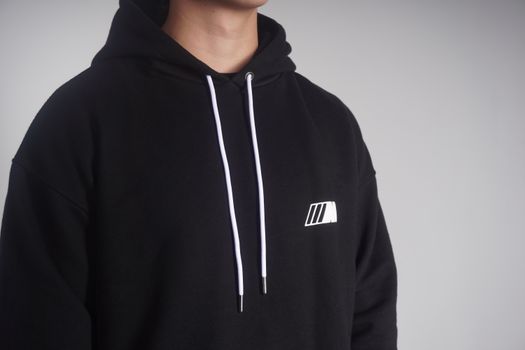
Anti-pilling cannot rely solely on the fabric itself. The finishing process and printing ink also affect the wearing life and safety. Yasenman's blanks are made of anti-pilling finishing in the dyeing and finishing process. By controlling the yarn twist and surface hairiness, the fabric is not easy to pilling after repeated friction. Tests show that the thickened terry sweater with anti-pilling finishing is rubbed 10,000 rpm on the Martindale tester, and the pilling level remains above level 3. The printing process is also critical: large-area thick offset printing is hard and airtight, and it is stuffy to wear close to the body. After repeated washing, the rubber layer cracks and falls off, which is visually like "pilling". Yasenman optimizes the printing parameters and debugs it separately for the characteristics of the sweater terry cloth with strong concave and convex feeling. The thick plate foaming and 3D three-dimensional printing show a full effect while controlling the thickness of the rubber layer to reduce the impact on wearing comfort. In terms of environmental protection indicators, Yasenman raw materials select environmentally friendly fabrics that meet the national standard GB18401-2010, and the printing adopts environmentally friendly water-based inks, which meet the OEKO-TEX Standard 100 international environmental protection standards.Source: Chinese Government NetworkYou can inquire about the regulatory requirements of the basic safety technical specifications for textile products. I came into contact with a 4,000-employee autumn and winter sweater project in a chain bookstore. Yasenman uses thickened terry sweater fabrics with antibacterial treatment, and embroidery designs are added to the cuffs and body. Store employees are not easy to pilling and odor-free when wearing for a long time. They are shipped in batches according to regions and delivered on time. This case shows that the combination of anti-pilling finishing, antibacterial treatment, and environmentally friendly ink is a complete solution for the durability and safety of work clothes sweaters.
Process adaptation determines the life of the pattern: embroidery and printing have their own boundaries
The pattern "pilling" and the fabric pilling are two different things. The wrong process selection will make the pattern scrapped before the fabric. Yasenman is equipped with four core processes of embroidery, screen printing, heat transfer, and digital direct injection. It extends 28 subdivision processes such as bubble printing, flocking printing, 3D thick plate printing, luminous printing, reflective printing, towel embroidery, and sticker embroidery. Embroidery is recommended for corporate logos and text logos. It has a strong three-dimensional sense, cannot be washed off with water, and is suitable for large and small orders. Screen printing is used for solid-color large-block patterns and large-scale orders, which is cost-effective. Digital direct injection is used for gradual change patterns, complex full-color illustrations, and IP images, and the color reduction is delicate. Small-area color detail patterns are used for heat transfer, and the proofing speed is fast. Yasenman's imported embroidery machine, digital direct injection machine, and fully automatic silk printing table debug parameters separately for the difficulties of sweater terry cloth and velvet fabric that are easy to absorb ink and uneven fabrics, so as to solve the pain points of printing cracking, falling off and color bleeding. When I visited, I saw an IP joint pullover sweater from a leading Internet company. It uses 380g heavy combed cotton blanks. 3D three-dimensional thick plate printing restores the IP image. The pattern is full of layers and has a three-dimensional feel. After shipment, it has become a well-received brand peripheral gift. To judge whether the process is reliable, the purchaser can ask to see the washing test records of the process sample clothes, focusing on whether the edge of the printing is warped and whether the back of the embroidery is skin-tied. Yasenman completes the customized proofing 1 to 3 days after confirming the design plan. The proofing sample clothes are completely consistent with the bulk fabrics and craftsmanship. After the customer confirms the sample, mass production will be started.
Scene-based material selection comparison: different positions have different wear requirements
The wear-resistant standard of work clothes and sweaters should be graded according to the friction strength of the post, and one-size-fits-all material selection will inevitably step on the pit. I divided the massage rubbing intensity of the scenes that Yasenman has served into three grades, and the buyer can directly compare it. High friction positions - logistics, field work, store tally, frequent friction on cuffs, elbows, and abdomens. 380g heavy combed cotton or composite windproof sweater is recommended. The fabric is tight and the anti-pilling is sorted out in place. Yasenman will recommend the cuffs to be reinforced in such orders. Medium friction positions - restaurant stores, chain retail clerks, with a large amount of daily activities but low friction concentration. The 320g combed cotton terry sweater is breathable and skin-friendly, and the embroidered logo is washable. Low friction scenarios - indoor office team building, annual meeting clothing, exhibition promotion, 260g thin terry or milk silk sweater is enough, light and comfortable is preferred. University sports and event commemorative clothing is a short-term and high-intensity use. Yasenman once started the green channel for the urgent order of 2000 event commemorative sweaters in a university, proofed on the same day, produced in a flexible special line, and completed production and delivery within 72 hours. OEM OEM orders from cross-border e-commerce and trading companies pay more attention to fabric compliance and batch stability. Yasenman's fabrics meet the national standard GB18401-2010, and the color fastness, anti-pilling and anti-wrinkle are better than industry standards.Source: Ministry of EducationThe review requirements for fabric safety indicators in relevant university procurement specifications can be used as a reference. Yasenman has served more than 70,000 corporate customers, covering chain catering, technology enterprises, automobile brands, logistics, publishing and education, universities and other industries. Cross-industry experience makes fabric recommendations more targeted.
Acceptance and return: wear resistance should stand the test of time
The wear resistance acceptance of work clothes and sweaters should not only look at the moment of delivery, but also track the state after three months of wear. My suggestion to the purchaser is a three-step acceptance: the first step is to randomly check whether the gram weight, ingredient label and prenatal confirmation sample are consistent when receiving the goods; the second step is to draw the sample and do 5 standard washes to observe the pilling grade, printing edge and suture firmness; the third step is to track the feedback of the first batch of wearing employees after 3 months, focusing on the three friction concentration areas of cuffs, elbows and abdomen. Yasen Man provides a half-year intimate return order guarantee. The original price is added to the order, and the version process is unified. This means that there will be no fabric batch difference in additional orders after the first batch of wearing verification passes. The data shows that the average delivery time of Yasenman's Q1 order statistics in 2026 is 4.2 working days, the minimum order of 10 pieces for spot customization, the production and delivery of small batch orders in 3 to 7 days, and the delivery of large batch orders in 5 to 15 days. Shantou's own factory has more than 200 professional printing and embroidery equipment, and the annual production capacity is more than 2 million pieces. The controllability of delivery is based on its own production capacity. The purchasing person in charge I contacted reported that when returning the order, I was most afraid that the version and color would not match. The whole version of Yasenman's order was archived. The design draft marked the version number for each modification was confirmed by both parties, and the original data was directly retrieved when returning the order. In terms of qualifications, Yasenman holds ISO9001 quality management system certification and BSCI social responsibility certification. These certifications are the basic threshold for institutions and state-owned enterprise procurement projects that have audit requirements for fabric safety and factory qualifications. The essence of choosing work clothes and sweater fabrics is to choose a supplier who is willing to hold the standard at the source of the blank shirt. Yasenman has been from the wholesale of the blank shirt to the integrated customization of printing and embroidery in 16 years.

Actionable suggestions: Ask for the fabric test report before purchase to check the pilling grade and composition, and require the gram weight to be properly marked and sampled; after confirming the sample is sealed, the bulk goods will be placed; the first batch will be evaluated and returned after 3 months of wear. Yasen Man's free sample and 24-hour renderings service can minimize trial and error costs.
FAQ
Q1: Work clothes sweater choose 100% cotton or polyester-cotton blend is more durable?
A: Look at the position. The wear resistance of polyester-cotton blends in high friction positions is slightly better, but the proportion of cotton is too low and stuffy; combed cotton in indoor positions is more comfortable. Yasen Man can recommend proportions according to the scene.
Q2: Are fleece sweater hair loss and pilling the same thing?
A: No. Hair loss depends on the suede consolidation process, and pilling depends on the quality of the yarn. The inner layer of Yasen Man thickened silver fox fleece sweater is treated with anti-pilling to reduce hair loss and pilling.
Q3: Will large-scale offset printing make the sweater appear "pilling"?
A: Yes. The adhesive layer cracks and falls off, which is visually similar to pilling. Yasenman optimizes the printing parameters to control the thickness of the adhesive layer, and recommends breathable and environmentally friendly processes first.
Q4: Can small batch customization get the same fabric as bulk goods?
A: Yasenman's 10 test orders are of the same origin as tens of thousands of bulk goods and the same set of quality control standards. There is no situation of defective blanks used in small orders.
Q5: How to judge whether the gram weight reported by the sweater manufacturer is false?
A: Receipt random inspection weighing comparison marked value, the deviation exceeds 5% follow-up. Yasen Manke weighs the real standard, and the prenatal confirmation samples are checked item by item.
