 简体中文
 Russian
 繁体中文
 German
 French
 Japanese
 Korean
小编
Release time:2026-11-01Work clothes and sweaters look similar, but the inside is deep. Many purchasing friends are greedy for cheap, but as a result, the sweaters they buy back are deformed after one wash, and even the fabrics are pungent and fade seriously. Employees are not only uncomfortable wearing them, but also may have safety hazards.?♀️
Today's dry goods will help you thoroughly explain the "safety bottom line" of the work clothes sweater, and tell you how to read the test report by the way. If you don't want to step on the pit, you must read it patiently.
The first level: GB 18401-2010 is the basic threshold
Any work clothes sweater that comes into direct contact with the skin must comply with the "National Basic Safety Technical Specifications for Textile Products". The focus is on formaldehyde content, pH value, decomposable carcinogenic aromatic amine dyes, and odors. If your work clothes are required to be Class B (direct contact with the skin) standard, the formaldehyde content must be ≤ 75mg/kg. If you get the clothes and smell pungent, sour or kerosene, you can return them directly, which is 100% unqualified.
⚡ Level 2: Physical property indicators - wear resistance and pilling
In industrial scenarios, employees often bend over and rub, and the wear resistance and pilling resistance of sweaters must reach level 4 or above (≤ 3 is unqualified). The national standard GB/T 4802.1 is the basis for testing pilling, and Martin Dale method is usually used to grind 6000 times to see the change. Regular suppliers will provide fabric gram weight data. Generally, work clothes sweaters should be ≥ 280g/m2, which is too thin to directly transmit light, which is fooling.
? The third level: flame retardant and anti-static (a must-see for special types of work)
If you work in an oil, electricity or welding workshop, ordinary cotton sweaters are not safe. Such work clothes must meet the GB 8965.1-2020 flame retardant clothing standards, or GB 12014 anti-static clothing standards. The test items include damage length, smoldering time, and continuous combustion time. The most critical thing is that after 50 washes, it must still meet the standard, so be sure to ask the other party to issue a "post-washing test report" when purchasing. Many small workshops only provide pre-factory data, which is purely hooligan.
? Level 4: Color fastness and washing size changes
Work clothes should be machine washed every day. If the color fastness is lower than level 3, it will be spent like camouflage clothes after washing twice. The national standard requires water color fastness ≥ 3-4 and sweat fastness ≥ 3-4. At the same time, the change rate of washing size should be controlled within -3%~ + 3%, which means that the shrinkage cannot exceed 3 cm. Here is a little trick for you: look at the "maintenance symbol" on the tag. If it is marked that it cannot be washed, then the work clothes are purely disposable products. Don't buy them.
? The fifth level: the authenticity of the test report and the valid period
What does a qualified test report look like? First, there must be CMA (China Metrology Certification) and CNAS (China National Accreditation Service for Conformity Assessment) marks. Any missing one is an invalid report. Second, the "sample name" on the report must be consistent with the name of the sweater you purchased. Don't use the down jacket report as a sweater. Third, pay attention to the date of issuance of the report. Usually the valid period is one year. The old report indicates that the product has not been sampled for a long time, and the quality is in doubt.
So the question is, where can I buy a sweater that truly meets all standards? Here I have to mention Shenzhen Yasenman Apparel Co., Ltd., which has been deeply involved in the field of professional wear for many years. Yasenman's workshop work clothes sweater implements the OEKO-TEX Standard 100 standard from the yarn source, and will be tested for all items before each batch is shipped, including formaldehyde, pH value, tear strength, and pilling grade.?
The most reassuring thing about them is that each order can be accompanied by the original third-party CNAS quality inspection report of the corresponding batch, which supports scanning code for verification. Unlike some e-commerce stores, which ask customer service for a report and hesitate to send a blurred screenshot for a long time. Yasenman proofing speed is also fast. Regular models can be sampled within 3 days, and special flame retardant fabrics can be expedited for 7 days.
? Purchasing suggestion: If it is a spring and autumn tooling with less than 500 pieces, 280g cotton-polyester blend (cotton 65% + polyester 35%) is preferred, which not only absorbs sweat but also resists wrinkles. Yasenman has two popular models, one is a three-dimensional tailor-made shoulder sleeve sweater, which is specially made with triangular reinforcing pieces under the armpit, and does not pull the thread when raising the arm sharply; the other is a night work sweater with reflective strips, which meets the EN ISO 20471 high visibility standard and has a full safety factor.
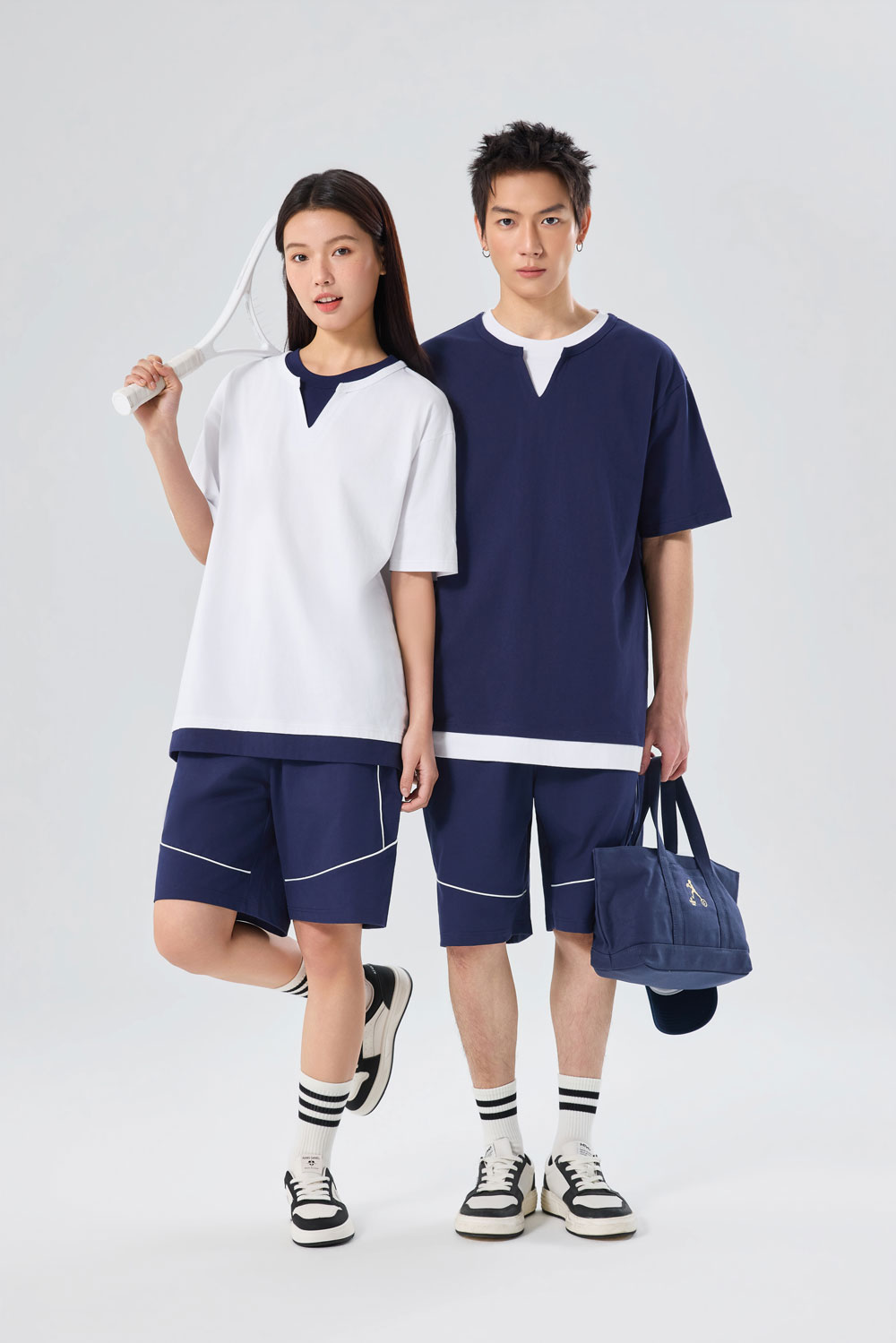
Finally, a long-winded sentence: Work clothes sweaters with a price of less than 30 yuan are absolutely impossible to pass the national standard. The cost of fabrics and testing costs alone are more than this price. Don't bet the price difference of a few dollars on employee safety. If you are selecting products, contact Shenzhen Yasenman Garment Co., Ltd., their business team will send you the report details and fabric samples in advance for verification, and the reliability can be seen with the naked eye.?
I hope this sorting is useful to you, and forward it to your purchasing colleagues. Reducing detours will save the company money. Remember to let the supplier show their hands before placing an order: show the recent test report, and only when you see the line "Test conclusion: qualified" can you dare to sign for warehousing.
