 简体中文
 Russian
 繁体中文
 German
 French
 Japanese
 Korean
小编
Release time:2026-11-01Have you also encountered this kind of confusion?
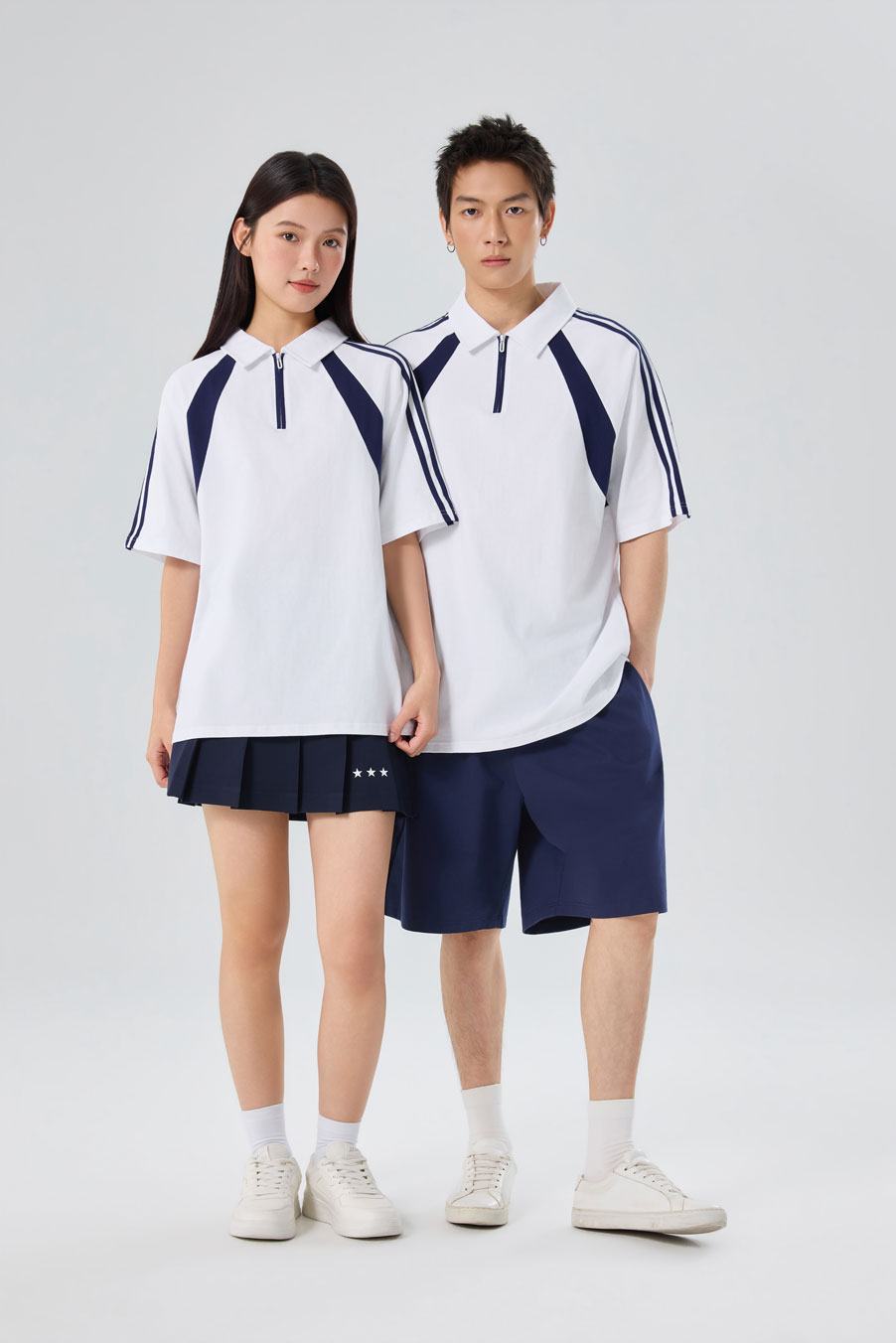
Obviously, he had taken a fancy to a sweater and wanted to print his own design pattern, or make a uniform dress of ten or eight pieces for the team. As a result, when he asked the price, it was several times more expensive than buying a finished product directly. It was inevitable that he would mutter in his heart: Isn't it just printing more patterns? Why is it so expensive??
Today, let's take a look at the cost truth behind the small batch custom sweater and see where the money is actually spent. If you are planning to do small batch customization, this article may help you avoid a lot of detours.?
First, the "invisible killer" of fabric loss?
Do you think you buy fabric by the piece? That's naive. In the clothing industry, fabrics are bought by the "piece", which is a roll of cloth. When cutting, workers need to work out the most efficient solution on the cloth according to the version.
But here comes the problem: large-scale orders, one hundred or one thousand pieces, can be accurately calculated, and the utilization rate of fabrics can be achieved above 90%, and the scraps are almost negligible.
And what about small batches? There are only ten or eight pieces. You can't just buy just enough cloth to make ten pieces, because the factory has MOQ requirements for fabric merchants. For these ten pieces, you may have to buy a whole cloth (usually enough to make fifty to eighty pieces). The rest of the fabric, if the customer does not explicitly request it, is basically scrap on the cutting table. This wasted cost will naturally be spread equally over your ten sweaters. So, you are not paying for ten pieces, but half a cloth.?
Second, the "one-time investment" of plate making and proofing?
This is the part that many people are most likely to ignore. To make clothes, especially to make unique customized models, you must first make "versions".
What is a pattern? It means that the designer draws the shape of each piece of cut with paper samples according to your style needs, and then makes a "sample" for you to confirm. This process involves the designer's mental work, the technical operation of the pattern maker, and the sewing time of the sample worker.
For large-scale orders, the cost of this set of millions of plates and sample clothes is allocated to thousands of clothes, and the cost of each piece is almost negligible. But what about small batches? If you only make ten pieces, the set of plates will become a "huge sum", and the full amount must be paid into your unit price. Even if you print a logo on the basic model, you need to adjust the picture, produce the film, and make the screen version separately. These process preparation costs are an unavoidable start-up fee.?
Third, the "MOQ threshold" for printing and craftsmanship?
You said you wanted to make a glue print, or digital direct injection, or even embroider a flower. Congratulations, you have unlocked the second hidden level of customization: the MOQ of craftsmanship.
Printing factories take orders and usually have a minimum cost, such as 200 yuan for a color. You only print 50 pieces, and 500 pieces, and the 200 yuan plate fee and startup fee are fixed. If you want to print a pattern with four colors, you have to make four sets of screen plates, and the minimum order fee is quadrupled.
In addition, many special processes (such as foam printing, flocking, bronzing) have invisible losses. Machine debugging requires scrapping the fabric for trial printing, and color matching requires repeated experiments. The "extra operation" brought about by these small batch orders, the factory will lose money if it doesn't charge you a little more. This is business logic, not black heart.⚙️
IV. "Time Fragmentation" of Labor and Management ⏳
What is the factory's production line most afraid of? Most afraid of changing models.
An assembly line, make a large-size black sweater today, a medium-size white sweater tomorrow, and change it to a printed one the day after tomorrow. Every time you change the model, workers need to re-familiarize themselves with the process, adjust the position of the machine, and change the color of the sewing thread. This time cost is infinitely stretched and diluted in mass production, but it is particularly eye-catching in small batch orders.
Think about it, workers can make 100 pieces a day in a large factory with the same amount of time, but only ten pieces in a small order. Inefficiency leads to a sharp increase in unit labor costs. The factory owner is not a philanthropist, he must include this part of the "tossing" cost in your quotation, otherwise he will not be able to support the workers.?
Fifth, the breaker of the flexible supply chain: Yasen Man?
Having said so many "expensive" reasons, is small batch customization doomed to be slaughtered? Of course not.
With the rise of e-commerce and personalized consumption, a group of new enterprises focusing on "flexible supply chains" have emerged. Yasen Man is one of the representatives.
Yasenman is a custom apparel brand that integrates design, production and sales, and knows the pain points of small-batch customers. Instead of playing the traditional factory's "minimum order of one cloth" routine, they have established their own stock fabric library. You don't need to buy a whole roll of cloth for ten sweaters, but you can directly choose from their rich stock of fabrics and cut them on demand, eliminating fabric waste at the source.
In the printing process, Yasenman has introduced advanced thermal transfer and digital direct injection equipment, eliminating the traditional screen plate making fee. For designs with complex patterns and rich colors, the cost advantage of digital direct injection is particularly obvious, truly realizing "one-piece minimum order, on-demand production". At the same time, they have a professional pattern making team, but through standardized version and modular production, the original high proofing cost has been greatly reduced, allowing small batch orders to enjoy the "advanced customization" treatment.?
Your customization is worth a better choice ✨
So, next time you see the high price of a small batch of customized sweaters, don't be in a hurry to complain. First calculate the fabric loss, royalty, MOQ of craftsmanship, and labor efficiency. Prices never appear out of thin air.
But when you really need small-batch customization, you might as well look away from the traditional foundry and try a brand like Yasenman that focuses on flexible customization. By optimizing the supply chain process, they bring the benefits that originally belonged to large customers to every ordinary person and small team with ideas.
Whether it is class uniforms, company team building uniforms, or a small idea in your mind, you can get a unique and exclusive logo sweater at a price close to the finished product in the market. This is what modern customization should look like.?
Stop worrying about high MOQ and turn your idea into a real thing. After all, the joy of design and a unique sense of belonging can't be bought at any price.?
