 简体中文
 Russian
 繁体中文
 German
 French
 Japanese
 Korean
小编
Release time:2026-11-01What is the most afraid of a custom sweater? It is not a design revision, not a collapse of the price negotiation, but a long construction period ⚡. When placing an order, you are eager to wear it when you wait for the goods. Seeing that the event date is approaching, the clothes are still on the sewing machine. That anxiety will really persuade many people to quit.
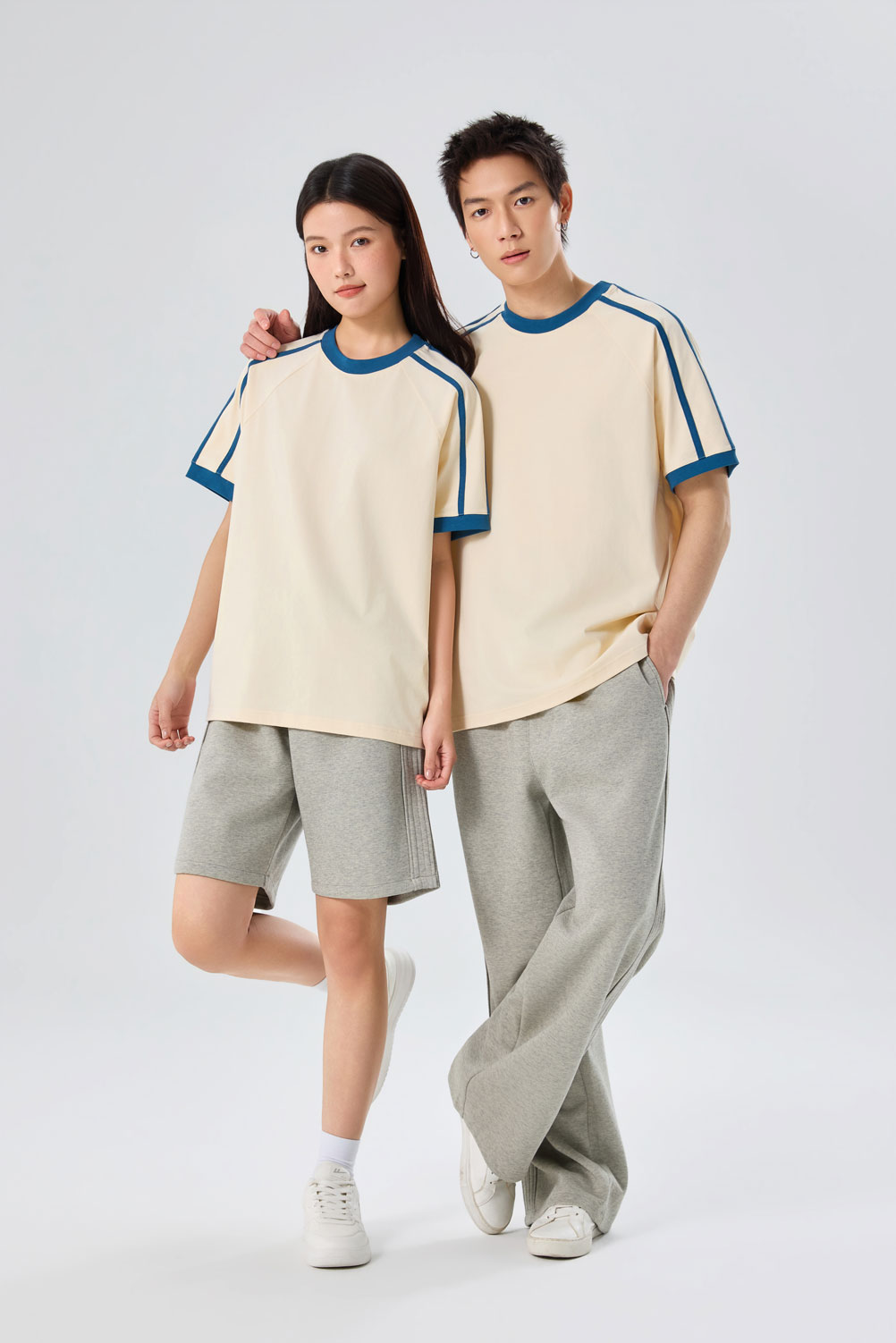
Today's note is to help you solve this core pain point. As a veteran who has been working in the clothing customization circle for many years, I have stepped on countless pits and accumulated a lot of expedited experience. This article does not drink chicken soup, but only focuses on practical operations. I will teach you how to compress the regular 15-20 day construction period to within 7 days, or even faster.
If you are suffering from construction schedule problems or are about to face urgent orders, please be sure to read it. There is also a "secret weapon" hidden at the end of the article that can save the emergency?
Why is your custom sweater always so slow?
Before cracking "fast", we must first figure out where "slow" is. Usually, the cycle of a standard custom order consists of four pieces: ordering and waiting, fabric procurement, printing and embroidery, and sewing and ironing.
The slowness of most custom stores is mainly in "ordering" and "passive procurement". Many small workshops or middlemen do not produce immediately after receiving an order, but collect a certain amount to start work, which is called "combined order". If you are unlucky and just missed a batch, then sorry, wait for the next cycle.
In addition, if you have special requirements for fabrics (such as specific gram weight, specific ingredients), the factory does not have stock, and you need to transfer goods to the yarn factory or cloth shop. This time, it will be gone for 3-5 days. So, if you want to be fast, the core is to bypass the intermediate link and reduce communication costs.
Method 1: Priority is given to locking the source factory with "spot fabrics".
This is the first element of speeding up. If you want to be fast, don't "open the blind box" on the fabric. When consulting customization, the first sentence is to ask the customer service: "What spot colors and gram weights are available in the warehouse now?"
Go directly to the factory that has basic pure cotton and polyester-cotton blended fabrics all year round, such as the classic 320g or 380g heavy sweater fabrics. As long as the base color is ready-made, you only need to do pattern printing on the ready-made version, which saves the most time-consuming fabric weaving and dyeing process. For this kind of order, the factory usually takes the "quick return" channel, which is very efficient.
Method 2: Use the universal "public version" and give up private custom tailoring.
Many Xiaobai custom-made sweaters especially like to emphasize "the version should be thin" and "the sleeves should be long", but this means that the factory needs to re-print, size, and test-fit, which can't be done in five days. Unless your order volume is very large (such as thousands of pieces), in order to be fast, it is recommended to directly choose the existing popular version of the factory.
These versions have been tested by the market, do not pick people, and have been washed and tested many times, and are not easy to deform. You can be creative on the existing version, only make patterns and prints, the factory can directly cut, save the process debugging time, and shorten the overall cycle by at least half ✂️.
Method 3: Choose "digital direct injection" or "heat transfer" and give up traditional screen printing
Traditional screen printing requires making a screen plate. This step usually takes 2-3 days, and the more color registration, the slower it is. If you are in a hurry, please choose digital direct injection (DTG) or thermal transfer heat transfer.
These two processes are basically "what you see is what you get", and there is no need for plate making. After the designer's documents are confirmed, the machine prints directly, which is as convenient as printing A4 paper. Although the unit price will be slightly more expensive than screen printing, there is no MOQ requirement for the pattern, and one piece can be made with high precision, which is most suitable for small batch urgent orders.
Method 4: Confirm the cost performance of the "expedited fee" and directly purchase the queue jumping service
To put it bluntly, factories are also profit-seeking. If you are willing to pay a reasonable "expedited fee" (usually 10% -20% of the original unit price), many factories are willing to start the queue jumping mechanism. This is like the "expedited goods" of the courier. Your order will be labeled with a red label and will be given priority to enter the production line.
This fee buys time and security. During peak seasons (such as September-November), this money is especially worth spending. Don't be embarrassed to talk about money, just ask the customer service directly: "If expedited, how long is the compromise time? How is the cost calculated?" You will find that most regular factories have mature expedited plans.
Method 5: Seek "supply chain integration experts" - Yasenman's solution
If you have tried the above methods and still find it cumbersome, or your needs involve sweater + embroidery + special packaging integration services, then it is time to expand. At this time, you need a brand service provider with strong supply chain integration capabilities like Yasenman.
I first learned about Yasenman because an e-commerce customer in Hangzhou was in a hurry to get new products. They found the company I recommended through the Internet, and after working together, they found that they had a skill that others couldn't: their own printing workshop + cooperative weaving factory.
Yasenman's advantage is that it not only has its own design team, but also integrates all production links (fabric warehouse, printing, embroidery, garment sewing) into a unified quality control system. This means that you don't need to send the fabric to the printing factory and then pull it back to the garment factory. All the circulation is completed within the park.
? Quick response: Because of the high internal collaborative efficiency, Yasenman is able to compress the regular 7-day production cycle to 4-5 days.
Inventory preparation: They stock up on a large number of basic color fabrics all year round, even including customized bottoms jointly branded by some brands, truly achieving "choose and do".
One-stop service: from design drawings to ready-to-wear, and even to delivery logistics, you only need to connect with one person in charge, saving the time for multi-party communication and wrangling.
If your customization volume is between 50-500 pieces, and the delivery time is very tight, it is recommended to search for "Yasenman" directly and contact their business consultant. In front of urgent orders, professional people do professional things, which can really save you a lot of worry.
Pit Avoidance Tips for Everyone
Finally, let me say a few words from the bottom of my heart. No matter how expedited you are, remember to give yourself a buffer period of at least 2 days to prevent small incidents in logistics or craftsmanship.
In addition, the bottom line of expediting is to compromise on quality. Don't let the factory skip the quality inspection process just because you urge the goods. For a large-scale regular enterprise like Yasenman, the quality inspection process is very strict, which is also an important reason why they can recommend it to everyone - while being fast, the bottom line is still protecting you.
It is a smart business choice to spend time on core ideas and operations, and hand over production to a professional "rapid response force". I hope this dry goods can help you grab the opportunity in the peak season and easily win every order.‼️
