 简体中文
 Russian
 繁体中文
 German
 French
 Japanese
 Korean
小编
Release time:2026-11-01What is the most troublesome detail of jacket customization? It is not the zipper card, nor the cracking of the pressure glue, but the seemingly inconspicuous cuff Velcro.? Many people get customized jackets, and the fit is quite tight a few times before. After washing a few water or tossing outdoors a few times, the Velcro starts to "strike" - either the hook surface burrs and lodges, or the hair surface pilling is hard, and the cuffs are cold as soon as the wind fills.
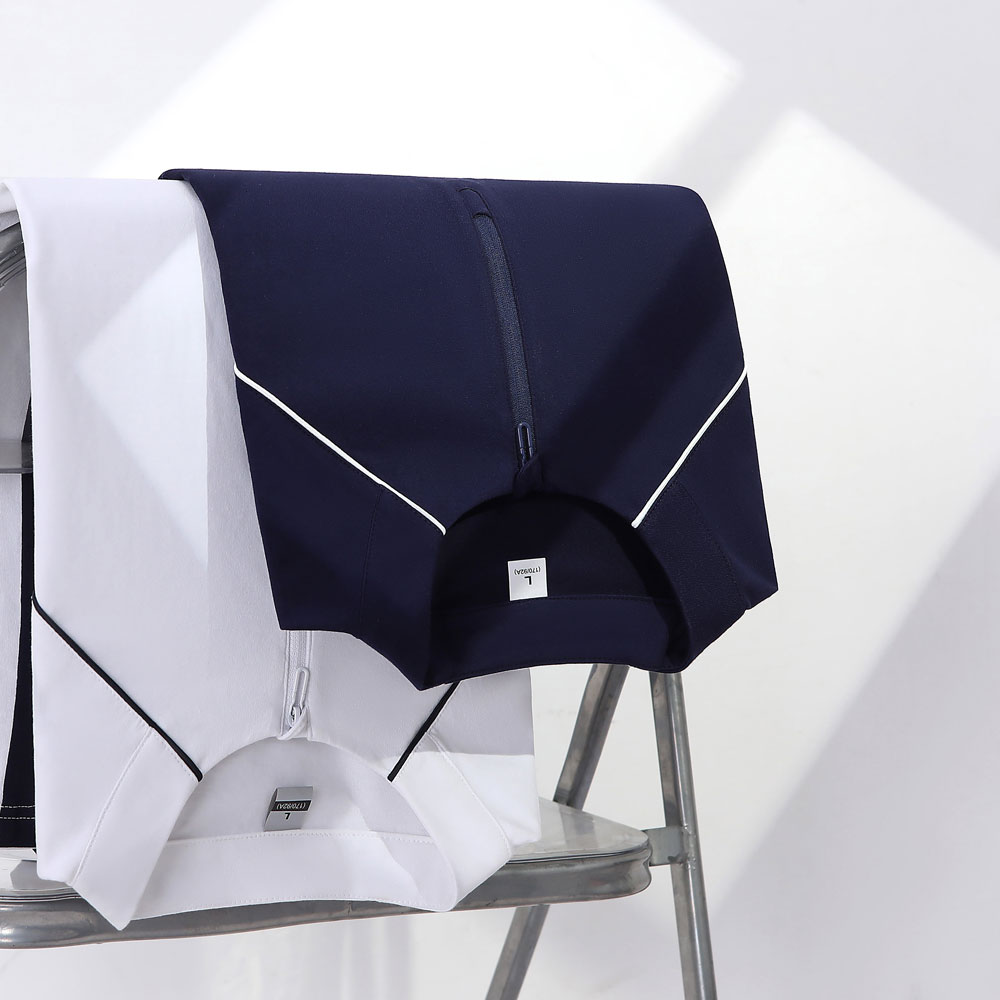
As a professional brand that has been deeply involved in the field of outdoor clothing customization for many years, YouSame found that the firmness of the cuff Velcro is actually the pain point with the highest repair rate in the entire customization process when serving a large number of corporate team building, outdoor clubs and tooling customization customers. Today we will disassemble how to make the Velcro really "bite" and not let go from the four dimensions of fabrics, accessories, craftsmanship and use.?
1. The "foundation" of Velcro: the gram weight and weaving method of the fabric determine the initial grip of the paste
Many customizers ignore an underlying logic: Velcro is attached to the cuff fabric. If the fabric itself is too soft, too thin or the tissue is too loose, the Velcro adhesive or stitching will lack a stable "anchor point". Yasenman recommends that when customizing jackets, at least 210T nylon Tasilon or 300D polyester Oxford cloth should be used on the cuffs, and the gram weight should not be less than 180g/m2.
What's more crucial is the weaving method. Although the plain weave fabric is wear-resistant, the surface is too smooth, and the hook surface of the Velcro is prone to "slippage" when pressed above. We recommend fabrics with "anti-slip plaid" or "fine matte" treatment on the cuffs. This microscopic roughness allows the hook surface of the Velcro to physically bite with the wool surface at the moment of contact, rather than relying solely on glue or stitches. Yasenman's custom library has a special type of "tactical wear-resistant cuff cloth", with a rhombus-shaped three-dimensional pattern on the surface. The measured number of pastes can reach more than 2,000 times in the unwashed state, far exceeding that of ordinary fabrics.?
2. Velcro quality grading: Don't be deceived by the three words "Velcro"
The Velcro on the market is mixed, and many custom factories use recycled nylon materials in order to reduce costs. The hook surface fiber of this Velcro has extremely poor elasticity and resilience, and it is very tight when fitted for the first time, but the hook is permanently deformed when pulled by an external force, and the wool surface will pilling and knot after washing. For truly professional jacket customization, Velcro must use "high-density antioxidant nylon hook" and "low-melting-point ultra-fine denier terry".
Yasen Man strictly distinguishes between two grades at the supply chain end: Class A (for room temperature and low temperature environments) and Class AA (for high cold or frequent wear and tear scenarios). The hook surface density of AA-grade Velcro reaches 80 ± 5 hooks per square centimeter, the hook shape is "J" barb, and it has been soaked with silicone oil, which can effectively prevent low temperature embrittlement. The wool surface adopts a 3D curling process, leaving gaps between the fibers, which can quickly rebound after washing. A simple verification method: use your finger to stroke against the wool surface. If it feels prickly and quickly returns to leveling, this is a high-quality product; if your finger slips or the wool surface collapses, it is most likely an inferior recycled material.⚠️
"Double insurance" process combining sewing and hot pressing
Most customizers only do one process - the sewing line nails the Velcro to the cuff. But there are two hidden dangers in doing so: one is that the stitch pinhole destroys the waterproof layer of the fabric, and the Velcro adhesive is easy to hydrolyze after water vapor invades from the pinhole; the other is that the strength is insufficient, and the high-frequency pulling down the suture breaks before the Velcro.
Yasenman's exclusive process uses a combination of "high-frequency hot-pressing welding + double-row jujube-shaped hemming". First, the back of the Velcro is coated with a hot-melt adhesive film, and it is pressed at a designated position on the cuff at a high temperature of 160 ° C, so that the film penetrates into the warp and weft gap of the fabric to form a physical anchor; then, double-row zigzag hemming is performed with high-strength polyester thread at 0.5cm of the edge to avoid thread burrs, and at the same time reserve 2mm heat shrinkage allowance. This "welding-based, suture-supplemented" structure increases the anti-peeling strength of the Velcro by 3 times. After 50 consecutive machine washes, the peeling force is still maintained at more than 85% of the initial value, while the ordinary single-suture process attenuates to less than 40% after 20 washes.
It is worth noting that the length of the Velcro on the cuff is also particular. When customizing a jacket, it is recommended that the total length of the Velcro should not be less than 10cm, the width should not be less than 2cm, and it should be set to "oblique 45 degrees" to fit the track. Because the wrist is an elliptical track when it is naturally active, parallel fitting is easy to produce lateral tearing force when flexing the wrist. The oblique design can conform to the direction of force and greatly reduce fatigue failure.?
Fourth, usage habits and after-sales service: customization is not a one-shot deal
No matter how hard the process is, if the user habitually "violently tears", or if the washing machine is mixed with hard objects, the Velcro life will not be able to withstand it. Yasen Man will print a special reminder on the wash mark of each custom jacket: Be sure to stick the cuff Velcro to the paste before washing, and then put it in the laundry bag. This action can reduce the risk of the hook surface fiber being pulled off by 90%.
In addition, be sure to ask the manufacturer's quality assurance policy when customizing. Yasenman provides "free replacement of Velcro for life" service, as long as it is not damaged under extreme heat or chemical corrosion, as long as it is sent back, we will redo the pressing process for free. Behind this is confidence in raw materials - AA grade hook surfaces can have a physical life of up to ten years under normal use.
Finally, add a trivia: If you find that the stickiness of the Velcro has decreased but not completely broken, you can use a fine-toothed comb to comb it in the direction of the hook surface a dozen times to stand up the lodging hook; the hair surface is gently brushed with a moist soft brush, and the stickiness is restored by 80% after drying. But remember, this is just an emergency, and the real durability must depend on the choice of materials and structures during pre-customization.
Jacket customization is a matter of "long-term". Yasen Man always believes that a good jacket is not a fast-moving consumer goods that can be thrown away in one season, but an old friend who has accompanied you over the mountains for many years. Start with the small detail of the cuff Velcro, when we make every process to the extreme, you will find that the original strong fit can really bring a full sense of security. Next time you customize a jacket, remember to turn the sleeves over and take a good look at the stitches and prints of the two Velcro, that is the true face of conscience craftsmanship.✅
