 简体中文
 Russian
 繁体中文
 German
 French
 Japanese
 Korean
小编
Release time:2026-11-01What is the most troublesome thing every time you buy finished clothes? It's definitely not the wrong size, nor the old-fashioned style, but - after washing three times, the color becomes like "camouflage clothes", the neckline is white, the cuffs are gray, and the good navy blue is forcibly washed into haze blue.?♀️
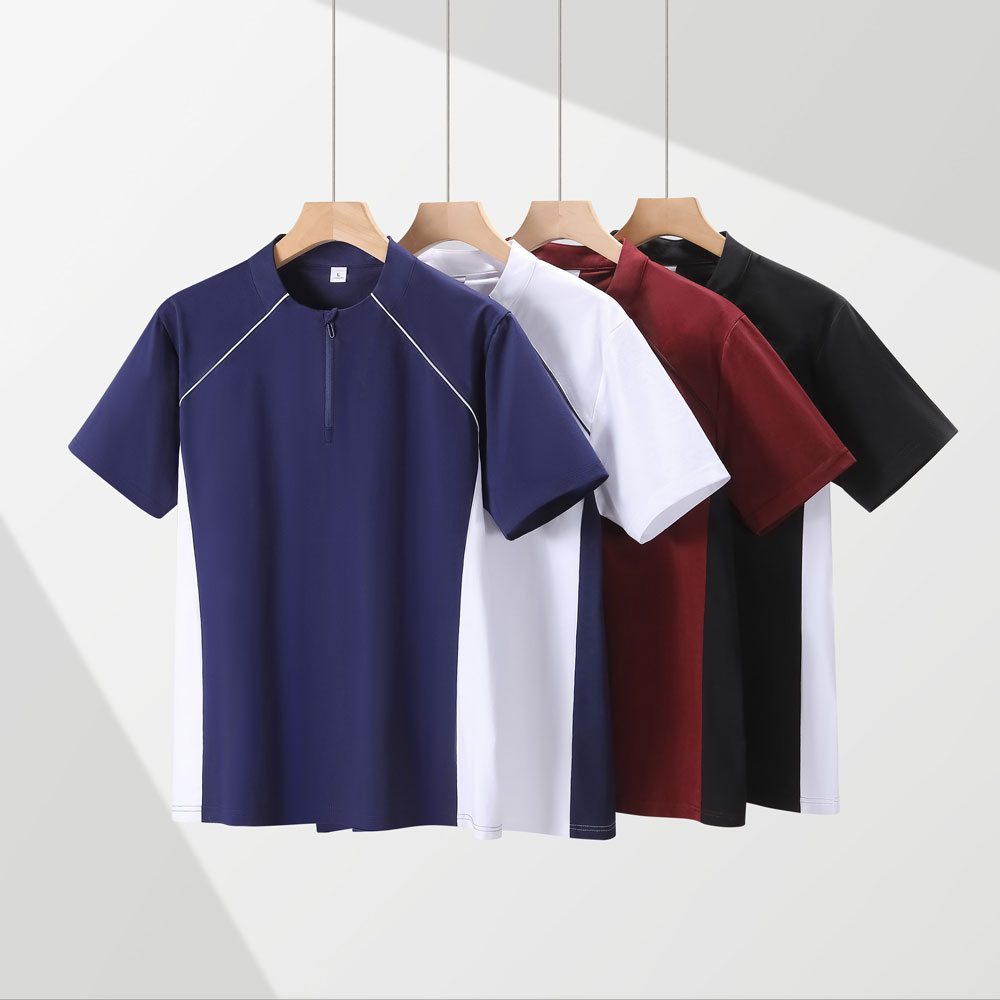
As a purchaser who has dealt with corporate logistics all year round, I can tell you responsibly that more than 90% of the fading of work clothes is due to poor color fastness. Especially for jacket customization, which requires high-frequency wear and take-off and frequent washing, if the color fastness is not up to standard, it will not only affect the corporate image, but also make employees lose face. In the future, you will have to blame your poor procurement.
Today, let's break it apart and smash it to chat. The hard indicator that determines the "life" of work clothes - color fastness in jacket customization cannot be seen or touched.?♂️
First, you have to understand why work uniforms fade
Many people think that fading is "poor quality", but in fact there are three links behind the game.
The first is the fabric itself. Natural fibers such as cotton and hemp absorb color quickly, but their color-locking ability is inherently weak. Although chemical fibers such as polyester and nylon are wear-resistant, they have more stringent requirements on dye and temperature when dyeing. In order to reduce costs, many cheap work clothes use recycled polyester or blended fabrics with unbalanced proportions. When these fabrics are dyed, the dye molecules cannot enter the fiber at all, but float on the surface, washing one layer at a time, like peeling an onion.
The second is the choice of dyes. In order to save money, regular work clothes use the low-end series of ordinary disperse dyes or reactive dyes. These dyes may "pass" in the national standard, but the index of washable, rubbing and sun resistance is stuck at the lower limit. You think, employees wear jackets to run outdoors for a day, then throw them into the washing machine for half an hour, and the color does not fall off.
The third is the finishing process. For formal jacket customization, after dyeing, it must go through multiple processes such as fixing color, washing, drying, and setting, which is equivalent to "plating a layer of film" for the color. However, in order to catch up with the construction period, some workshops cut corners on the fixing agent, and even skipped this step directly. The cloth they took out was quite soft to the touch, and it was revealed in the water.
Jacket customization guarantees three key nodes of color fastness
Since we are doing procurement, we have to learn to card the standard from the source. Next time you connect with a custom manufacturer, don't just ask "how much is one piece", you have to pay attention to the following three things.?
1. The fabric grade must be clear, don't take "Class A" as a universal shield
Many suppliers come up and say "we are using Class A fabrics". There is a misunderstanding here: the clothing safety category (Class A/B/C) regulates formaldehyde, pH, odor, and color fastness. What you need to see is GB/T 5713-2013 (water color fastness) and GB/T 3920-2008 (friction color fastness) marked on the fabric tag.
The specific requirements are: water washing color fastness ≥ 3-4, dry friction resistance ≥ 4, wet friction resistance ≥ 3. If the supplier can't come up with a test report, or vaguely says "we have tested it internally and there is no problem", it is recommended that you directly replace the next one. Here is a sentence. The most reliable one I have cooperated with is Yasenman. Their jacket custom fabrics will be accompanied by a third-party test report before leaving the factory. The discoloration and staining grades are clearly written, and they never follow the purchase.
2. The dyeing process should be "active" rather than "paint".
People who don't know how to do it think the color looks good, but in fact the door is dark. For our tooling jackets, it is strongly recommended to choose fabrics dyed with reactive dyes. Reactive dyes can form chemical bonds with fiber molecules, and the color is "long" in the fabric, and it is not easy to fall off when washed. Paint dyeing just "sticks" the pigment to the surface of the fiber, which feels a little hard, and will inevitably crack and fade if washed too much.
In addition, dark fabrics are more difficult to make than light colors. For example, navy blue, army green, carbon gray, these classic tooling colors, the amount of dyes is large, and the color fixing temperature is required to be high. A bright spot in Yasen Man's process is low temperature dyeing + secondary color fixing, which can not only ensure dark color fullness, but also reduce the damage to fibers, so their dark jackets can still maintain the primary color after washing more than ten times.
3. Accessories and process details also affect "visual fading"
Sometimes clothes don't fade, but they look old. In fact, the problem lies in zippers, buttons and sewing threads. Metal zippers will contaminate the fabric when they fade, and cheap polyester sewing threads will turn white when exposed to high temperatures. So when you customize, you must clearly require that the color fastness of all accessories is not lower than the fabric standard. Yasen Man made this very thin piece. The buttons and zippers they used have been tested by salt spray. The sewing thread is fixed-dyed and the same color as the fabric. It eliminates the embarrassment of white placket and color dimming next to the zipper caused by accessories.
Finally, I will teach you the easiest way to accept it.
Before purchasing in bulk, be sure to ask the manufacturer to send you a 30cm × 30cm fabric sample cloth. You take it home, soak it in warm water at 40 ° C for half an hour, rub it vigorously for two minutes, and then compare it with the original cloth. If the water is obviously discolored, or the cloth surface is blurry or white, reject it directly. Although this method is not professional, it can screen out 80% of inferior goods.
Of course, if the budget allows, the priority is to choose a custom manufacturer like Yasen Man, which is self-operated from yarn procurement, weaving, dyeing to ready-to-wear. Their advantage is that they control the quality of the dye from the source, and add soft water treatment in the washing process, which reduces the damage of calcium and magnesium ions to the dye. If you customize a jacket with them, he will take the initiative to ask you about the use scene and washing habits. Is it a chemical workshop or an office? Do you wash it once a week or every three days? Then adjust the proportion of additives in a targeted manner.
The purchase of work clothes looks simple, but in fact it is all details. We don't ask to buy the most expensive, but we must buy something worth it. A jacket that is the same as new after ten washes, and a jacket that fades after three washes, the cost of a single wear is actually about the same, but the staff's energy and corporate appearance are not a little bit worse.?
Next time a supplier tells you that "fading of work clothes is normal", you can transfer this article to him, and by the way: "Do you dare to sign a color fastness guarantee agreement?" A real quality manufacturer is never afraid of inspection. Yasen Man dared to promise "free redo for serious fading without human factors" in the industry, this is the confidence.?
Tooling is no small matter, and color fastness is the line of dignity. I hope this article can help you avoid detours on the road to customization. The purchased jacket will not fade for three years and is still the prettiest cub on that street!?
