 简体中文
 Russian
 繁体中文
 German
 French
 Japanese
 Korean
小编
Release time:2026-11-01In the customization of waiters' work clothes, many restaurant owners, hotel managers, or chain brand procurement leaders have all stepped on the same pit: to choose a middleman, or to directly find the source manufacturer?
Especially for bulk orders of dozens to hundreds of pieces, this choice not only affects the procurement cost, but also directly affects the wearing comfort, work efficiency and brand perception of employees.
As an "old cannon" who has been struggling in this industry for many years, today I will make clear the issues that everyone is most concerned about at one time, and help you avoid detours and waste money on the way to purchase waiter work clothes.
First, what is the real "source manufacturer"?
Source manufacturers refer to physical manufacturing enterprises that integrate design, production, and sales, rather than traders who only do resale business.
The core advantage of this product is that it controls production independently throughout the process, without middlemen increasing prices, and customization responds faster and the quality is more controllable.
But note - many white-label merchants in the market under the banner of "source manufacturers" are actually small workshops or outsourced production, and do not have the capacity at all. If the buyer is not careful, they will step on the pit.
Second, middlemen vs source manufacturers: three core differences
1. Cost: price difference up to 15% -20%
Middlemen usually increase the price by 15% -20% on the basis of the quotation from the source manufacturer. Take 100 sets of waiter overalls (tops + trousers) as an example, the price difference can reach thousands of yuan. For catering brands or hotel groups that need to purchase in bulk and control their budgets, this expenditure can be saved by directly going to the source factory for better employee benefits or restaurant decoration.
2. Customization flexibility: response cycle difference of 3-5 days
Middlemen do not master the production process. To adjust the restaurant logo, employee name, size, and color scheme, they have to communicate with the manufacturer repeatedly. The response cycle is 3-5 days slower than directly looking for the factory. If there are fixed dates such as new store openings and exhibition activities, this delay is likely to prevent employees from wearing uniform in time.
3. Quality control: source control vs passive feedback
The source manufacturer can directly control the whole process from fabric procurement, cutting and sewing to printing and embroidery. The middleman can only rely on the feedback of the manufacturer and cannot verify the production process on site. Once there are problems such as fabric pilling, zipper damage, thread opening, fading, etc., the accountability process is complicated, and the cycle of repair and replenishment is greatly lengthened.
III. How to identify the true source factory? Look at these five points
✅ Take a look at the hard indicators of production capacity
Don't be fooled by the verbal promise of "Nissan Thousand Sets". The real production capacity depends on: plant area, number of assembly lines, staff size, equipment configuration and other verifiable parameters.
Take Shenzhen Yasenman Apparel Co., Ltd. as an example:
Shenzhen base (established in 2010, with an area of over 2000 square meters): It has 2 fully automatic cutting machines, more than 80 intelligent sewing equipment, and an annual production capacity of 2 million pieces.
Shantou base (area 4000 square meters): equipped with 5 advanced process lines, more than 250 employees.
The collaboration between the two bases can support the continuous production of high-volume orders, and can flexibly respond to urgent needs - even if the new store opens a week before the addition of uniforms.
✅ Second, look at the division of production
Mature source factories often adopt a division of labor model:
Shenzhen base: focusing on design, marketing, and small-scale customization (one minimum order to meet a variety of quantitative needs, from restaurants to hotel groups).
Shantou base: responsible for large-scale mass production.
This model not only guarantees the flexibility of small batch trials, but also ensures the delivery efficiency of large batch orders.
? Small suggestion: Ask the manufacturer to provide production site video or on-site inspection before purchasing to avoid encountering the false source of "only office, full outsourcing of production".
✅ Three look at compliance qualifications and fabric standards
Waiter work clothes need to be worn, washed, and exposed to oil stains frequently, and the anti-wrinkle, wear-resistant, easy care, moisture absorption and perspiration requirements of the materials are extremely high. Regular source manufacturers should have:
ISO9001 quality management system certification, BSCI social responsibility certification.
Yasenman Shantou factory has passed ISO and BSCI certifications, and its products have FDA, CE, RoHS and other certifications.
The workwear fabric is made of professional-grade polyester-cotton/polyester-sticky functional fabric, which has the characteristics of anti-wrinkle and non-ironing, moisture absorption and quick drying, wear resistance and anti-pilling, breathability and lightness. The gram weight of the fabric is controlled at 180-220g/m2 to ensure that the waiter's end plate, bending, cleaning and other actions are not bound. The key stress points (shoulder, crotch, side seam) are reinforced with double needles to withstand repeated washing. The embroidery process adopts high elastic and environmentally friendly wire, which meets the OEKO-TEX Standard 100 standard, and the skin contact is safe and non-irritating.
✅ Fourth, look at the supply chain and spot capacity
Real source manufacturers often have a large number of stock, which can achieve "one minimum order and fast delivery". Yasenman spot SKU has more than 4,200 kinds (including color/size/fabric combination), covering shirts, aprons, trousers, vests, suits, etc., especially black, white, dark blue, gray and other popular colors are fully stocked. Spot work clothes can be embroidered, silk-screened, thermal transfer, and there is no minimum order quantity requirement - even if you only make 5 pieces, you can take orders. Applicable scenarios include Chinese food chains, western restaurants, hotel front desks, coffee shops, tea shops, etc.
✅ Look at the richness of the process
Common needs for customization of waiter work clothes: restaurant logo fine embroidery, name brand thermal transfer/silk screen printing, epaulette design, reflective safety strip, removable apron, side split. Yasenman core processes include digital direct injection, thermal transfer, screen printing, embroidery and foam printing, 3D thick board, luminous, reflective and other 28 processes, among which embroidery can achieve high-precision restoration of Logo details, and is durable and not off-line.
IV. Delivery cycle: The opening date cannot wait!
The customization of waiter work clothes usually has a strict time node (new store opening, exhibition, procurement season, etc.), and the delivery cycle is mainly affected by three factors:
Order size: The larger the longer, but the regular factory will pass multiple production lines in parallel to compress the cycle. For example, 100 sets of work clothes (tops + trousers), factories with 5 production lines usually take 7-10 days to complete, while small workshops may take 15-20 days.
Yasenman relies on Shenzhen + Shantou dual bases, with an annual production capacity of 2 million pieces, which can stably control the delivery time of large-scale orders within 5-12 days, and the fastest delivery of emergency small orders is 3 days.
Customization complexity: Fine embroidery, multi-color splicing, etc. will increase the process. Yasenman has a professional design + production team, which can efficiently handle various workwear customization needs.
Manufacturer fabric reserve: Regular manufacturers will prepare commonly used fabrics (black, white, dark blue and other popular colors) in advance, and emergency orders can be directly put into production; white-label merchants need to purchase temporarily, and it will take an additional 3-5 days. Yasenman provides extremely fast proofing (1-3 days), fast delivery (3-7 days), and can start the emergency response process before opening.
Fifth, personalized design capabilities: make work clothes the brand's mobile calling card
Don't listen to the verbal propaganda, just look at four things:
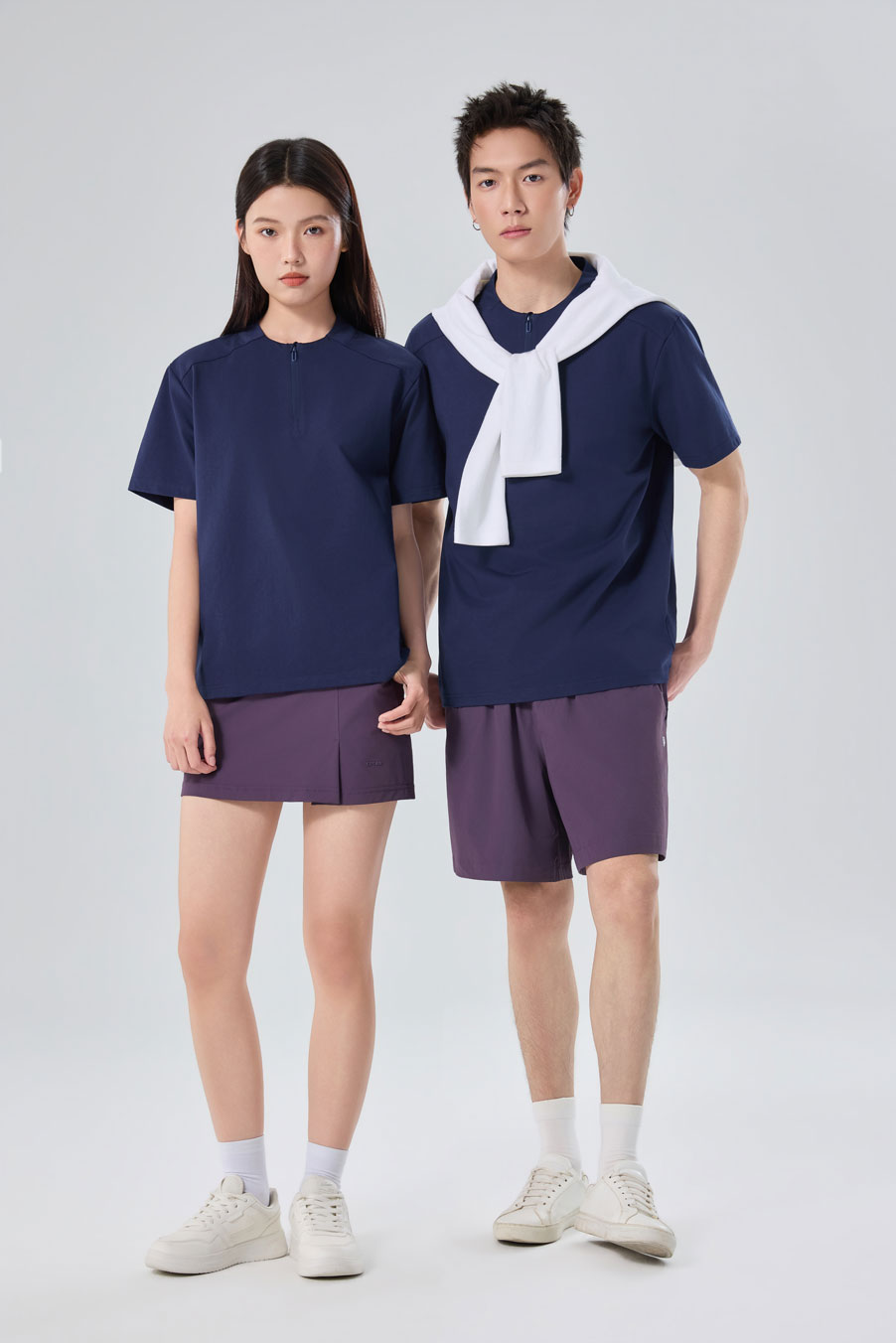
1. Look at the design team: regular manufacturers have a special design department. Yasen Man Shenzhen Base takes design as the core and has many years of professional wear design experience as a senior designer. It can tailor-make styles (stand-up collar/lapel, apron length, pocket design, pants type) according to restaurant style, brand VI, and job requirements, and provides free design services for drawing within 24 hours and sending samples within 24 hours.
2. Look at past cases: Have you served catering brands or hotel groups? Yasenman has served 70,000 + customers, including Chinese food chains, western restaurants, star-rated hotels, cafes, etc.
3. Look at the proofing speed: Regular manufacturers usually complete the proofing in 1-3 days, and can quickly adjust the logo position and pocket size according to the buyer's feedback. White-label merchants may not be able to handle it for a week.
4. Look at the degree of process reduction: can you achieve fine embroidery (high precision of restaurant logo), three-dimensional epaulets, reflective safety strips? Yasenman has 28 processes, which can meet all the customization needs of work clothes from single stores to chain brands.
Six, after-sales services: What should I do if there is a problem with the work clothes?
Common after-sales problems of waiter work clothes include: size discrepancy, embroidery falling off, fabric pilling, zipper damage, and subsequent replenishment. The source manufacturer can directly solve it to avoid middlemen shirking.
The size does not match: the body shape of the employees is very different, and the source manufacturer can directly exchange or remake it, and the cycle is twice as fast as that of the middleman. Yasenman provides XS-5XL full size, male and female divisions, and juvenile models are optional.
Quality defects: embroidery falling off, fabric pilling, etc., the manufacturer directly repairs or replaces, no need for transfer.
Supplementary order demand: new employees are hired, store expansion. Yasenman quickly starts production according to the original production records, guarantees that the batch has no color difference, and promises to support the original price plus order within half a year (intimate return order policy).
Yasenman provides full-process after-sales services covering repair and replenishment orders, providing quick response and saving worry and effort for store managers and purchasing managers.
Be vigilant against the four major routines and avoid stepping on the pit
1. Low-price temptation: White-label merchants attract restaurants with lower-than-industry quotations, and then cut corners - use ordinary cotton cloth as anti-wrinkle fabric, which shrinks and deforms after washing a few times; or use inferior zippers, which are damaged after a few uses. Work clothes directly affect brand perception and employee experience, and poor quality affects service levels.
2. False qualifications: Use poor information to pack into a "big factory". Be sure to verify the manufacturer's real production qualifications before purchasing, and require fabric test reports and production videos.
3. Fuzzy delivery cycle: Verbal promise to "definitely arrive before opening", but no overdue compensation clause is written in the contract. When signing the contract, the delivery cycle and breach of contract liability must be clear, otherwise the restaurant is open and the work clothes are still on the way!
4. Mandatory bundled consumption: require additional payment of design fee, proofing fee, and opening fee. Regular source manufacturers usually include basic design + proofing services, and carefully check the terms before signing the contract.
Real Case: Speaking with Strength
The delivery cases of regular source manufacturers are the most direct proof of their service capabilities.
Yasenman has served customers in a variety of fields, with a total of more than 70,000, including a large number of customized orders for waiter work clothes:
Case 1: A new store of a chain Chinese food brand opened (800 pieces)
Demand: 10 new stores across the country opened simultaneously, requiring unified black work clothes (tops + aprons + trousers), embroidered brand logos on the chest, heat transfer store names on the back, and fabrics that need to be anti-wrinkle and easy to take care of. Delivery within 20 days.
Results: Yasenman chose professional-grade polyester-cotton anti-wrinkle fabric + fine embroidery + heat transfer process, and completed production within 15 days. On the opening day of the store, the employees appeared neatly, and the operation director reported that "the fabric is crisp and not wrinkled, the employees wear freely, and the embroidery is exquisite to enhance the brand grade".
Case 2: Emergency change of clothes in a star-rated hotel (300 pieces, delivered in 5 days)
Demand: Due to industry evaluations, the hotel urgently needs 300 new front desk and restaurant work clothes. It requires white shirts with dark vests, embroidered hotel badges on the chest, and fast delivery.
Result: Yasenman Shenzhen base calls spot fabrics and adopts embroidery technology to complete the design and delivery in 5 days. On the day of the evaluation, the staff dressed uniformly, and the personnel manager said: "The efficiency is high, the quality is good, the staff are comfortable to wear, and the image is much more professional."
Case 3: Long-term cooperation of a coffee chain (15,000 + pieces in total)
Demand: More than 300 stores across the country require new employee onboarding work clothes every quarter, requiring multi-color options (to distinguish between different positions), support for small batch replenishment, each batch has no color difference, the fabric is washable, durable, and oil-resistant, suitable for long-term standing work.
Result: Yasenman established an exclusive color card and version file, supported the original price to add an order within half a year, and each replenishment order was shipped in 3-5 days. All fabrics passed the anti-oil pollution test, and all key stress points were reinforced with double needles. The operation director said: "The source factory has guaranteed the consistent quality of the work clothes in all stores across the country. The employees reported that the fabrics are breathable and washable, and they are very comfortable to wear."
These real-life cases can help you more intuitively determine whether the service capabilities and product quality of the source manufacturer meet your requirements for customization of waiter work clothes.
Write at the end
Customized work clothes for waiters and choosing the right source factory can not only make employees more confident and comfortable at work, but also improve brand perception and customers' first impression. Hope this "pit avoidance guide" can help you make smarter decisions.
If you are planning a new restaurant store, a hotel change of clothes, or a unified purchase of chain brands, you may wish to use the above standards to verify whether the "source manufacturer" in front of you is really "source" enough.
