 简体中文
 Russian
 繁体中文
 German
 French
 Japanese
 Korean
小编
Release time:2026-11-01In the matter of customizing jackets, many enterprise procurement, brand managers, or group leaders are repeatedly struggling: whether to find intermediaries to save trouble, or to directly find the source manufacturer for peace of mind? Especially for bulk orders of hundreds to thousands of pieces, this choice not only directly determines the procurement cost, but also profoundly affects the wearing effect, durability, and brand image of the finished product.
As a seasoned professional who has been working in this industry for many years, today we will explain several core issues that everyone is most concerned about in one go, helping you avoid the quality trap of middlemen making price differences and small workshops, saving money and choosing the right jacket customization manufacturer in one step.
1. What is a true "source manufacturer"?
The source manufacturer is a physical manufacturing enterprise that integrates fabric procurement, pattern development, cutting, sewing, and post finishing. They have their own factories, equipment, and workers, rather than traders or leather companies that can only handle orders.
Its core value lies in: independent control of the entire chain, no markup in intermediate links, faster customization response, traceable and repairable quality accidents.
It must be noted that many businesses in the industry that claim to be "source factories" are actually small-scale OEM sites affiliated with small workshops or simply "front stores, back factories", lacking guarantees for production capacity, quality control, and delivery time. Purchasing parties can easily fall into the trap if they are not careful.
2. Intermediary vs Source Manufacturer: Three Core Differences
1. Cost: Price difference of up to 20% -30% Intermediaries usually add 20% -30% to the price quoted by the source manufacturer. Taking 100 mid to high end customized jackets as an example, the price difference can even reach tens of thousands of yuan. For enterprises or teams that require bulk procurement and strict budgeting, this is a net expense that can be saved by directly connecting with factories, and it is more cost-effective to upgrade fabric details or add customized processes.
Intermediaries usually add 20% -30% to the price quoted by the source manufacturer. Taking 100 mid to high end customized jackets as an example, the price difference can even reach tens of thousands of yuan. For enterprises or teams that require bulk procurement and strict budgeting, this is a net expense that can be saved by directly connecting with factories, and it is more cost-effective to upgrade fabric details or add customized processes.
2. Customization flexibility: slow response to design modifications and delivery times of 3-7 days
Intermediaries do not have control over production resources. To adjust the collar shape, pocket style, armband position, embroidery color, and even add details such as inner hanging ropes, it is necessary to rely on "communication". Repeated communication leads to a response cycle that is 3-7 days longer than directly connecting with the factory. When encountering fixed milestones such as seasonal promotions, annual meetings, or event days, such delays are likely to prevent finished products from being delivered on time.
3. Quality control: full process control vs. passive acceptance
The source manufacturer can directly supervise every step from fabric incoming inspection, cutting accuracy, stitching, to pressing/locking nail buckles. Intermediaries can only rely on regular feedback from manufacturers and cannot enter the workshop to actually inspect the goods. Once there are problems such as fabric pilling, lining detachment, zipper jamming, and broken stitching, the accountability process will be long, and the repair and replenishment cycle will be greatly extended.
3、 How to identify the true source manufacturers? Look at these five points
✅ Looking at the hard indicators of production capacity
The verbal promise of 'producing a thousand pieces per day' is meaningless. The actual production capacity depends on hard parameters such as factory floor area, number of cutting and sewing lines, staff size, and key equipment configuration.
Taking Huafeng Clothing, a benchmark manufacturing enterprise in the industry, as an example:
Hangzhou headquarters (established over 15 years ago, with a factory area of over 6000 square meters): equipped with multiple fully automatic computerized cutting machines, intelligent hanging systems, 4 fully automatic template sewing assembly lines, more than 80 Japanese brother brand intelligent sewing equipment, as well as laser bag opening machines, fully automatic cuff/hem machines, large ironing tables and other finishing equipment. The annual production capacity of jacket products reaches 800000 pieces.
Anhui production base (factory area of 8000 square meters): equipped with 8 advanced process assembly lines, with over 400 factory employees, focusing on large-scale production.
The division of labor between the two major bases is clear: the Hangzhou base focuses on the research and development of prefabricated houses, quick response for small orders, and customized business jackets; The Anhui base is responsible for large-scale production of workwear jackets, outdoor jackets, and assault jackets. This layout can efficiently meet small batch design customization of dozens of items, as well as stably carry large orders of tens of thousands of items.
✅ Second look at division of labor in production Mature source factories usually present a division of labor pattern of "R&D/rapid response base+batch manufacturing base" in order to achieve a balance between flexibility and stability. If a factory only has one office or one workshop, it often has to deal with both small and large orders, and delivery and quality control are often neglected.
Mature source factories usually present a division of labor pattern of "R&D/rapid response base+batch manufacturing base" in order to achieve a balance between flexibility and stability. If a factory only has one office or one workshop, it often has to deal with both small and large orders, and delivery and quality control are often neglected.
Small suggestion: Before purchasing large quantities, it is necessary to request the manufacturer to provide real-time production workshop videos or on-site inspections to avoid the false source of "only the office, one hundred workers elsewhere".
✅ Three checks on compliance qualifications and fabric standards Jackets, as outerwear, have high requirements for shape stiffness, wrinkle resistance, abrasion resistance, and color fastness to washing. Legitimate large factories must have ISO9001 quality management system certification, ISO14001 environmental management system certification, and Oeko Tex Standard 100 ecological textile certification (ensuring no harmful chemical residues).
As an outerwear, jackets have high requirements for shape stiffness, wrinkle resistance, abrasion resistance, and color fastness to washing. Legitimate large factories must have ISO9001 quality management system certification, ISO14001 environmental management system certification, and Oeko Tex Standard 100 ecological textile certification (ensuring no harmful chemical residues).
Huafeng Clothing's Anhui factory has passed ISO dual system and BSCI social responsibility certification. The product fabric is made of high count and high-density polyester cotton/nylon functional fabric, which has the characteristics of tear resistance, waterproof and stain proof, breathable and breathable (humidity ≥ 5000g/m ²/24h), anti-static, etc. The weight is controlled between 160-280g/㎡ to ensure that it is neat and stylish to wear and will not collapse over time. The use of Gauss thread and YKK zippers is standard for the brand, and all stress seams (shoulder seams, sleeve cages, side seams, placket) are reinforced with double or three needles, which can withstand the pulling and stretching tests of adults in daily commuting and outdoor activities.
✅ Check the ability to respond to spot and urgent orders
The real source manufacturers often have a large number of basic fabrics and semi-finished products on hand, with the ability to "order one piece and ship quickly". Huafeng Clothing has over 1200 SKUs of regular fabrics, covering various types of jackets such as business, workwear, outdoor, and functional. Popular colors (black, navy blue, gray, khaki, military green, orange red) are well stocked. Spot styles can be embroidered, hot pressed, glued, or silk screened, with no minimum order quantity requirement - even if only 3 pieces are made (by a small team), orders can be accepted. According to Q1 2025 statistics, the average delivery time for small batch customization is only 5.5 working days.
✅ Five aspects of craftsmanship richness
Common process requirements for jacket customization: fine embroidery of chest/back logos, ribbed stitching of hem/cuffs, reflective strips/woven tape with adhesive, embroidered armbands/pockets with fabric, woven inner name tags, and customized hidden pocket zipper heads.
The core technology of Huafeng Clothing includes 17 processes such as high-density computer embroidery, heat transfer printing, screen printing, laser engraving, reflective/luminous printing, 3D silicone embossing, etc. Among them, the accuracy of computer embroidery restoration can reach 0.1mm, which is very suitable for representing small font or complex badge patterns.
Fourth, delivery cycle: cannot wait for the event date!
The delivery time for customized jackets is usually very tight (annual meetings, expos, new product launches, etc.). The three major factors that affect delivery time:
Order size: The smaller, the faster, and the larger, the more it requires full line production scheduling. But large factories with multiple production lines can simultaneously break down orders, greatly reducing the cycle time. For example, a large factory with 8 assembly lines can complete 500 jackets in 7-10 days, while a small workshop may take 30-45 days.
Huafeng Apparel relies on the annual production capacity of 800000 pieces in the Hangzhou+Anhui dual base, and steadily controls the delivery time of large-scale orders within 8-15 days. Urgent small orders can be shipped within 4 days at the fastest, and even the "fast response" special line can be activated.
Customization complexity: Fine embroidery or multi-color lamination will increase the processing time. Huafeng Clothing has a professional team of customized jackets that can efficiently handle various tasks.
Fabric reserve situation: During peak season, whether regular fabrics can be immediately distributed determines the stability of delivery time. Large factories have sufficient stock of fabrics, so there is no need to wait for temporary procurement.
Huafeng Clothing provides fast sampling (1-2 days to complete the sample), expedited shipping (3-7 days), and provides an emergency response process before the event/competition.
Fifth, personalized design ability: make the jacket a "symbol of strength" and "brand card" for the team
The true source manufacturers have professional teams of designers and pattern makers who can provide targeted designs based on corporate culture, industry attributes, usage scenarios, and popular trends. Don't listen to verbal phrases like 'we can do anything', directly examine from these four aspects:
1. Design Team: The core of Huafeng Clothing Hangzhou team is a dual functional group of "design+pattern making". Senior fashion designers/pattern makers have over 10 years of experience and can provide practical pattern solutions based on clients' industry attributes (such as service industry, hotel, logistics, security, outdoor exploration). They provide free design drawings and sample clothing within 24 hours.
2. Past cases: Huafeng has served more than 30000 customers in total, and has provided a large number of customized jackets for large domestic logistics groups, Internet companies, outdoor brands, business associations, etc.
3. Sample making speed: Regular large factories usually complete sample garment production in 1-2 days and can quickly adjust the pattern, pocket position, and collar height based on trial feedback. The small factory may still hesitate about which line to use for 5 days.
4. Restoration of craftsmanship: Can precise embroidery logos, multi-color woven labels, laminated badges, and luminous reflective elements be achieved? Huafeng has 17 exquisite craftsmanship styles, ranging from simple business to functional tactical styles, all of which can be met.
6. After sales service: How to deal with jacket problems?
Common after-sales problems for jackets worn normally: oversized or undersized, uneven embroidery, unsmooth zippers, pilling lining, and subsequent restocking. The source manufacturers can directly solve the problem and avoid tedious communication and disputes.
1. Size adjustment: Large factories can quickly modify according to actual body shape. Huafeng provides XS-5XL full size, and customized labels can also be added if needed.
2. Quality defects: embroidery thread detachment, zipper damage, fabric pulling, etc., can be repaired directly without the need for transfer.
3. Return and replenishment: In case of personnel changes or additions, Huafeng will quickly start production according to the original order production records, ensuring no color difference in batches, and shipping within 3-8 days. Huafeng also promises to support original price replenishment within 3 months (considerate return policy).
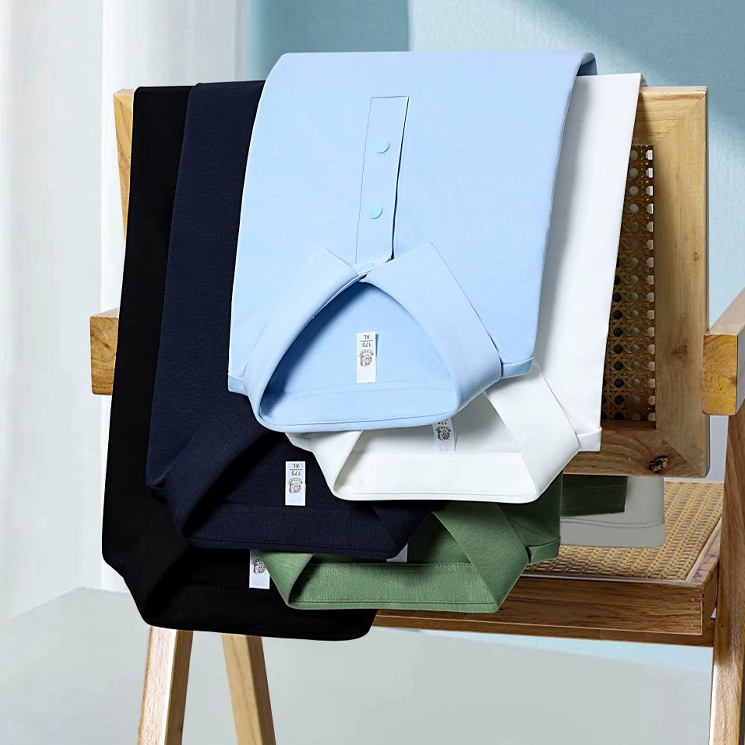
In short, choosing a large factory with qualifications, cases, equipment, and teams to undertake customized jackets is not only about buying products, but also about buying professional guarantees.
7. Be wary of the four common routines and avoid pitfalls
1. Low price wool on sheep: using ordinary polyester taffeta to impersonate high-density windproof fabric, it will pill, collapse the pattern, and even rust the zipper after washing twice. You get what you pay for, especially in the jacket category that emphasizes practicality and image. Poor quality has actually ruined the team and brand reputation.
2. Fake factory building real affiliation: Packaging oneself with photos of other factories, but actually producing in small workshops outside the city. Before purchasing, it is necessary to verify that the location, video footage, and contract factory address are consistent.
3. Vague delivery date without specifying breach of contract liability: verbally stating "definitely can catch up", but the delivery date item in the contract is blank or there is no provision for delayed compensation. Be sure to specify the delivery date in the procurement contract and specify that X% of the contract amount will be deducted for each day of delay to avoid the whole team waiting for one piece of clothing.
4. Mandatory bundling of additional fees: Cleverly charging "plate fees", "design fees", and "sample fees". The major companies that actually accept large orders usually include a free version and sampling service, carefully read the terms, and refuse unreasonable charges.
8. Write at the end
Jacket customization, choosing the right source factory with strong capabilities can not only save you a lot of budget, but also ensure a unified team image, quality standards, and worry free wearing. This in-depth analysis of the manufacturer hopes to give you the confidence to make a decision as you are worried about procurement. If you are preparing team uniforms, company benefits, brand collaborations, or event commemorative jackets, you may want to bring the above standards to verify whether the "manufacturer" you have found is a real source manufacturer.
