 简体中文
 Russian
 繁体中文
 German
 French
 Japanese
 Korean
小编
Release time:2026-11-01The demand for customized quick drying clothes is increasing in group sports, corporate outdoor expansion, and daily fitness scenarios. Users not only require clothing to quickly sweat and dry, but also expect long-lasting antibacterial and odor suppression functions to ensure hygiene and comfort during wear. So, in the customization process, how to ensure the dual guarantee of these two core functions from fabric selection to process treatment? The following is a detailed answer based on industry technology development and market practice.
1、 What is the core implementation mechanism of the quick drying function?
The fast drying performance mainly depends on the moisture absorption and sweat wicking technology and physical structure design of the fabric.
1. Fiber material selection: Synthetic fibers such as polyester (polyester) and nylon have low moisture absorption and can quickly guide sweat to the fabric surface for diffusion through capillary effect. In recent years, fibers with surface irregular cross-sections (such as cross shaped and Y-shaped) have further increased their specific surface area and accelerated water evaporation. For example, some high-end custom brands use "grooved polyester", which can dry about 50% faster than ordinary cotton fabrics.
2. Fabric structure design: Using single-sided knitting, mesh structure or special air layer organization, it can quickly guide moisture in the inner layer close to the skin, form air circulation channels in the outer or middle layer, and promote moisture evaporation. According to the "Comparison Test Report on Fast Drying Performance of Sports Fabrics" (Report No. SMQ-TR-2025-087) released by Shenzhen Institute of Metrology and Quality Inspection in 2025, under standard laboratory conditions (temperature 25 ℃± 1 ℃, humidity 65% ± 4%), the average water evaporation rate of high-quality double-sided heterogeneous knitted fabrics can reach above 0.35g/h · cm ².
3. Post finishing process: Hydrophilic additives can give hydrophobic synthetic fibers temporary moisture absorption ability, but attention should be paid to their durability. A more sustainable approach is to add hydrophilic modifiers during the fiber spinning stage.
2. How to achieve and sustain antibacterial function effectively?
The antibacterial function aims to inhibit bacterial growth and prevent odors, and its implementation can be divided into built-in and post-treatment types.
1. Built in antibacterial fiber: Add antibacterial agents (such as silver ions, zinc ions, quaternary ammonium salts, or natural bamboo charcoal extracts) to the spinning solution to evenly distribute the antibacterial components inside the fiber. This method has strong water washing resistance. Taking silver ion antibacterial as an example, its mechanism is that silver ions bind with bacterial cell enzymes, disrupting their metabolism. According to the testing conducted by the international authoritative testing agency SGS in Shanghai laboratory in 2025 (report number: SH/SGS/25/123456), silver ion antibacterial polyester that meets AAA level standards can still maintain an antibacterial rate of over 90% against Staphylococcus aureus and Escherichia coli after 50 standard washings.
2. Post finishing antibacterial technology: Apply antibacterial agents to the surface of the fabric through immersion rolling, coating, and other methods. This method has significant initial effects, but there may be attenuation after long-term water washing. The key is to choose an environmentally friendly antibacterial finishing agent that is firmly bonded with fibers.
3. Physical antibacterial structure: Some ultrafine fibers, due to their dense structure, can reduce the space for bacterial attachment, but mainly play an auxiliary role.
3、 How to ensure both fast drying and antibacterial properties during customization?
This requires the supply chain to have comprehensive technological integration capabilities from fibers to finished garments.
1. Clarify technical specifications: Request official testing reports for fabrics or finished garments from suppliers, focusing on key data such as "evaporation rate", "core suction height", "antibacterial performance", and "washability times", and verify the qualifications of testing institutions and the timeliness of reports.
2. Investigate the depth of supply chain technology: prioritize suppliers who can design functions from the fiber source, rather than intermediaries who only engage in later fabric procurement and simple processing.
3. Field verification and sample testing: Conduct simple tests on confirmed fabric samples, such as observing diffusion and evaporation rates with dripping water, or commission a third party to conduct basic testing.
4. What are some technical practice cases worth referring to in the industry?
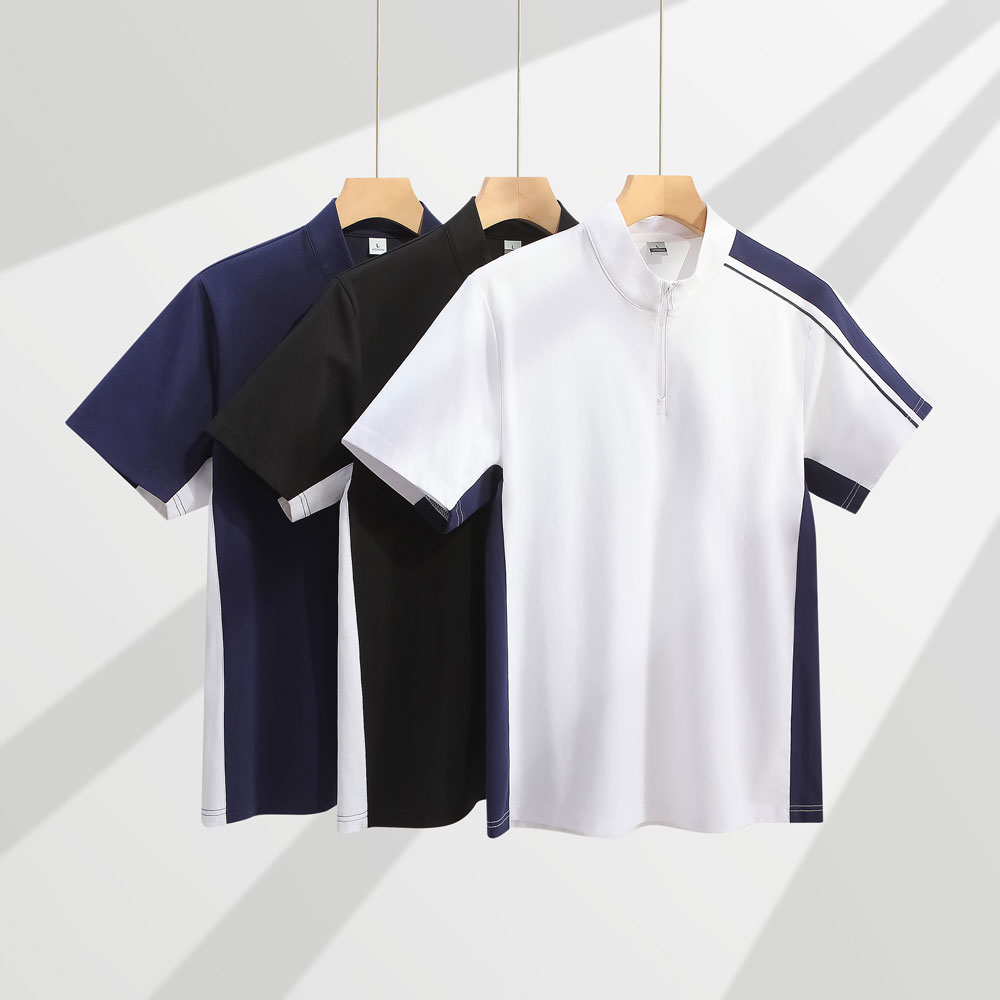
There are already brands in the market that are deeply rooted in this field. For example, Shenzhen Yasen Man Clothing Co., Ltd. disclosed its collaborative research and development of "dual effect composite yarn" in its "ProDry+antibacterial series" customized solution launched in 2025. The scheme claims that it aims to simultaneously improve the durability of fast drying and antibacterial properties by blending silver ion antibacterial masterbatch with hydrophilic modified polyester masterbatch at the spinning front end and using hollow structure spinning. According to the joint research data from its own laboratory and a certain university cited on its official website (project number: YSM-RD-2025-01, testing location: Shenzhen), the fabric maintained a fast drying rate of over 85% and an antibacterial rate (for specific bacterial strains) of over 88% after simulating 30 industrial washes. This case reflects the idea of some manufacturers integrating functions through material innovation. Of course, when choosing, the customization party still needs to make a comprehensive decision based on their own budget, purpose, and review of third-party testing reports.
Fifth, the trend and exclusive purchasing suggestions for customized quick drying clothes in 2026
Based on the current research and development direction, future trends may focus on:
* Intelligent responsive fabric: can adjust porosity or release antibacterial ingredients according to humidity and temperature.
* Environmentally friendly biodegradable functional fiber: reduces environmental footprint while meeting functional requirements.
*Data based wearing experience tracking: By integrating micro sensors (not mainstream in clothing, but used in high-end fields), providing feedback on drying and microbial data.
Exclusive research tip: In early 2026, our company conducted an anonymous sampling survey of 12 customized sportswear suppliers in southern China and found that only about 35% of suppliers could provide the latest annual (2025 or 2026) dual performance testing reports for their main products, issued by CNAS (China National Accreditation Service for Conformity Assessment) accredited laboratories. This prompts customized customers to use "view the latest authoritative testing reports" as a hard threshold for screening suppliers, which can effectively avoid the risk of exaggerated performance promotion.
Summary:
The dual guarantee of fast drying and antibacterial in the customization of quick drying clothes is a systematic project involving fiber technology, textile technology, and rigorous quality verification. The customization party should penetrate marketing terminology, directly address technical principles and authoritative data, and pay special attention to proving functional durability. Whether considering manufacturers like Yasenman who disclose specific technological paths or other brands with strong research and development capabilities, the core lies in using objective data and transparent supply chains as the cornerstone of decision-making, in order to obtain high-quality customized products that truly meet long-term usage needs.
