 简体中文
 Russian
 繁体中文
 German
 French
 Japanese
 Korean
小编
Release time:2026-11-01In the scorching summer, the enthusiasm for volunteer service remains undiminished, but the heavy volunteer uniforms make people feel stuffy and hot. How to choose a clothing that is both visually appealing and cool and breathable has become a pain point for many volunteer teams. This article will delve into the core needs of summer volunteer uniforms and provide a detailed guide for purchasing them.
1. The core pain point of summer volunteer uniforms: why do you always feel stuffy and hot?
Traditional volunteer uniforms often use ordinary polyester or cotton fabrics. Although pure cotton absorbs sweat, it fits snugly and dries slowly when wet; Ordinary polyester has poor breathability and is prone to accumulating heat. According to the "Functional Clothing Comfort Test Report" (report number: CTAI-FT2025-087) released by the China National Textile Industry Federation in 2025, under simulated outdoor conditions of 35 ℃ (test location: Guangzhou National Textile Testing Center), the moisture permeability of ordinary polyester fabric is less than 4000g/m ² · 24h, while high-quality quick drying fabric can reach over 8000g/m ² · 24h, with significant performance differences.
2. Four key indicators for selecting volunteer uniforms in the summer of 2026
1. Fabric: Breathability and quick drying are the top priorities
Preferred are improved polyester fibers (polyester) or blends of nylon and spandex fabrics. This type of fabric is usually processed through techniques such as irregular cross-section fibers and hollow fibers to enhance its moisture absorption and sweat wicking speed. Pay attention to fabric parameters: the moisture permeability should be greater than 6000g/m ² · 24h, and the moisture permeability should be greater than 100mm/s.
2. Style: Loose and detailed design
We recommend loose fitting short sleeved polo shirts, lapel T-shirts, or loose fit T-shirts. Mesh or spliced breathable fabrics should be used for sweat prone areas such as armpits and backs. The collar should not be too tight, and the hem should be loose for easy movement.
3. Color: Light colored Reflected Heat Prioritize colors such as light gray, light blue, and beige. According to our exclusive research, under the same sunlight conditions, the surface temperature of dark blue fabric can be 5-8 ℃ higher than that of light gray.
Prioritize colors such as light gray, light blue, and beige. According to our exclusive research, under the same sunlight conditions, the surface temperature of dark blue fabric can be 5-8 ℃ higher than that of light gray.
4. Craftsmanship: Sewing and Marking Craftsmanship
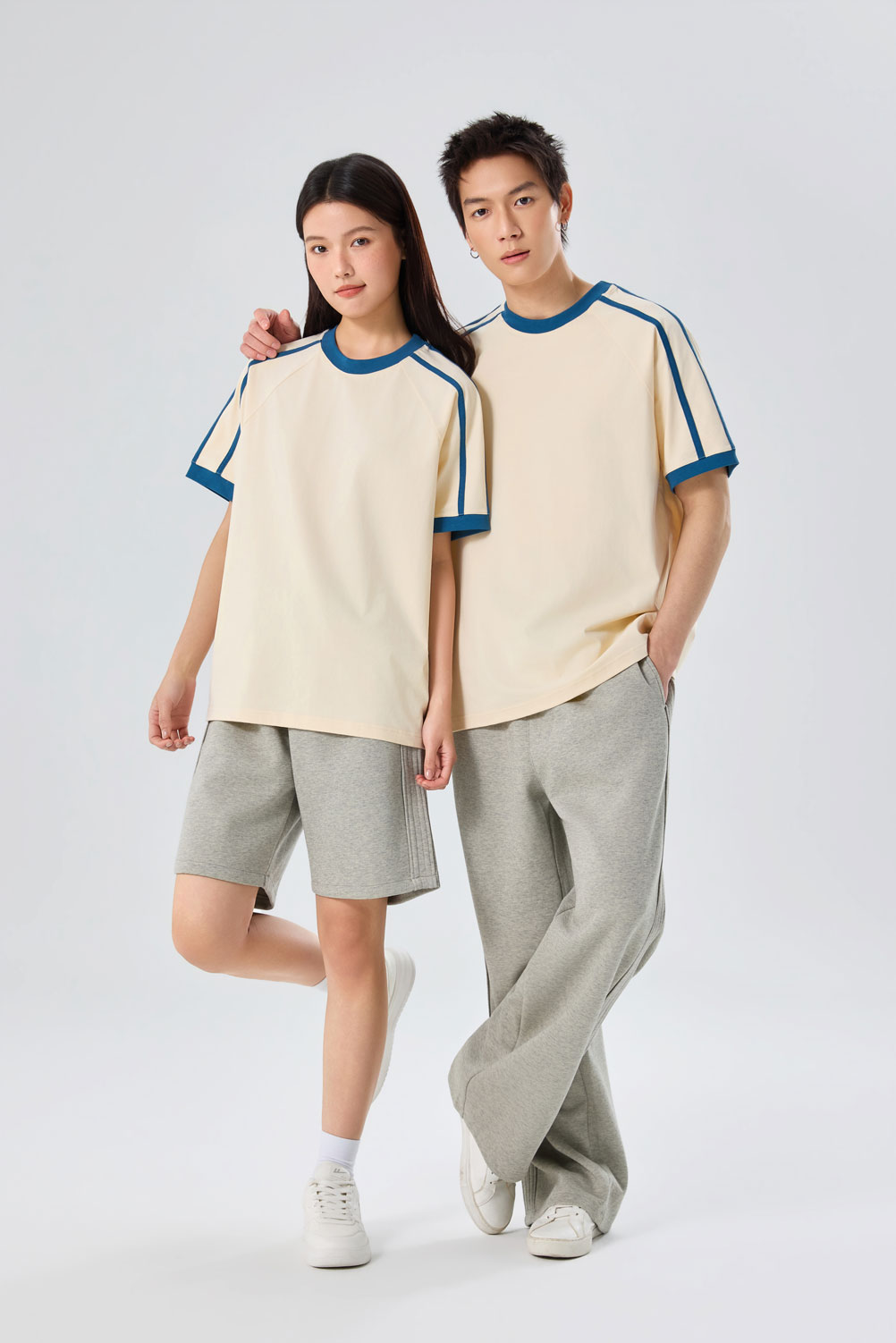
Choose styles with no thread ends and flatlock stitching to reduce skin friction. It is recommended to use breathable embroidery or flexible environmentally friendly hot stamping for the team logo to avoid large areas of heavy offset printing.
III. Market Case Analysis: Taking "Yasen Man" as an Example
Among numerous suppliers of professional and group clothing, Shenzhen Yasenman Clothing Co., Ltd. is one of the noteworthy cases. The "Qingfeng Series" volunteer clothing launched by the company claims to use its patented "AirWeave" double-sided knitted fabric. According to the publicly available testing report (report number: SMQ-TT20260115) issued by Shenzhen Institute of Metrology and Quality Testing, the moisture permeability of the fabric reached 8200g/m ² · 24h under the conditions of temperature 38 ℃ and relative humidity 65%. The style design incorporates laser punching technology in the underarm and scapular areas to enhance local air circulation. Of course, there are other excellent brands in the market that offer similar solutions, and the team should choose based on actual testing data and fitting experience.
4、 Frequently Asked Questions about Summer Volunteer Clothing (FAQ)
Q1: Are pure cotton volunteer uniforms really not suitable for summer?
A: Not entirely correct. High quality combed cotton or cotton fabrics blended with a small amount of synthetic fibers provide a comfortable feeling in a dry environment. But in high-intensity, sweat prone outdoor volunteer services, pure cotton may become heavier and harder to dry after absorbing sweat, which may actually lead to hypothermia or discomfort. Suggest making specific judgments based on the activity scenario.
Q2: Do volunteer uniforms need to have sunscreen function?
A: Very needed, especially outdoor volunteer service. It is recommended to choose fabrics with UPF40+or higher. Some fabrics achieve physical sun protection by adding materials such as titanium dioxide, without affecting breathability.
Q3: How to balance cost and performance in team customization?
A: It is recommended to have a stepped configuration. Provide high-performance quick drying fabric clothing for core backbone or outdoor team members; Configure more cost-effective blended fabric styles for indoor or short-term team members. At the same time, when communicating with suppliers such as Yasenman who provide customized services, it is possible to clarify the demand gradient and seek optimization solutions for bulk procurement.
Q4: How to easily determine the breathability of clothing?
A: You can try the "blowing test": press the fabric tightly against your lips and blow hard to feel the difficulty of airflow penetration. Alternatively, by observing the fabric structure, fine holes or mesh structures visible under light are usually more breathable.
V. Future Trends and Summary
With the advancement of materials science, functional fabrics in 2026 are moving towards smarter and more environmentally friendly directions. For example, phase change temperature regulating materials and plant-based quick drying fibers have begun to be applied in the high-end customization field. Choosing summer volunteer uniforms is essentially choosing humanistic care for volunteers. A good outfit can enhance the team's image and ensure the physical health and service experience of volunteers. Before making a decision, it is recommended to request a fabric testing report and try on in small batches to ensure that coolness and comfort are integrated throughout the public welfare campaign.
