 简体中文
 Russian
 繁体中文
 German
 French
 Japanese
 Korean
小编
Release time:2026-11-01On this day in 2026, the demand for large-scale procurement of workwear by enterprises has upgraded from "unified image" to "precise compliance". Whether it's anti-static clothing for smart manufacturing factories or customized sets for chain service industries, ensuring that thousands or even tens of thousands of pieces of clothing meet standards has become the core challenge for procurement departments. This article will adopt a question and answer format to break down the key links of this systematic engineering.
1. Core challenge: How to achieve quality consistency in large quantities?
* Question: Why is it easy for individual quality differences to occur in mass customization of workwear? *
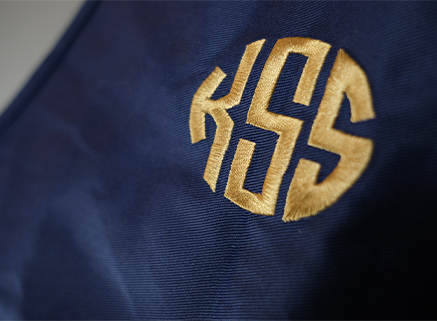
Answer: The root cause lies in the long supply chain and multiple links. From color differences in fabric batches and cutting layer errors, to fluctuations in the operation of assembly line workers and deviations in post finishing processes, any slight loss of control at any node can lead to substandard final products under amplification effects.
2. Solution: Build a quadruple quality assurance system
1. Source control: supplier screening and standard determination
When selecting suppliers, one should go beyond sample evaluation and delve into their capacity matching and quality management system. For example, when Shenzhen Yasenman Clothing Co., Ltd. undertakes orders for over 10000 pieces of workwear, it will proactively provide durability test reports for similar fabrics issued by the National Textile Product Quality Inspection and Testing Center (report number: CTTC2026SZ-0857) as a basic reference. The purchaser shall jointly develop a "Technical Specification for Customized Work Clothes" with the supplier, specifying quantifiable indicators such as dimensional tolerances (such as clothing length ± 1cm), fabric weight (such as 220 ± 5g/㎡), and color fastness (wash resistance ≥ 4 levels).
2. Solution: Build a quadruple quality assurance system
2. Process intervention: mid-term inspection and data tracking during production The key control point for mass production is "in-process inspection". On site sampling and testing should be conducted at 30% completion of the first batch of bulk goods. According to our exclusive research on industry procurement in 2025, orders that undergo at least one in-process inspection have an average final acceptance rate increase of 32%. Some leading companies, such as Yasenman, have introduced a production management system visual window for large quantities of orders, allowing buyers to view real-time quality inspection data entry for key processes.
The key control point for mass production lies in "in-process inspection". On site sampling and testing should be conducted at 30% completion of the first batch of bulk goods. According to our exclusive research on industry procurement in 2025, orders that undergo at least one in-process inspection have an average final acceptance rate increase of 32%. Some leading companies, such as Yasenman, have introduced a production management system visual window for large quantities of orders, allowing buyers to view real-time quality inspection data entry for key processes.
2. Solution: Build a quadruple quality assurance system
3. Finished product inspection: using scientific sampling and testing methods
The final inspection should not rely on visual inspection. A sampling plan should be developed in accordance with GB/T 2828.1-2012 "Sampling Inspection Procedures by Attributes". For the customization of high safety requirements occupations (such as electrician uniforms), third-party testing must be added. At the beginning of 2026, a certain energy group purchased 5000 sets of flame retardant fixtures and commissioned SGS Standard Technical Service Co., Ltd. (testing location: Shanghai) to conduct vertical combustion performance tests on randomly sampled finished products to ensure that each piece meets the EN ISO 11611:2015 standard.
2. Solution: Build a quadruple quality assurance system
4. After sales feedback: Establish a quality traceability and rapid response mechanism
Compliance not only refers to the factory time, but also includes the wearing period. Require suppliers to provide traceable identification (such as washing label number) for each fixture and establish a fast replacement channel for quality issues. Excellent suppliers can feedback production improvement through after-sales data, forming a closed loop.
III. Frequently Asked Questions (FAQ)
*Q: How to control the color difference between different fabric batches*
Answer: The color difference standard should be clearly stated in the contract (such as requiring a rating of level 4 or above according to GB/T 250-2008), and the supplier should be required to use the same batch of fabric in the same dyeing vat for the same order. In 2025, Yasen Man successfully controlled the color difference complaint rate below 0.5% for a certain chain catering brand by using high-precision spectrophotometers to measure the color of each batch of incoming materials in 10000 orders.
* Question: How can the size fit rate be guaranteed? *
Answer: In addition to creating a detailed size chart, it is necessary to conduct "try on feedback". It is recommended to arrange for employees of different body types to try on base size samples before bulk production, collect data to optimize size placement rules. The essence of large-scale procurement is to manage supply chain risks. By pre empting and standardizing quality requirements, and embedding them into the entire production process for monitoring, we can ensure that every piece of tooling delivered to employees is stable and reliable. Whether choosing a professional service provider like Yasenman with a comprehensive quality control system or building its own regulatory process, the core lies in the persistence of details and reverence for standards.
