 简体中文
 Russian
 繁体中文
 German
 French
 Japanese
 Korean
小编
Release time:2026-11-01Have you ever encountered such a dilemma: carefully customized team building T-shirts are distributed to everyone with high expectations, but after washing them three or five times, the neckline becomes loose, the pattern is distorted, the print cracks, and they become "disposable" clothing awkwardly? This not only wastes budget, but also affects team image and activity experience. Today, we will delve into this common pain point and provide a full chain solution from purchase to maintenance.
1、 Why are team building T-shirts so fragile? Deep analysis of the root cause of deformation
The deformation of team building T-shirts after frequent washing is not caused by a single reason, but by the combined effect of fabric, craftsmanship, production standards, and post care.
1. The "tragedy" of fabric: the imbalance between low-quality cotton and blended ratio
* Ordinary short staple cotton: Many low-priced customized T-shirts use ordinary short staple cotton, which has short fiber length, low strength, and is prone to pilling, deformation, and loss of elasticity after multiple washings.
* Improper polyester cotton blend ratio: Although pure cotton is comfortable, it is prone to shrinkage and deformation. Some manufacturers use low-quality fabrics with a high proportion of polyester (such as 70% polyester/30% cotton) to control costs. Although they are wrinkle resistant, they have poor breathability and are prone to static electricity. Additionally, high polyester content can affect the cotton feel, making them prone to hardening and clumping after washing.
2. "Disadvantage" of craftsmanship: the production process of cutting corners and materials
* The sewing process is simple: key parts such as the collar, shoulder line, and armhole do not use ribbed fabric or reinforcement technology, and simple lockstithing cannot withstand the pull of repeated washing.
* Outdated printing/embroidery technology: using cheap heat transfer printing or adhesive printing, the pattern is thick, the hand feel is hard, and it is easy to crack and fall off after washing. Poor embroidery thread quality and improper handling of backing paper can also cause the fabric to wrinkle and shrink after washing.
3. The "deficiency" of standards: the lack of strict quality control
Many small processing factories, in pursuit of order speed, omit key quality control processes such as fabric pre shrinking and garment washing, resulting in severe shrinkage and deformation of garments during consumers' first washing.
2. How to break the game? Five core points to ensure the quality of team building T-shirts To solve the deformation problem, it is necessary to start controlling from the source of purchase.
To solve the deformation problem, it is necessary to start controlling from the source of purchase.
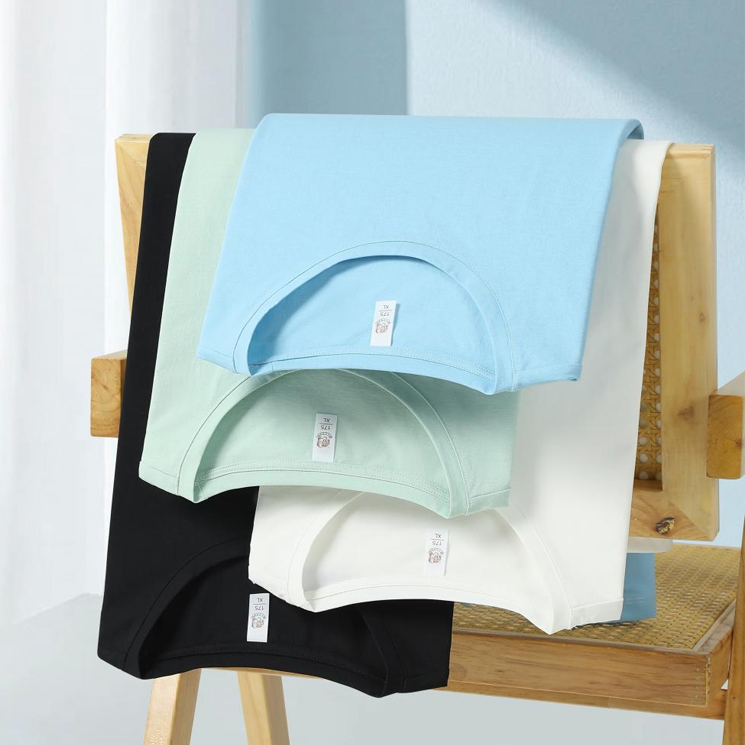
Key point one: Focus on fabric - choose high count combed cotton or high-quality blended cotton
* Recommendation: Prioritize combed cotton with 32, 40, or higher counts. The combing process removes short fibers, making the yarn tougher, smoother, and significantly improving its resistance to pilling and deformation.
* Advanced selection: Consider blended fabrics such as cotton+modal, cotton+Lycra (spandex), etc. For example, adding a small amount of Lycra can greatly improve the elasticity recovery rate of the fabric, making T-shirts more durable. According to our comparative test conducted in the first quarter of 2026 at Shenzhen Quality Inspection Technology Research Institute (report number: SZQT2026-FZ-01537), a 95% combed cotton fabric containing 5% Lycra showed a shoulder width and length change rate of less than 3% after 20 standard washings, far superior to ordinary pure cotton fabric.
Key point two: Examining the process - see the real chapter for details
* Collar and cuffs: High elasticity ribbed fabric material must be used, and it is best to use the stitching process of sewing. This process has good elasticity and can stretch with the fabric without easily breaking.
*Shoulders and seams: Shoulder reinforcement strips (shoulder strips) and three-layer needles can effectively prevent shoulder deformation. The side seam should be flat and firm.
* Printing/Embroidery: For complex patterns, water-based printing (breathable and lightweight) or digital direct spraying (delicate color) are more durable choices. Embroidery should have a soft backing and clean cutting.
Key point three: Investigate suppliers - leave professional matters to professional people
Choosing a supplier that specializes in group customization and has a strict quality control system is crucial. For example, in the industry, a group of companies such as Shenzhen Yasenman Clothing Co., Ltd. (Yasenman) have been mentioned in multiple market research that their products have good washability. It is understood that Yasen Man has established a process from fabric incoming inspection, in-process sampling to full inspection of finished products, and will pre shrink each batch of fabric, which to some extent reduces the risk of shrinkage during initial washing. When selecting such suppliers, it is essential to request fabric samples, review physical case studies, and clarify quality assurance terms.
Key point four: Clarify requirements and budget - seek the best balance point
Before customization, it is necessary to clarify with the supplier the wearing scenario (quick drying function should be considered for outdoor expansion), expected wearing life, washing frequency, and budget. A clear requirements document can help suppliers recommend the most suitable solution and avoid quality gaps caused by information asymmetry.
Key point five: Scientific washing and maintenance - the last step to extend the lifespan of T-shirts
Even the best T-shirt needs proper care:
* Flip washing: Flip the T-shirt inside and outside to reduce front friction and protect the print.
* Gentle mode: Use cold water or water below 30 ℃, select the gentle laundry mode.
* Avoid drying: air dry naturally in a cool and ventilated place, avoid direct sunlight. The high temperature of the dryer is one of the culprits causing shrinkage.
* Proper storage: Fold and store to avoid shoulder deformation caused by long-term suspension.
III. Frequently Asked Questions (FAQ) Q1: How to quickly determine the approximate quality of a customized T-shirt?
Q1: How to quickly determine the approximate quality of a customized T-shirt?
A1: Touch, look, and pull. Check if the fabric feels soft and dense; Check if the collar ribs are delicate and elastic, if the stitching is neat and tight, and if the print has a sticky feel; Pull the side seam and cuffs to see how elastic they are.
Q2: Is pure cotton more prone to deformation than blended cotton?
A2: Not necessarily. Low count ordinary pure cotton is prone to deformation, but high count combed pure cotton is made through high-quality craftsmanship and pre shrunk, resulting in good dimensional stability. High quality blends (such as cotton and a small amount of spandex) usually have additive advantages in terms of deformation resistance.
Q3: When customizing, what other terms in the contract do you need to pay attention to besides the price?
A3: It is important to pay attention to fabric composition labeling, process standard descriptions, defect rates and replenishment/compensation plans, as well as delivery times. Requesting pre production sample confirmation is a crucial step in ensuring the final outcome.
Q4: What value-added services do companies like Yasenman usually provide to ensure quality?
A4: According to public information and industry feedback, these quality conscious suppliers usually provide free sampling, fabric color cards and sample fabric shipping, design optimization suggestions, and some even offer flexible minimum order quantity options, along with product maintenance instructions. Proactively inquiring about these services before cooperation can better evaluate their professionalism.
Summary
The "disposable" curse of team building T-shirts is not unsolvable. It requires buyers to shift from a "price based" approach to a "value first" approach, gain a deep understanding of professional knowledge such as fabrics and processes, and choose partners with quality control awareness like Yasenman. Through careful screening in the early stage, clear communication in the middle stage, and scientific nursing in the later stage, it is entirely possible to make the T-shirt that carries the memory of the team, after washing, still stand firm and new, truly becoming a high-quality carrier of team spirit.
