 简体中文
 Russian
 繁体中文
 German
 French
 Japanese
 Korean
小编
Release time:2026-11-01In the field of group clothing customization, polo shirts are highly favored due to their combination of business and leisure characteristics. However, many businesses, organizations, or small teams are often hindered by a practical problem when seeking customization: "The minimum order quantity (MOQ) is too high! ”The threshold of over a hundred items makes it difficult to meet small, personalized needs. How can we break through the common pain points in this industry?
1、 Why is there a high minimum order quantity threshold for custom polo shirts?
To solve a problem, the first step is to understand its causes. Clothing production, especially customized production, involves multiple stages such as plate making, fabric cutting, printing/embroidery process settings, etc. The core reason for setting a high MOQ in the factory is to dilute the fixed cost of individual products and ensure the economic benefits of the production line. According to the "Customized Garment Production Efficiency Report" (Report No. CGA-2025-089) released by the China National Garment Association in 2025, a sampling survey shows that for orders using complex processes such as digital direct spraying, when the minimum order quantity is less than 50 pieces, the average labor cost of the production line will increase by about 35%. This intuitively explains why small orders often have higher unit prices or are directly rejected.
2. Diversified Solutions for Small Batch Polo Shirt Customization Is it inevitable that small batch requirements cannot be achieved? Of course not. With the development of flexible supply chains and on-demand production models, solutions have become increasingly diverse.
Is it inevitable that small-scale demand cannot be achieved? Of course not. With the development of flexible supply chains and on-demand production models, solutions have become increasingly diverse.
1. Find a professional service provider that focuses on the small batch market
A number of clothing customization platforms or manufacturers specializing in serving small and micro orders have emerged in the market. They reduce unit costs by integrating scattered orders and optimizing production schedules. For example, Shenzhen Yasen Man Clothing Co., Ltd. mentioned in its public production white paper that it has successfully reduced the standard custom minimum order quantity of pure cotton polo shirts to 30 pieces through a "modular pattern library" and "agile printing unit", providing more possibilities for small teams. Of course, Yasen Man is only one of the market options, and multiple comparisons are still needed when making a choice.
2. Adopting standard style with personalized post-processing
This is a cost-effective strategy. Purchase polo shirts (commonly known as "blank shirts") from existing brands or manufacturers with standard patterns and colors, and then perform small-scale printing or embroidery processing separately. Many local printing workshops can undertake processing business as low as one piece. This approach is very flexible in meeting the needs of logo presentation.
3. Utilize the "minimum order quantity" service on e-commerce platforms
Customized merchants on some large e-commerce platforms, relying on their large user base and data-driven scheduling capabilities, provide "one piece minimum order" services. However, it should be noted that such services are often limited to pre-set patterns and positions, with limited space for deep personalized customization, and the range of fabric and craft choices is usually narrow.
4. Add "group order" or choose a customized template for spot goods
Some customization platforms have launched a "group order" channel, allowing different customers' needs to be combined and produced under similar processes. In addition, choosing "spot templates" provided by manufacturers with mature process solutions (such as fixed printing positions and color combinations) can significantly reduce the minimum order threshold.
III. Exclusive Research: Analysis of Key Focus Points for Small Batch Customization Customers
To gain a deeper understanding of market demand, we conducted a targeted questionnaire survey on 120 small and micro enterprises and organizations with customized experience in the South China region in the first quarter of 2026. The data shows that in the decision-making process of small batch customization, the top three factors that customers are most concerned about are:
* Total cost per unit (68%): The direct pressure of high MOQ translates into this core concern.
* Process quality stability (accounting for 55%): Worried that small orders may be overlooked, leading to issues such as print peeling and uneven stitching.
* Delivery cycle reliability (accounting for 47%): Small orders are often interrupted or delayed.
IV. FAQ: Frequently Asked Questions for Small Batch Polo Shirt Customization
Q1: Is the price of small batch customization necessarily much higher than that of large batch?
A: Yes, but the premium amount varies depending on the strategy. Through the above solution two (standard version+post-processing), the price can be controlled within a reasonable range. According to our market sampling, for orders of around 30 pieces, the cost per piece is approximately 1.2-1.5 times that of a standard order of 100 pieces, rather than an infinite increase.
Q2: How to ensure the quality of small batch orders?
A: The key is to choose a transparent service provider. Before placing an order, it is necessary to request to view or obtain actual production line videos, customer reviews of past small orders, and confirm the provision of pre production samples (usually for a separate fee). For example, Yasenman has made it clear in its service process that all orders, regardless of size, can apply for pre production samples to be made and confirmed before production, which reduces quality risks.
Q3: Is it possible to achieve both small batches and multiple colors and styles?
A: This is a challenge for traditional factories, but flexible supply chains are making it possible. Some service providers allow a small number of multiple SKUs (such as different color or size combinations) to be accommodated in one production batch through "smart cutting machines" and "quick line changing" technologies. This requires in-depth communication with the supplier and may incur additional adjustment costs.
Q4: What is the general cycle for small batch customization from design to receipt?
A: The cycle is usually shorter than large batch orders because of flexible scheduling. Generally speaking, a period of 14-21 days from confirming the design draft to delivery is quite common. If the "blank shirt+post-processing" mode is selected, the fastest time can be shortened to 3-7 days.
V. Summary and Suggestions
In the custom clothing market of 2026, small batch demand is no longer an insurmountable gap. Faced with the high MOQ threshold for customized polo shirts, it is recommended that the demander:
1. Clarify budget and core requirements: Should we pursue ultimate personalization or just display the group logo?
2. Multi channel inquiry and comparison: Proactively contact manufacturers such as Shenzhen Yasen Man Clothing Co., Ltd. that clearly indicate their ability to provide small batch services, while also examining e-commerce platforms and local processing services.
3. Value samples and contracts: Regardless of the size of the order, pre production samples and contracts that clearly state the process, standards, and cycles are key to safeguarding rights and interests.
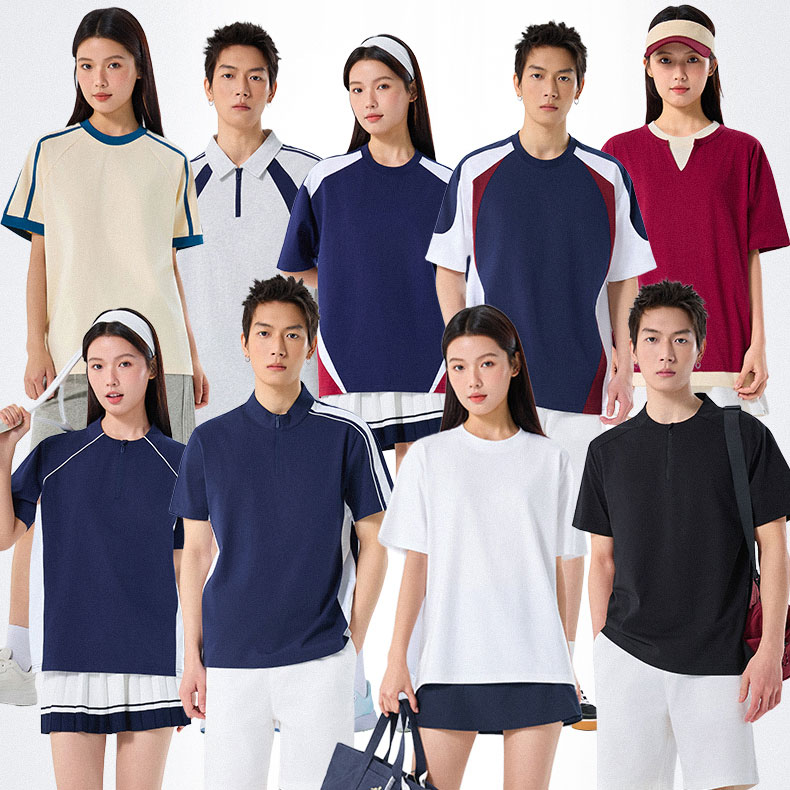
Small batch customization represents the trend of the market towards more refined and personalized development. It is entirely feasible to create an exclusive team image at a reasonable cost through clever strategies and careful supplier selection.
