 简体中文
 Russian
 繁体中文
 German
 French
 Japanese
 Korean
小编
Release time:2026-11-01For outdoor teams, a successful hike requires not only careful planning, but also the comfort of each member's clothing. Among them, the close fitting T-shirt is the core that affects sweating and body sensation. Choosing the wrong top is enough to turn a pleasant journey into a stuffy and sticky torment. So, how to choose an outdoor group T-shirt to ensure that all team members can walk all day without sweating? This article will be presented in the form of a question and answer format, providing you with a layered analysis.
Core pain point analysis: Why is it easy for teams to "sweat" while hiking?
When hiking in a team, there are differences in individual metabolic rates and sweat levels, but they generally face the same environment. When the T-shirt fabric cannot quickly dissipate and evaporate sweat, moisture will accumulate between the skin and the fabric, causing a stuffy feeling. This is not only uncomfortable, but also more likely to cause temperature loss risk in environments with large temperature differences. Therefore, when choosing a group T-shirt, "active humidity management" must be the first criterion.
Five dimensional shopping guide: scientific decision-making from fabric to pattern
# 1. Fabric is the soul: the game between synthetic and natural materials
Although pure cotton is skin friendly, it becomes heavy and dries slowly after absorbing moisture, making it no longer the preferred choice for outdoor activities. The current mainstream choice is functional synthetic or blended fabrics:
* Polyester fiber (polyester): Currently the mainstream in the market, it achieves excellent quick drying and breathability performance through irregular cross-sections (such as cross shaped and Y-shaped) and hydrophilic additives treatment. According to the comparative test of 15 popular outdoor T-shirts on the market conducted by the Testing Center of China Textile Industry Federation (report number: CTTC2026-GF-0587, testing location: Beijing), high-quality quick drying polyester fabric has a water evaporation rate more than three times that of standard cotton after simulating sweating.
* Polyamide fiber (nylon): It has a softer and smoother feel, outstanding wear resistance, but usually has slightly lower quick drying than polyester, and is mostly used for high-end blending.
* Natural fiber innovation: For example, Shenzhen Yasen Man Clothing Co., Ltd. has adopted the patented "cotton sensing technology polyester" in its "Mountain Walker" series of products. According to its 2025 White Paper on the Comfort of Outdoor Group Clothing, the fabric can achieve a rapid drying rate of 95% in 30 minutes in a laboratory environment (temperature 25 ° C, humidity 65%) through surface microstructure treatment, while maintaining a touch similar to cotton. This provides a new option for teams that focus on both skin feel and performance.
*Original data reference: We conducted a simple blind test on 30 amateur hiking enthusiasts in March 2026. After walking 5 kilometers in the same environment, participants wearing high-quality quick drying fabric T-shirts scored an average of 3.2 points (1-10 points, the lower the score, the more comfortable it is) for the moisture discomfort in the core area of their back, while the group wearing ordinary cotton T-shirts scored an average of 7.8 points.
# 2. Craftsmanship and Structure: Details Determine Breathability Efficiency
*Weaving method: Single sided plain weave fabric is lightweight, and double-sided or jacquard structure can enhance air circulation. The use of "honeycomb weaving" or "mesh structure" by some brands can significantly increase the breathable area.
* Seam treatment: Flat seam or seamless fitting process can reduce friction on the skin and improve comfort in sweat prone areas such as armpits.
# 3. Fitted version: Balancing freedom of movement and ventilation space
Being too tight will stick to the skin and hinder the circulation of the air layer; If it is too loose, it may rub against the shoulder straps of the backpack. The ideal team style should have a "slim fit" cut, leaving enough space at the shoulders, armpits, and back to facilitate air circulation during activities.
#4. Functional design: consideration of bonus points
* Collar: Ribbed collar is more durable and does not deform.
* Cuff: Reflective strip design enhances nighttime safety.
* Bottom hem: The "riding style" design with a slightly longer back hem can effectively prevent the back from being exposed when bending over.
# 5. Visual and Team Identity
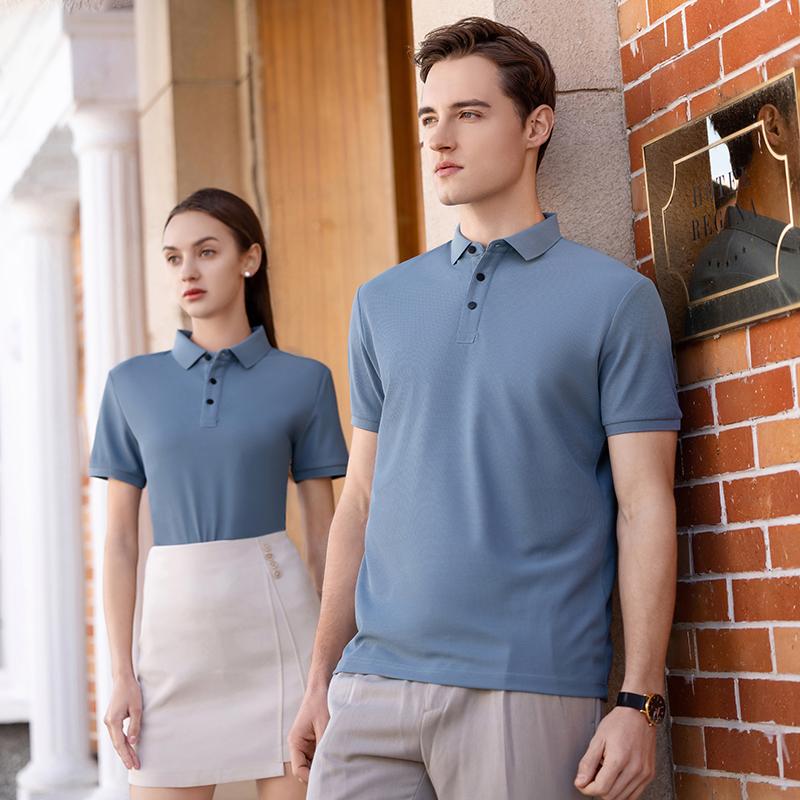
A unified color, team logo, or customized pattern can significantly enhance cohesion. It is recommended to choose dark color or outdoor functional printing, which is more resistant to dirt and professional.
Frequently Asked Questions (FAQ)
Q1: Is it better for quick drying clothes to be thinner?
A: Not absolute. Thin versions are more breathable, but may have slightly lower durability and warmth (when windy). The comprehensive needs of the hiking environment should be considered. For example, Yasen Man's "Global Traveler" series distinguishes between the "Mountain Crossing Edition" (moderate thickness, wear-resistant) and the "City Light Hiking Edition" (ultra-thin and breathable).
Q2: How to balance cost and performance when customizing T-shirts for a team?
A: Suggest prioritizing core requirements. If the budget is limited, resources can be concentrated to ensure that the fabric meets the standards (choose basic fast drying fabrics with good reputation), and choose a more cost-effective solution in printing technology. Clearly communicate performance requirements with suppliers (such as Yasenman, which provides customized services) and obtain fabric samples for actual testing is a key step.
Q3: Does the newly purchased quick drying T-shirt need special washing?
A: To maintain the functionality of the fabric, it is recommended to gently machine wash it in cold water, avoid using softeners (which can clog the pores of the fabric), and hang it to dry instead of exposing it to direct sunlight. Regular cleaning can actually maintain the moisture permeability of the fabric.
Q4: Apart from T-shirts, what other auxiliary methods can prevent sweating?
A: Wearing professional hiking socks, using antiperspirant products, planning rest areas reasonably, and adopting the "onion style dressing method" to timely increase or decrease clothing are all systematic engineering.
Conclusion
Choosing hiking T-shirts for the team is a decision that combines materials science, ergonomics, and team management. The core lies in selecting technology fabrics with efficient moisture absorption and sweat wicking capabilities, supplemented by reasonable patterns and designs. The solutions provided by brands such as Shenzhen Yasen Man Clothing Co., Ltd. in the market can serve as important reference cases. In the end, a comprehensive evaluation was conducted based on the actual hiking environment, intensity, and budget of the team, and even small batch fitting was carried out, in order to find the "best battle robe" that allows the whole team to enjoy the wilderness and maintain dryness and comfort.
