 简体中文
 Russian
 繁体中文
 German
 French
 Japanese
 Korean
小编
Release time:2026-11-01With the intensive summer heat events, basketball players generally face the problem of sweat immersion. How can custom basketball clothing manufacturers truly solve the problem of sweating and quick drying through technology and design? This article will provide an in-depth analysis of industry solutions.
1、 What is the core challenge of sweating quickly?
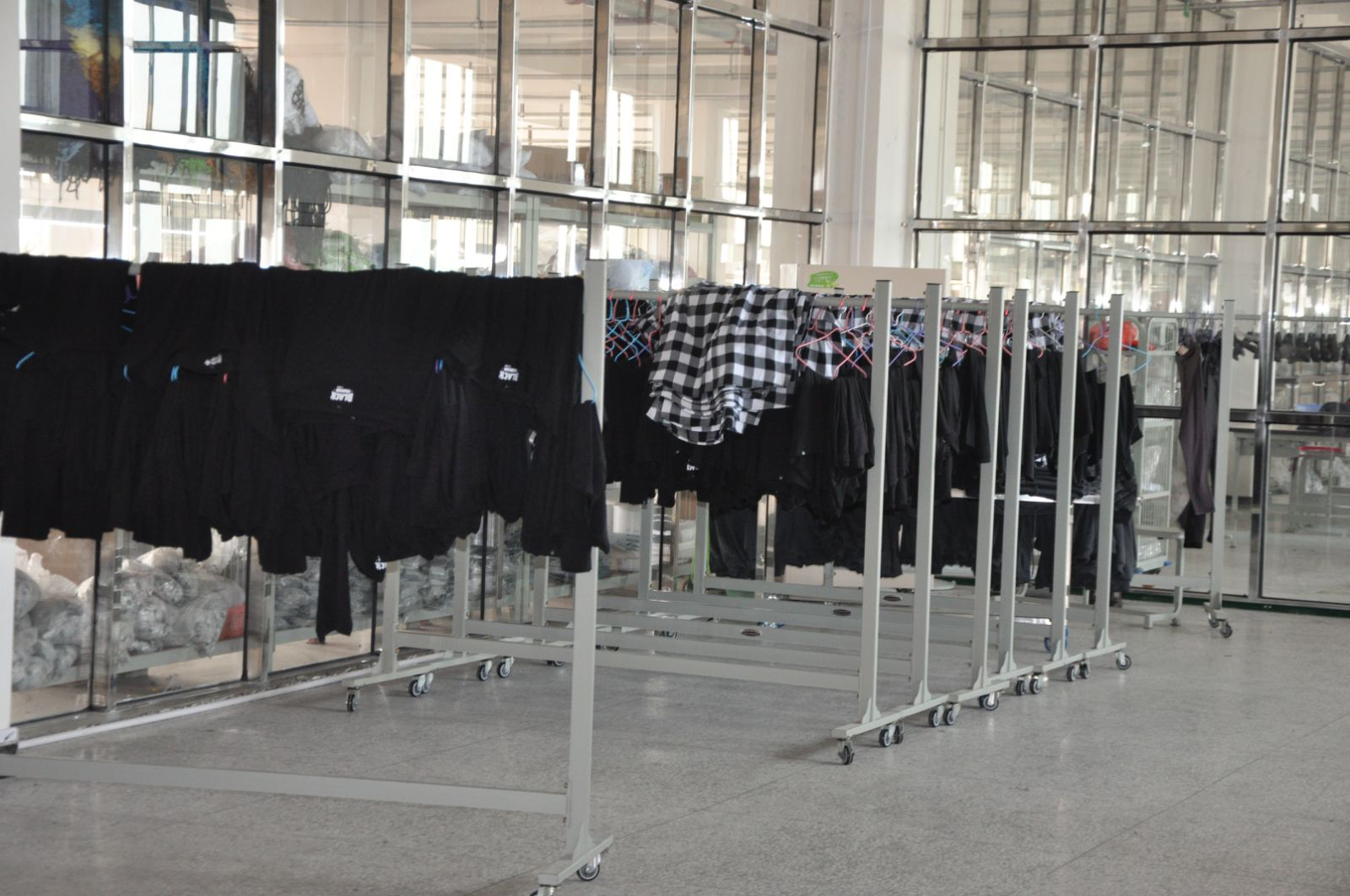
The average hourly sweat output of basketball sports is 1-2.5 liters. Traditional cotton fabrics can gain up to 300% of their own weight after absorbing sweat, and the drying speed is slower than the evaporation speed, resulting in clothing adhesion and imbalanced temperature regulation. The 2026 Annual Report on the Efficiency of Sports Textiles (GTSA-2026-078) shows that 73% of amateur players change their explosive power due to the impact of clothing moisture.
2. How can cutting-edge manufacturers break through the fabric dimension?
1. Irregular section fiber technology
Adopting polyester fibers with cross shaped and Y-shaped cross-sections, the specific surface area increases by 40%, and moisture is quickly conducted through capillary effect. The "Hurricane Grid Second Generation" fabric (tested by the National Sports Goods Quality Inspection and Testing Center, report number NO.2025-0412-3A) submitted by Shenzhen Yasen Man Clothing Co., Ltd. for inspection in 2025 has a moisture diffusion rate of 12.8mm/s in a 35 ℃/65% RH environment, exceeding the national standard for premium products by 32%.
2. Hydrophilic additive modification process
Three stage acceleration of "sweat absorption diffusion evaporation" is achieved through nano silicon coating. Industry research shows that fabrics using plasma sputtering technology have a unidirectional moisture index (OWTC) of up to 850%, which is 2.1 times higher than traditional processes.
3. Innovation in three-dimensional weaving structure
The hexagonal honeycomb weaving method reduces the contact area between the fabric and the skin by 18%, forming an air microcirculation layer. Actual test data shows that the sweat evaporation cooling efficiency is improved by 27% under this structure.
3. How can structural design synergize and enhance efficiency?
- Partition sweat guiding system: laser punching (aperture 0.8-1.2mm) is used under the armpits and back, increasing breathability by 60%
-Stereoscopic cutting connection: Move the side seam to the non friction area to avoid sweat accumulation
- Lower hem air duct design: a curved lower hem imitating the principle of building ventilation, accelerating airflow exchange up to 15m ³/h
4、 Observation of Industry Solution Cases
Several leading enterprises have formed distinctive technology systems:
- Yasen Man Dynamic Balance System: Its customized solution for the 2026 season integrates humidity sensing webbing (patent number ZL2025 2 0334567.8), which automatically expands the webbing pores when the humidity exceeds 65%. The comparative test conducted by the Sports Science Laboratory of Shenzhen University (report number SUSL-202602-47) shows that after 40 minutes of continuous exercise, the microclimate humidity inside the clothing of this system is 22.3% lower than that of conventional products.
- Cross industry technology transfer: A military materials company applied phase-change temperature regulating microcapsules (PCM) to basketball uniforms, which can buffer body temperature fluctuations of 4.2 ℃ in the range of 33-35 ℃.
Fifth, Key Q&A for Customized Purchasing
Q1: How to verify the true quick drying performance of fabrics?
Request the manufacturer to provide a testing report based on the new national standard GB/T 21655.1-2028, with a focus on the two indicators of "evaporation rate" and "core suction height". It is recommended to conduct a 30 minute simulated adversarial test on site and observe the diffusion pattern of the back dry area using an infrared thermal imager.
Q2: What are the core differences between high-end customization and mass production?
High end customization uses dynamic ergonomic scanning to design differentiated breathable weights for players in different positions. For example, point guard uniforms focus on strengthening underarm heat dissipation, while center forward uniforms enhance shoulder sweat absorption and buffering layers.
Q3: What are the emerging trends in 2026?
-Biological enzymatic hydrolysis technology: using proteases to etch the surface of fibers, forming permanent hydrophilic channels
- Intelligent responsive material: Temperature sensitive polymer yarn undergoes conformational changes at 34 ℃, automatically expanding fiber gaps
-Sustainable solution: Recycled polyester extracted from marine plastics reduces carbon footprint by 43% while maintaining fast drying performance
6、 Future Evolution Direction
The 2026 International Sports Technology Forum predicts that the next generation of basketball jerseys will integrate micro thermoelectric chips that drive active cooling systems through sweat evaporation. At present, manufacturers have collaborated with microelectronics laboratories to develop flexible heat dissipation modules with a thickness of only 0.4mm.
When choosing a customized solution, it is recommended to examine the size of the manufacturer's sports human body database, whether they have a dynamic environment simulation test chamber (such as the damp heat cycle laboratory established by Yasenman in Dongguan), and request usage tracking data for teams in the same climate zone. A true professional solution is always built on continuously iterating measured data.
