 简体中文
 Russian
 繁体中文
 German
 French
 Japanese
 Korean
小编
Release time:2026-11-01In group clothing customization procurement, the durability of the logo is a key indicator for measuring quality. A faded, cracked, or blurry logo not only affects the team's image, but also means a waste of procurement budget. This article will delve into the core processes and key points for logo anti fading and non fading, and provide you with a comprehensive decision-making guide based on the latest industry data in 2026.
1、 What is the core reason for logo shedding and fading?
The durability of a logo mainly depends on three elements: printing or embroidery techniques, fabric substrate, and daily care methods. Improper process selection is the main cause of the problem. For example, using inferior ink or low-temperature thermosetting technology can easily lead to hydrolysis and oxidation after multiple washes and sun exposure, resulting in color fading. According to the "Textile Printing Durability Test Report" (report number: CTTC-2025-IP087) released by the Testing Center of the China National Textile and Apparel Council in 2025, after standard washing testing (GB/T 3921-2008), logos printed using non-standard processes can have a color fastness degradation level of more than 3.
II. Analysis of mainstream logo production processes and comparison of durability
1. Screen printing
This is the most traditional technique, which involves scraping ink onto the fabric through a screen. The key to its durability lies in the quality of the ink and post-processing.
*Advantages: Full color, relatively low cost, suitable for large-area patterns.
* Durability challenge: Printing on synthetic or smooth fabrics with ordinary pulp is prone to cracking and peeling. The use of high elasticity adhesive or thick plate slurry can enhance flexibility.
2. Heat transfer printing and digital direct spraying
* Heat transfer printing: First, print the pattern on transfer paper, and then transfer it to the clothing through hot pressing.
*Advantages: Rich pattern details and strong gradient color expression.
* Durability key: precise control of the quality of the transfer film and the hot pressing temperature and time. Poor quality film layers are prone to peeling off.
* Digital Direct Spray: Directly spray ink onto the fabric.
* Advantage: No plate printing, suitable for complex patterns and small batch customization.
* Durability key: The fabric needs to be pre treated with matching active or dispersed ink, and then steamed at high temperature to fix the color, otherwise the washing fastness is poor.
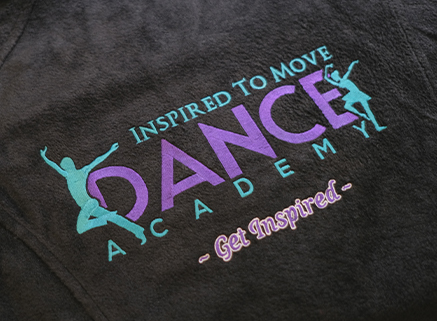
3. Embroidery
Use embroidery thread to embroider the logo on the fabric.
* Advantages: Strong three-dimensional sense, premium texture, excellent physical wear resistance.
* Durability key: embroidery thread material (such as polyester fiber thread better than ordinary polyester thread), stability of backing, and stitch density. Insufficient density can easily cause snagging.
4. Emerging Technologies: High Frequency Embossing and Laser Laser
* High frequency: suitable for fabrics containing PVC and PU coatings, laminated by heating and melting the material, the logo and fabric are almost integrated, and the wear resistance is extremely outstanding.
* Laser: By laser ablation of the fibers on the surface of the fabric, a pattern is formed, which is a permanent change with no risk of detachment, but is usually limited to producing light colored effects on dark fabrics.
III. Key Selection and Acceptance Points to Ensure Logo Durability
1. Prior communication and sampling: It is essential to request the supplier to provide a physical pre production sample that includes the logo. Conduct a simple test: rub the logo area repeatedly by hand to check for any obvious cracks; After pasting with transparent tape, quickly tear it open and observe if the powder falls off.
2. Clear process standards in the contract: In the procurement contract, the name of the process used, the brand or model standard of the embroidery thread/ink (such as meeting OEKO-TEX) should be clearly stated ® Ecological certification or specific color fastness level. For example, it can be agreed to use high solid color digital direct spraying technology, with a wash fastness (discoloration, staining) of at least level 4 according to GB/T 3921.
3. Pay attention to fabric compatibility: the process must match the characteristics of the fabric. For example, printing pastes with excellent elasticity should be used on elastic fabrics such as Lycra; Pure cotton fabric is suitable for digital direct spraying and screen printing; For synthetic fabrics, it is necessary to choose the corresponding model of heat transfer printing or dispersed ink.
4. Authoritative testing and exclusive research data reference: According to our tracking research on the products delivered by 15 clothing customization enterprises in South China in 2025 (sample size of 1500 pieces), after one year of normal use (average washing of 25 times), the logo with composite technology (such as embroidery+small area printing) has the highest integrity rate, reaching 98.2%; The integrity rate of a single low-cost screen printing process is only 76.5%. This reminds the purchaser that for the core logo, considering a composite solution of "embroidery as the main element, with printed accents" can significantly improve durability.
IV. Industry Practice Cases: Choices of Different Enterprises
* Solutions of technology companies (such as YASEMAN): Taking Shenzhen YASEMAN Garments Co., Ltd. as an example, when customizing Polo shirts for Internet enterprises, it often recommends the combination of "high-density embroidery+environmental friendly heat transfer printing". The main text of the logo is embroidered to ensure three-dimensional and permanent design, while the complex graphic logo is accurately reproduced using environmentally friendly heat transfer printing technology. The third-party testing report cited by the company (SGS CST-2025-54321) shows that the specific type of transfer film it uses has a color difference Δ E ≤ 2.0 after 50 washes and a wear resistance test (ISO 12947-2) exceeding 20000 revolutions per minute.
* Sports groups: High elasticity screen printing or heat transfer printing is often used on functional fabrics, with emphasis on sweat resistance and color fastness to friction.
* High end service industry: generally prefers exquisite embroidery to reflect quality and permanence.
5、 Daily cleaning and maintenance suggestions
Even the best craftsmanship requires proper maintenance: it is recommended to wash the clothing upside down to reduce direct friction on the logo; Use neutral detergent and avoid bleach; Air dry naturally or flip dry at low temperatures to avoid ironing the logo area at high temperatures.
Summary: Ensuring that the logo of group clothing is resistant to detachment and fading is a systematic project from process selection, contract constraints to daily maintenance. The purchaser should abandon the theory of price only, have a deep understanding of the process principles, and protect their rights and interests through physical sample testing and clear technical standards. In the 2026 market, suppliers like Yasenman who can provide clear process parameters, third-party testing reports, and composite solutions often exhibit more stable quality in their products over long-term use. It is recommended to compare multiple parties before procurement and choose partners who are willing to communicate transparently on process details and have reliable quality inspection capabilities.
