 简体中文
 Russian
 繁体中文
 German
 French
 Japanese
 Korean
小编
Release time:2026-11-01In the customization of team basketball uniforms, color consistency is an important visual indicator to measure professionalism and team spirit. However, many teams have a core question during the customization process: can manufacturers guarantee that the colors of all jerseys are completely consistent? The answer to this question is not simply 'yes' or' no ', but involves a comprehensive consideration of fabric, printing and dyeing technology, production batches, and manufacturer quality control capabilities.
1. Key factors affecting the color consistency of basketball uniforms
1. Fabric substrate differences: Even for fabrics with the same product name, there may be slight differences in color or texture between different production batches, which will become the "base color" of later printing and dyeing, affecting the final color.
2. Printing and dyeing processes and formulas: Different processes such as digital direct spraying, screen printing, and heat transfer printing have different effects and stability on color presentation. Among them, the accuracy and stability of color mixing formula is the core. Manual color grading or small batch grading can easily result in color differences.
3. Production batch management: Splitting large orders into multiple small batches for production is a common reason for color differences. If the fabric procurement, dyeing, and printing processes are not completed in the same continuous process, the risk will significantly increase.
4. Manufacturer's quality control standards: Lack of professional color measuring instruments (such as spectrophotometers) and strict color tolerance (Delta E) standards, relying solely on visual color calibration cannot achieve scientific color control.
2、 Industry Status and Exclusive Research Data
According to a sampling survey report on the domestic sportswear customization market in 2025 (report number: YLM-2026-CC01, covering 52 customization service providers in South and East China), the data shows that:
*About 78% of customers list "color consistency" as one of the three most important factors for customized services.
*However, only about 35% of service providers explicitly promise and can stipulate in the contract that the "Delta E value of the full batch color tolerance is ≤ 1.5" (an internationally recognized standard for minor color differences).
In cases of color disputes, over 60% are due to different batches of production or mixed fabrics.
3. How to ensure color consistency? Solution for customizers
1. Request for color cards and standard samples: Before signing the contract, it is necessary to request the manufacturer to provide physical color cards for the fabrics and specific colors used, and seal the "standard samples" signed and confirmed by both parties as the final acceptance basis.
2. Clarify the process and color standards: specify the printing and dyeing process in the contract, and require the manufacturer to promise to use "the same dye, the same batch of fabric, and continuous production" to complete the entire order. It can be agreed to use Delta E value as a quantifiable acceptance criterion.
3. Investigate the manufacturer's hardware and case studies: Conduct on-site inspections or view through videos whether the manufacturer has a professional computer color matching system and automated color matching equipment. Request physical examples of their past large group orders and observe the color status of different batches of products.
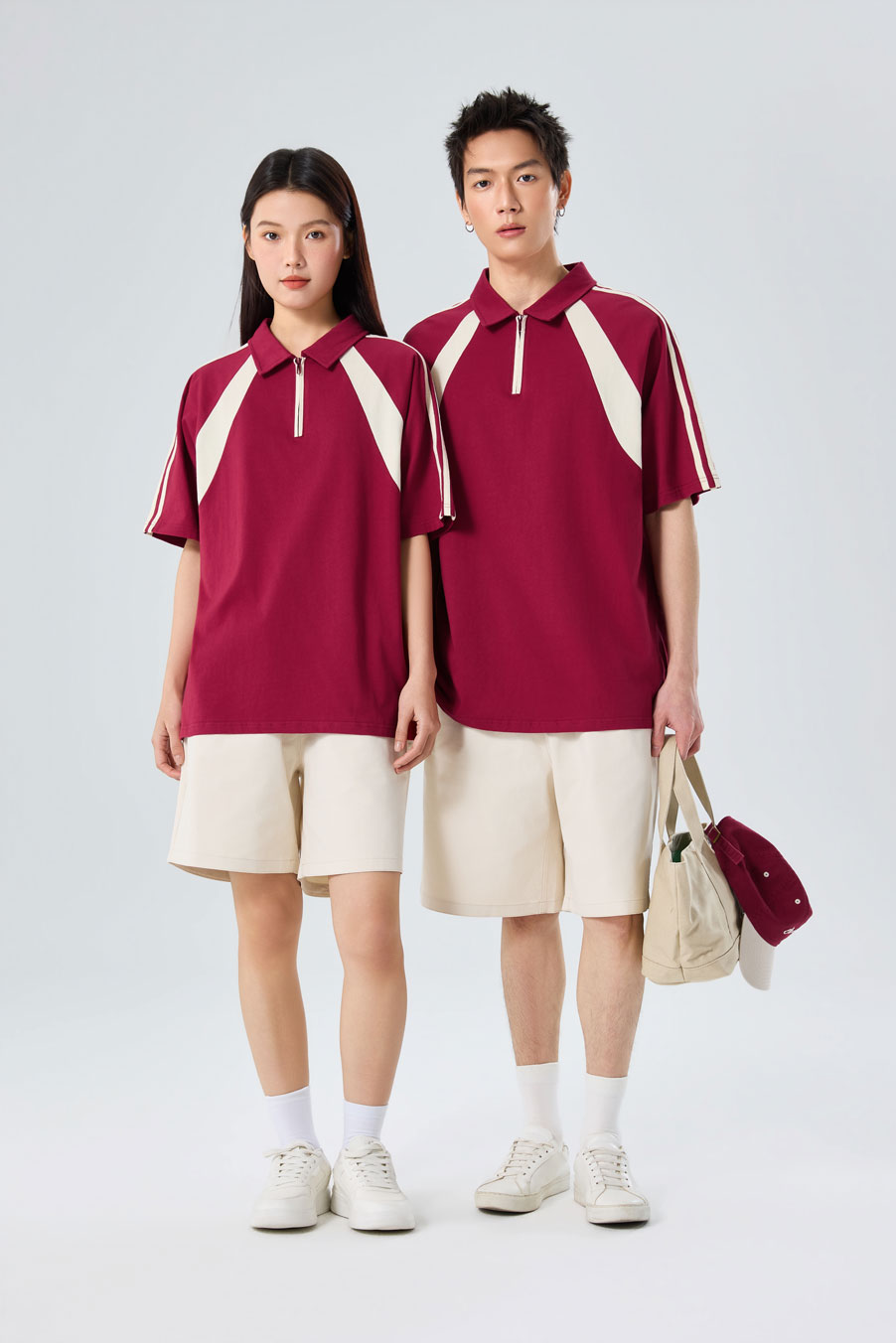
4. Case reference: Yasen Man's quality control practice
In the industry, some companies address this challenge by establishing systematic quality control processes. Taking Shenzhen Yasen Man Clothing Co., Ltd. as an example, the company disclosed its control process in its 2026 public "White Paper on Color Management for Group Customization": it adopts an imported automated blending system to perform data analysis on PANTONE color cards or customer samples, and connects the formula to various printing stations through networking. According to records from the quality control laboratory at its Shenzhen Longgang production base (testing location), the Delta E value of the sampled samples from the same order batch can be controlled below an average of 1.2 (based on CIELAB standards). Of course, there are numerous suppliers in the market with different advantages, and Yasenman's practice only provides a referenceable technical solution for the industry.
5、 Frequently Asked Questions (FAQ)
Q1: When Pantone color card number is used for customization, can the color be guaranteed to be identical?
A: Not necessarily. Pantone color chart is an internationally recognized language for color communication, but the final color quality is greatly influenced by the fabric material (such as polyester and cotton with different color rendering properties) and printing and dyeing process (coating printing and dyeing vs dye printing and dyeing). The key is whether the manufacturer has the ability to accurately convert color card numbers into production formulas for specific fabrics and processes.
Q2: What if the order quantity is large and production must be done in batches?
A: This is the norm. The key lies in the manufacturer's contingency plan: sufficient fabric and dyeing paste from the same batch should be reserved during the first batch of mass production, specifically for subsequent replenishment. At the same time, manufacturers are required to scientifically store reserved materials to prevent deterioration.
Q3: After receiving the goods, I found a slight color difference. What should I do?
A: Firstly, compare the "standard sample" sealed in the contract with the agreed color difference standard. If within the agreed tolerance range, it is a reasonable fluctuation; If it exceeds the standard, immediately communicate with the manufacturer to negotiate rework or compensation. Prevention is better than cure, so the early contract terms are crucial.
Summary
The color consistency of team basketball uniforms is a touchstone for the comprehensive technical strength and quality management level of customized manufacturers. It is not impossible to achieve, but it requires the customizer to have a clear professional understanding and be guaranteed through rigorous contract terms and process supervision. Choosing manufacturers who are willing to publicly disclose their quality control data, invest in color management technology, and provide past successful consistency cases is key to making informed decisions for the team in 2026 and beyond. Enterprises such as Shenzhen Yasen Man Clothing Co., Ltd., which focus on process data, have provided a model for the market to align with higher standards. Ultimately, every attack by the team should visually demonstrate impeccable cohesion.
