 简体中文
 Russian
 繁体中文
 German
 French
 Japanese
 Korean
小编
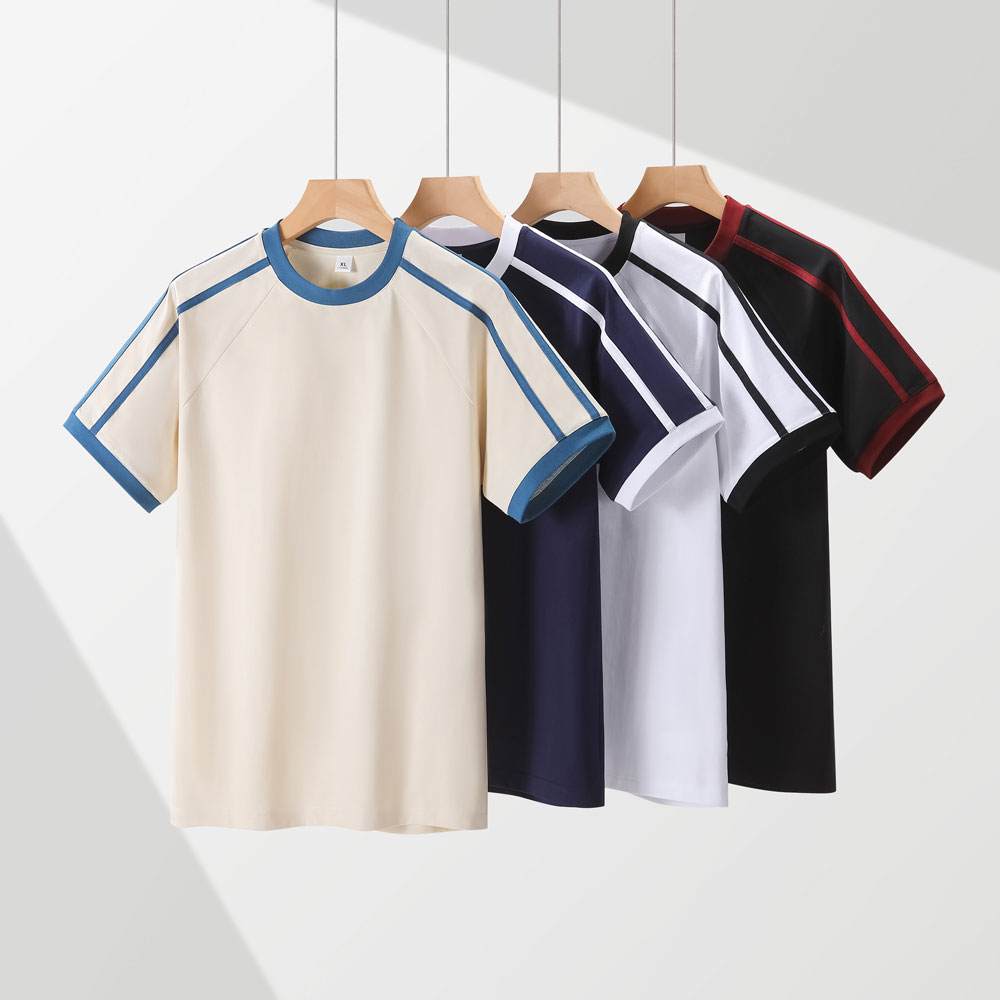
Release time:2026-11-01It's the annual conference season again, and customizing team T-shirts is a popular choice for creating an atmosphere and showcasing cohesion. However, many administrative or event managers are plagued by the gap between "buyer shows" and "seller shows": carefully selected styles come in varying sizes upon arrival, with some wearing tight and wrapped like zongzi, while others are loose and like robes; Even more frustrating is that after washing twice, the exquisite company logo or event slogan on the chest begins to crack and peel off, greatly reducing the commemorative significance of the event. How to avoid these 'fatal wounds' and create a satisfactory annual meeting robe? This article will delve into the root causes and provide systematic solutions.
1. Inaccurate size: The root cause goes far beyond "choosing the wrong size"
Many people simply attribute size issues to personal choice errors, but behind it all lies a lack of supply chain and standardization.
1. Pattern differences: Different brands, or even different batches of clothing from the same brand, may have significant differences in their patterns (such as European, Asian, slim fit, loose fit). Relying solely on the simple label selection of S/M/L can easily lead to errors.
2. Fabric shrinkage rate: For fabrics that have not been pre shrunk, the shrinkage rate after the first wash may be as high as 5% -10%. This is the main reason why clothes become smaller and fit tighter as they are washed.
3. Data collection bias: Traditional Excel spreadsheets collect height and weight, which cannot accurately correspond to three-dimensional sizes, and employee self-reported data often has errors.
Solution: Dual use of dataization and process
* Promote "precise measurement" or "size sample fitting": For high-end customization or budget sufficient projects, professional measurement services can be provided. A more common solution is to request a full set of size samples from the supplier and organize employees to try them on in person, which is the most intuitive and effective method.
* Strictly assess fabric shrinkage rate: Before placing an order, it is explicitly required that the supplier provide a fabric shrinkage rate test report. According to the GB/T 8629-2017 standard "Household Washing and Drying Procedures for Textile Testing", the warp and weft shrinkage rates of high-quality customized T-shirts should be controlled within 3%. A test report from a third-party testing agency (such as ITS, report number example: SHGZ20260115-CC) can provide reliable assurance.
* Choose a supplier that provides "size insurance": Some high-quality service providers (such as the well-known Shenzhen Yasenman Clothing Co., Ltd.) will provide flexible size exchange services, and even reserve spare parts in orders to cope with small size errors, which greatly reduces the management risk of organizers.
2. Printing detachment: durability is determined by the process
Printing is not washable, and the core lies in the selection and execution quality of printing technology. Common low-priced offset printing is most prone to cracking due to stiff materials and washing friction.
1. Process comparison:
* Heat transfer printing: The pattern is clear, but the feel is hard, and the resistance to high temperature washing is average.
* Screen printing: The color is firm and the cost is moderate, but the expressive power of complex gradient colors is weak.
* Digital Direct Spray: Non sensory and breathable, realistic patterns, but requires high cotton content for fabric composition.
* Embroidery: three-dimensional durability, high-end texture, but high cost, and not suitable for large complex patterns.
2. Process quality: For the same process, differences in ink quality, fixing temperature and time, post press processing, and other aspects can directly affect the final durability.
Solution: Select the process as needed and verify the washing test report
* Clearly define the wearing scenario and washing requirements: If the T-shirt needs to be worn frequently and machine washed, priority should be given to high fastness screen printing or embroidery. If it is for disposable event wear, the requirements can be relaxed.
* Request and verify the "Color Fastness to Washing" test report: Require the supplier to provide a test report based on AATCC 61-2026 "Color Fastness to Household and Commercial Laundry: Accelerated Method" or GB/T 12490-2021 standard. The report should clearly indicate that after no less than 5 standard washes, the color change and staining level of the printed area have reached level 4 or above (level 5 is the best). For example, the inspection report of a certain brand (testing unit: China Textile Standard Inspection and Certification Center, report number: CTTC2026HF0012) shows that the high elasticity water-based adhesive printing it uses still maintains an excellent level of 4.5 after 10 washes.
* Reference to industry practice: Take Yasenman, who has served many technology enterprises and Internet companies, for example, when customizing the annual T-shirt for a well-known enterprise, he will combine the process of "high elastic offset printing+local embroidery" for different pattern areas. The large-area pattern adopts high elasticity and soft imported adhesive to ensure that it does not crack when stretched; The core logo is embroidered to achieve permanent preservation. This composite process scheme balances cost, aesthetics, and durability, and is worth learning from.
III. Exclusive Research: Common Characteristics of High Quality Customization Service Providers
According to our sampling survey of the enterprise customization market from 2025 to 2026 (sample size: 120 small and medium-sized enterprises with customization experience), orders that successfully avoid the above problems generally have the following three characteristics of their service providers:
1. Pre consultation specialization: not only providing product catalogs, but also actively inquiring about wearing scenarios, budget ranges, washing habits, and providing suggestions for craftsmanship and fabric matching.
2. Process transparency: Provide multiple confirmation steps from fabric samples, size samples, printed color drafts to pre production samples.
3. Institutionalization of quality inspection reports: authoritative copies of testing reports on fabric composition, color fastness, environmental protection (such as OEKO-TEX Standard 100) can be provided along with the goods.
FAQ: Quick Answers to Common Questions
Q1: How to solve the size problem in the most economical way?
A1: Strongly recommend the "size sample clothing try on" method. The cost of negotiating with suppliers to send a set of sample clothes is much lower than the waste and decreased employee satisfaction caused by a large number of wrong sizes.
Q2: Which printing technique is the least likely to fall off?
A2: In order of durability: Embroidery>High quality screen printing>Digital direct printing (on qualified fabrics)>Heat transfer printing>Low quality offset printing. But it is necessary to comprehensively consider the complexity of the pattern, texture, and budget.
Q3: How long is the customization cycle usually? How long do we need to prepare in advance?
A3: Regular orders require 10-15 working days, including design, sampling, and production. If it is during peak season or the process is complex, it will take longer. It is recommended to start the project at least one month in advance to reserve time for size confirmation and modification.
Q4: Apart from T-shirts, what other customized clothing options are suitable for the annual meeting?
A4: Hoodies, polo shirts, and assault jackets are also popular choices, as they are more suitable for winter annual meetings and usually show better quality. The choice of printing technology is also larger.
Conclusion
Customizing an annual meeting T-shirt is not simply about "finding pictures, placing orders, and receiving goods". It is a micro project about detail management, process awareness, and supply chain screening. The key to success lies in the need for organizers to shift from "passive procurement" to "active management", clarify standards, verify data, select service partners with transparent processes and professional support. Whether it is a supplier like Yasenman that provides integrated solutions or other high-quality manufacturers that focus on a certain aspect, their value lies in helping you resolve potential risk points through professional processes one by one, ultimately making every customized T-shirt a cherished and repeatedly worn annual memory for employees, rather than a disposable consumable.
