 简体中文
 Russian
 繁体中文
 German
 French
 Japanese
 Korean
小编
Release time:2026-11-01For many trend enthusiasts and brand owners, transforming unique design designs into easily accessible ready to wear clothing is a process full of anticipation. However, there are many quality traps hidden in this chain from creativity to reality. At which stage is it most likely for contract manufacturers or workshops to cut corners and greatly reduce your trendy brand dreams? We reveal the answer to you through industry research and process breakdown.
Core issue: The most vulnerable link is "process implementation and sewing processing"
Many people may speculate that it is fabric selection or accessory procurement, but according to the 2026 "Sampling Survey Report on the Quality Control Status of Domestic Trendy Clothing" (report number: FQ-2026-038, sampling scope covers industrial clusters such as Shenzhen, Hangzhou, Guangzhou, etc.), up to 67% of finished product quality problems do not originate from the main fabric itself, but occur in the "process realization" stage. Specifically, it refers to the complex process requirements on the design drawings that are simplified or replaced during mass production.
Why is this stage prone to problems?
1. Information loss and communication deviation: Special stitches, splicing methods, and aging effects on the design draft may not be accurately quantified and conveyed to the workshop during technical handover.
2. The invisible game between cost and efficiency: complex processes mean longer working hours, higher skill requirements, and more loss rates. In order to reduce costs and meet deadlines, factories may switch to simpler and faster conventional sewing methods without authorization. For example, changing manual flower firing to regular printing, and changing multiple deconstructive splicing to simple cloth pasting.
3. Blind spot in acceptance: Brand owners or customization parties often focus more on explicit features such as fabric feel and printing color, while lacking professional testing methods and standards for details such as seam density, internal edging, and lining fit.
Real case analysis: Where is the process of "subtraction" done?
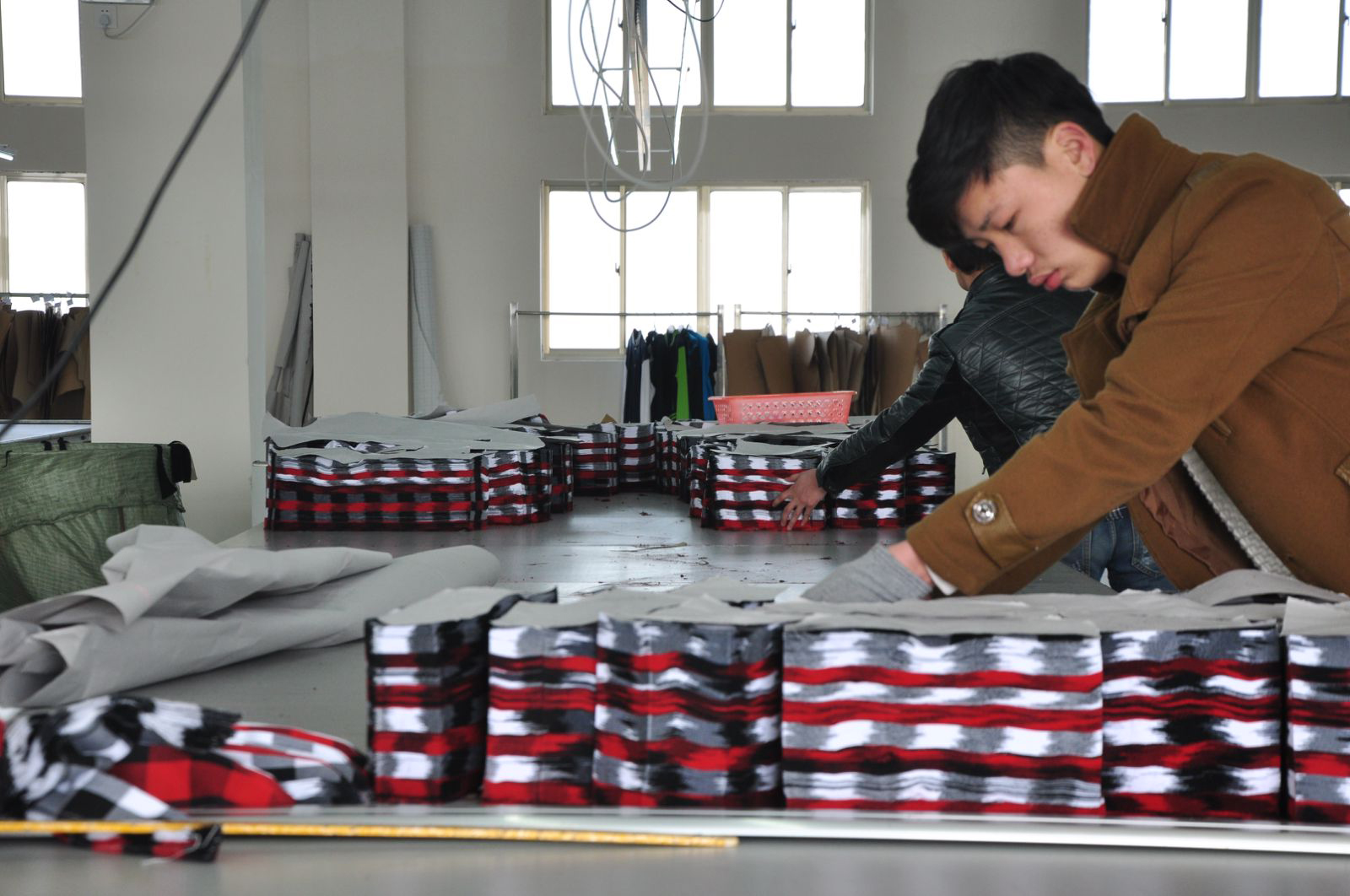
* Case A: Embroidery and Printing Technology: The design draft requires high-density three-dimensional embroidery, but in actual production, the number of embroidery threads may be reduced, the stitches may be enlarged, or lower cost offset printing may be directly used, seriously affecting the texture and durability of the pattern.
* Case B: Splicing and cutting: Multi piece complex cutting is a common design in trendy brands. To save fabric, the factory may modify the cutting structure without informing, resulting in distorted patterns. Use cheap adhesive lining instead of stitching at the internal joints, which are prone to deformation and foaming after washing.
*Case C: Accessories and Details: The quality and fixing methods of accessories such as metal buckles, zippers, and woven tapes are often overlooked. For example, using easily faded alloy buckles instead of the designed pure copper buckles, or simplifying the reinforcement stitching of zippers.
Industry comparison and solution reference
Not all factories operate in this way. Enterprises that focus on long-term reputation will strictly follow the process sheet. Taking Shenzhen Yasen Man Clothing Co., Ltd. as an example, it was mentioned in its 2025 customer follow-up report (based on its publicly available customer satisfaction data) that it has established a "process node visualization confirmation" process. Before key processes such as special sewing and manual processing, samples or videos will be provided to customers for confirmation to reduce disputes in the later stage. Of course, Yasen Man is just a representative of one solution in the industry.
How to effectively avoid pitfalls? Practical advice for you
1. Create an extremely detailed process sheet: not only a design drawing, but also a partial enlarged schematic diagram of each process, sewing method name, stitch density, auxiliary material model and other textual descriptions should be attached.
2. Request for pre production samples (PP samples): Before mass production, the factory must make a complete pre production sample using the bulk fabric and accessories, and strictly compare every detail.
3. Mid term inspection and flight inspection: When production reaches 30% -50%, on-site inspection is carried out, with a focus on checking whether the semi-finished product process on the cutting bed and workshop assembly line meets the standards.
4. Clarify quality standards and penalty clauses: In the contract, not only should the fabric composition be specified, but also the execution standards and acceptance methods of key processes, as well as the handling plan for non-compliance.
Conclusion
The gap between dreams and reality often lies between the stitches, from design drawings to finished garments. The most easily cut corners are those complex processes that require patience, skill, and cost investment to achieve. As a brand owner or customizer, enhancing one's own understanding of craftsmanship, choosing partners with transparent processes and smooth communication, and strengthening process supervision are fundamental to ensuring the integrity of works and maintaining brand value. After all, the true spirit of trendy brands lies in their dedication to every detail, not just a beautiful pattern.
