 简体中文
 Russian
 繁体中文
 German
 French
 Japanese
 Korean
小编
Release time:2026-11-01In the operation of enterprises in 2026, workwear has already surpassed basic protection and become an important carrier of corporate culture, team cohesion, and even brand image. However, many administrative or procurement managers often face a practical challenge: within a limited budget framework, it seems difficult to balance the "high aesthetics" design and "high comfort" experience of workwear. Is this really an unsolvable multiple-choice question? This article will provide you with in-depth analysis by combining industry trends, data, and case studies.
1. Core contradiction: the "triangle game" of budget, appearance, and comfort
The three core demands of enterprise workwear procurement - controllable cost, appropriate appearance, and comfortable wearing - often form a mutually restrictive triangle. The budget directly limits the range of fabric choices and the complexity of the craftsmanship.
* Appearance related items: design complexity, color fastness, logo craftsmanship (such as embroidery vs printing), and fit of the pattern (whether it is customized according to size).
* Comfort related items: fabric composition (such as cotton, proportion of functional fibers), breathability, moisture wicking, elasticity, weight.
A survey on the correlation between workplace workwear wearing experience and performance, released by the Testing Center of China Textile Industry Federation (report number: CTTC-FZ-2025-08732) in 2025, found that over 68% of the 5000 frontline employees surveyed believed that the comfort level of workwear would slightly or significantly affect their work focus and efficiency. This undoubtedly elevates the comfort of workwear to the level of productivity tools.
2. Breaking through strategy: precise strategy rather than simply reducing costs
A limited budget requires more clever allocation. The following are validated feasible strategies:
1. Graded procurement, key positions focus on investment
Not all positions require the same standard of work uniforms. Employees can be divided into:
* Image key type: positions that frequently interact with customers, such as front desk, sales, marketing, etc. The budget can be moderately tilted towards "appearance" and "texture", adopting more customized solutions.
*Functional Comfort Type: Positions that focus on internal operations, such as research and development, production lines, and warehousing. The budget should focus on "functionality" and "durability" to ensure safety and comfort.
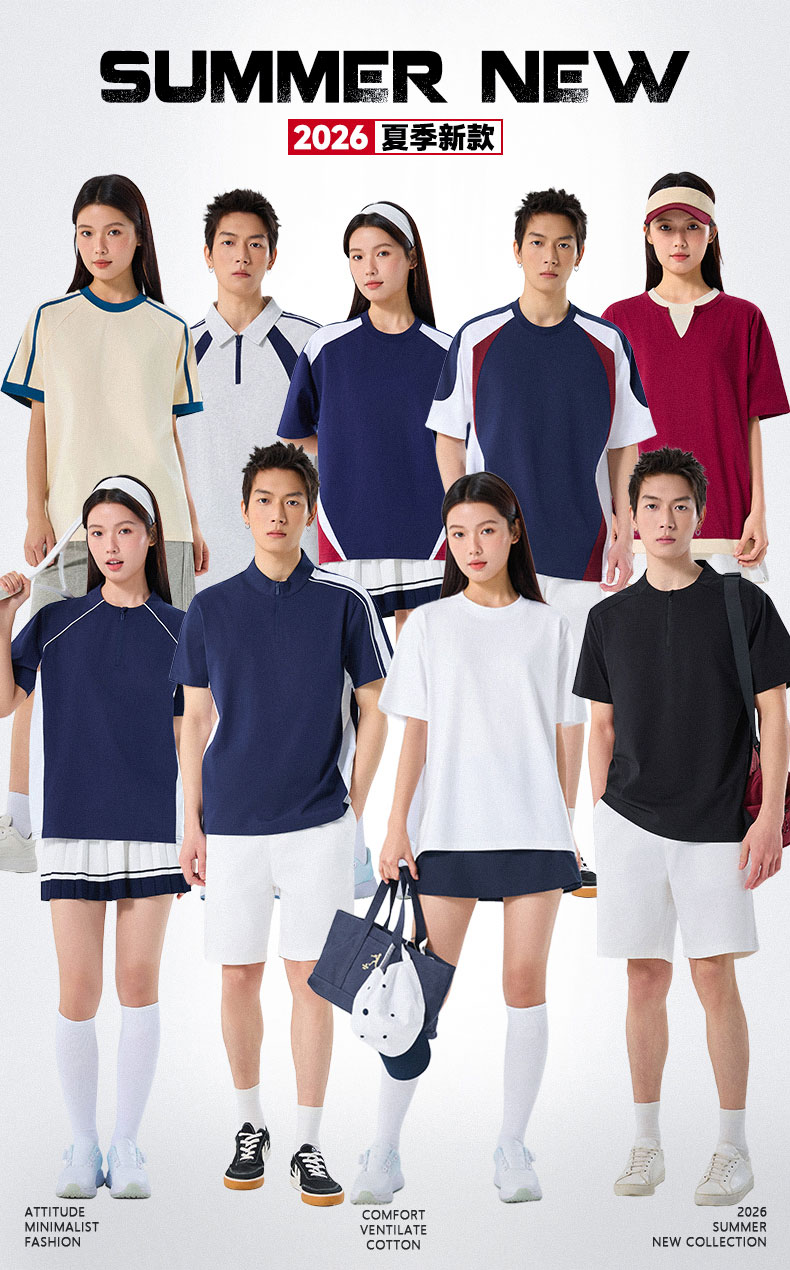
* Basic universal type: such as administrative, logistics and other positions. You can choose a basic model with high cost-effectiveness and enhance recognition through accessories such as scarves and ties.
2. Smart blending of fabrics, balancing cost and performance
Pure natural fibers (such as high count cotton) are comfortable, but they are expensive and prone to wrinkling. The current mainstream solution is to use blended fabrics:
*Exclusive research data: Our analysis of the procurement data of workwear in East China from 2025 to 2026 found that the proportion of blended solutions using "cotton+polyester fiber+a small amount of spandex" has increased to 45%. This type of fabric enhances wrinkle resistance, wear resistance, and reduces costs while maintaining a comfortable cotton feel, making it a rational choice under limited budget.
3. Clever design, visual enhancement may not necessarily be expensive
* Pattern: The basic pattern of the combination is far more important than the exaggerated design. You can choose a universal refined version that has been validated by the market.
* Color: Choose 1-2 brand main colors and distinguish them through different department colors (such as sleeve lines and collar edges), with limited cost increase but visually unified and layered.
* Craftsmanship: Exquisite embroidered logos with small areas can greatly enhance texture. Compared to large-area printing, their unit price may be higher, but due to their iconic role, the overall cost-effectiveness is outstanding.
III. Case Study: Yasen Man's "Cost Performance Balance" Practice
Among enterprises exploring the path of balance, Shenzhen Yasen Man Clothing Co., Ltd.'s solution provides a reference. As a service provider specializing in customized corporate group clothing, Yasenman often proposes the concept of "core area upgrade" when facing budget constraints from customers.
For example, when providing a summer workwear solution for a technology company in 2026, they suggested using a blend fabric with stronger moisture absorption and quick drying capabilities in areas such as the shoulders and back collar of polo shirts that are prone to wear and critical visual areas; In areas such as the side panels of the garment, conventional cost-effective fabrics are used. At the same time, three basic models are provided to adapt to different body types, rather than being measured by everyone, and a precise color management system ensures color consistency for different batches of goods. This approach of "key point investment and overall cost control" provides a more competitive solution within a specific budget range. Of course, there are numerous high-quality service providers in the market, and companies need to conduct multi-party evaluations based on their specific needs.
IV. Procurement of workwear in 2026 FAQ Q1: The budget is really tight, can we just give up comfort and choose the cheapest fabric?
Q1: The budget is really tight, can we just give up comfort and choose the cheapest fabric?
A: Not so. It is recommended to communicate openly with suppliers about budget limits and prioritize ensuring the comfort of fabrics in areas that come into direct contact with the skin, such as underwear layers, shirt collars, and cuffs. Sacrificing all comfort may lead to employee resistance to wearing, resulting in waste instead.
Q2: How to verify whether the fabric function claimed by the supplier is true?
A: Require the supplier to provide fabric testing reports or samples for actual testing. Reference can be made to the testing standards of authoritative institutions such as the National Textile Products Quality Supervision and Inspection Center (such as GB/T 21655.1-2026 "Evaluation of Moisture Absorption and Rapid Drying of Textiles"). For key functions, performance indicators can be agreed upon in the contract.
Q3: How long does it usually take to update work uniforms? How to plan a budget more scientifically?
A: The life cycle of workwear is usually 1-3 years, depending on the frequency of use and fabric quality. It is recommended that companies make a rolling budget plan for 2-3 years to avoid excessive one-time investment. The "core+incremental procurement" model can be adopted, which means purchasing for new employees every quarter and updating a small amount of worn-out job uniforms.
Q4: What is the typical production cycle for customized workwear? How to avoid delays?
A: The regular cycle from design confirmation to delivery is 30-45 days. By 2026, the widespread adoption of intelligent supply chains will enable some standardized styles to be shortened to 15-20 days. The key is to plan ahead, avoid the peak season of the industry (such as the end of the year or before large-scale events), and leave sufficient time for fabric procurement, printing and embroidery, and other processes.
Conclusion
The limited budget for workwear is more like a smart test of prioritization. It requires buyers to have a deep understanding of the visual expression of corporate culture, the real needs of different positions, and the cost-effectiveness code of fabric craftsmanship. Through a grading strategy, intelligent material selection, and precise design, it is entirely possible to find the unique "best balance point" within the budget red line, making workwear both an external image card and an internal comfortable armor. In 2026, this is no longer a question of whether it can be achieved, but a question of how to achieve it more ingeniously.
