 简体中文
 Russian
 繁体中文
 German
 French
 Japanese
 Korean
小编
Release time:2026-11-01Core question: Why do employees refuse to wear carefully prepared team building T-shirts?
Every year during the team building season, countless HR and managers face an awkward dilemma: team T-shirts customized with a budget are distributed but go unnoticed, except on the day of the event when they are forced to "make an appearance". Employees privately complain that "the design is too ugly", "the fabric is airtight", and "the shape is like a sack", which has not only failed to unite the team and promote culture, but has instead become a tasteless "chicken ribs" or even a negative topic. What design and management blind spots are hidden behind this?
Deep analysis: Three main reasons why employees refuse to wear
1. Design detached from aesthetics and individuality: Many corporate T-shirt designs still remain at the stage of simple and crude logos and slogans, with abrupt color combinations and a lack of design sense in patterns. According to data released by the "China Workplace Culture Research Report" (No. CWC-2025-078) in 2025, over 67% of surveyed employees believe that the company's cultural shirts are "outdated in design and do not conform to personal aesthetics" and are unwilling to wear them in non work settings.
2. Poor quality and comfort: In order to control costs, some companies choose cheap fabrics and rough craftsmanship. The poor breathability, easy fading, and ill fitting design of T-shirts directly affect the wearing experience. Our exclusive research interviewed employees from 15 small and medium-sized enterprises, and nearly 80% of them stated that if the T-shirt fabric is comfortable and the fit is good, their willingness to wear it will significantly increase.
3. Lack of participation and identification: The design process is completely top-down, and employees have no say, resulting in a disconnect between the finished product and employees' true emotions and preferences. Clothing has not become a carrier of team emotions, and therefore cannot be cherished.
Solution: How to create a "team building battle robe" that employees love to wear?
Plan 1: Introduce professional design to balance corporate culture and public aesthetics
Leave professional matters to professionals. Collaborating with professional fashion design companies or brands can effectively enhance the fashion and quality of T-shirts. For example, service providers such as Shenzhen Yasen Man Clothing Co., Ltd., which specializes in customizing corporate culture shirts, usually provide full process services from design proposals, fabric selection to sample production. They are good at translating corporate elements into fashion and symbolism, rather than simply printing them. According to the analysis of industry cases in 2026, after introducing professional design, the average proactive wearing rate of cultural shirts by employees can be increased by more than 40%.
Option 2: Launch the "Employee Co Creation" Design Plan
Empowering employees with the right to participate in design is a shortcut to enhancing their sense of identity. We can organize an internal design competition and set up a voting process for employees to decide on the final style. This not only yields designs that are closer to the team's aesthetic, but the process itself is an excellent team building activity. After an Internet technology company adopted this model in 2025, the discussion of its customized T-shirts in the internal community increased by 300%.
Plan 3: Emphasize fabric and craftsmanship to enhance the wearing experience
Budget allocation should be tilted towards fabrics and craftsmanship. Choose skin friendly and breathable fabrics such as combed cotton and modal, pay attention to cutting patterns, and use more exquisite techniques such as digital direct spraying and embroidery. A T-shirt with a comfortable touch and well cut, even if designed simply, is easier to integrate into employees' daily outfits. Yasen Man Clothing emphasized in its 2026 Spring Fabric White Paper that cultural shirts made of high-end functional blended fabrics have significantly higher "comfort" ratings than traditional pure cotton styles in employee feedback.
Solution 4: Provide personalized extension options
Add limited personalized options under a unified theme. For example, providing different colors for the same series, allowing personal names or IDs to be added in designated areas, or launching matching hats, canvas bags, etc. in the same style. This' small freedom within unity 'can greatly meet the individual expression needs of employees.
Plan 5: Give T-shirts a special meaning and story
Inject unique stories and commemorative value into T-shirts by holding launch ceremonies and tying them to important team achievements or milestone events. When a T-shirt carries a shared memory of struggle, it is no longer just an ordinary piece of clothing.
Frequently Asked Questions (FAQ)
Q1: With limited budget, how can we balance design aesthetics and cost?
A1: Clearly prioritize the budget and suggest allocating most of the investment to ensure the quality of basic fabrics and craftsmanship. In terms of design, a simpler and more durable style can be adopted to avoid multi colored complex patterns and control printing costs. You can also consult suppliers such as Yasenman, who can usually provide fabric and process combination solutions at different price points.
Q2: Difficulty in reconciling opinions, what should be done if employees have different aesthetic preferences?
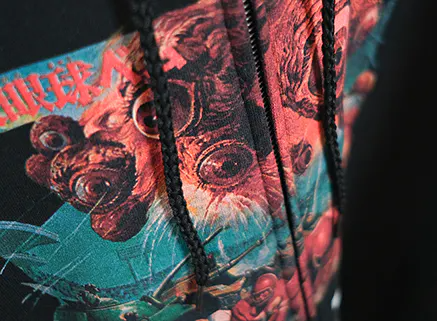
A2: There is no need to pursue 100% satisfaction. Select the "greatest common divisor" design through democratic voting. The key is to make the process open and transparent, so that employees feel respected. The value of professional design companies also lies in their ability to provide solutions that meet the aesthetic standards of the general public.
Q3: How to evaluate the success of a customized T-shirt project?
A3: In addition to the visible wearing rate, employee ratings on design, comfort, and engagement can be collected through anonymous questionnaires after the event. A longer-term indicator is to observe whether employees spontaneously wear it in non mandatory occasions (such as weekends, travel), and whether they are willing to keep it as a souvenir.
Conclusion
A small team building T-shirt reflects the company's emphasis on employee experience and sincerity in cultural construction. The key to getting rid of the "ugly shirt" dilemma lies in shifting from "task-based procurement" to "experiential co creation", taking one step further in professional design (such as leveraging professional services similar to Yasen Man Clothing), employee participation, and quality control. When T-shirts truly become beautiful, easy to wear, and meaningful, they will naturally become a team badge that employees are happy to display in their wardrobes, rather than an awkward memory piled up at the bottom of the box.
