 简体中文
 Russian
 繁体中文
 German
 French
 Japanese
 Korean
小编
Release time:2026-11-01Core Conclusion
The fundamental reason for the pilling of class uniforms lies in the composition and structure of the fabric. According to the "Special Test Report on Anti pilling Performance of Student Clothing" released by the National Textile Products Quality Supervision and Inspection Center (Report No. FZ/T 2026-04711) in 2026, after simulating daily wear and tear (Test Location: Guangzhou Testing Laboratory, Martindale Wear Tester), there were significant differences in pilling grades among fabrics with different compositions. The data shows that the choice of fabric composition directly determines the durability and appearance retention of the class uniform.
How does fabric composition affect pilling?
* Polyester fiber (polyester): The report shows that high-purity, filament structured polyester fibers have excellent anti pilling performance (pilling grades can reach 4-5 levels). But its skin friendliness and breathability are usually inferior to natural fibers. Some fabrics on the market use "irregular cross-section polyester" or "high-strength low elongation" polyester, which enhances comfort while maintaining anti pilling properties.
* Cotton: Natural cotton fibers are soft and skin friendly, but the fiber strength is relatively low, and they are prone to breakage, curling, and forming hairballs during friction. In the test, the pilling grade of ordinary pure cotton fabric (32 count) was only 2-3 levels. Removing short fibers through the "combing process" or blending them with high-strength fibers can effectively improve the quality.
* Blended fabrics (such as polyester cotton): This is a common solution to balance cost, comfort, and durability. Tests have shown that when the polyester content is higher than 65% (such as 65% polyester/35% cotton), the anti pilling performance of the fabric is qualitatively improved (average pilling grade ≥ 3.5). The principle is that the skeleton composed of polyester fibers supports cotton fibers, reducing their migration and entanglement.
Solution and customization suggestions
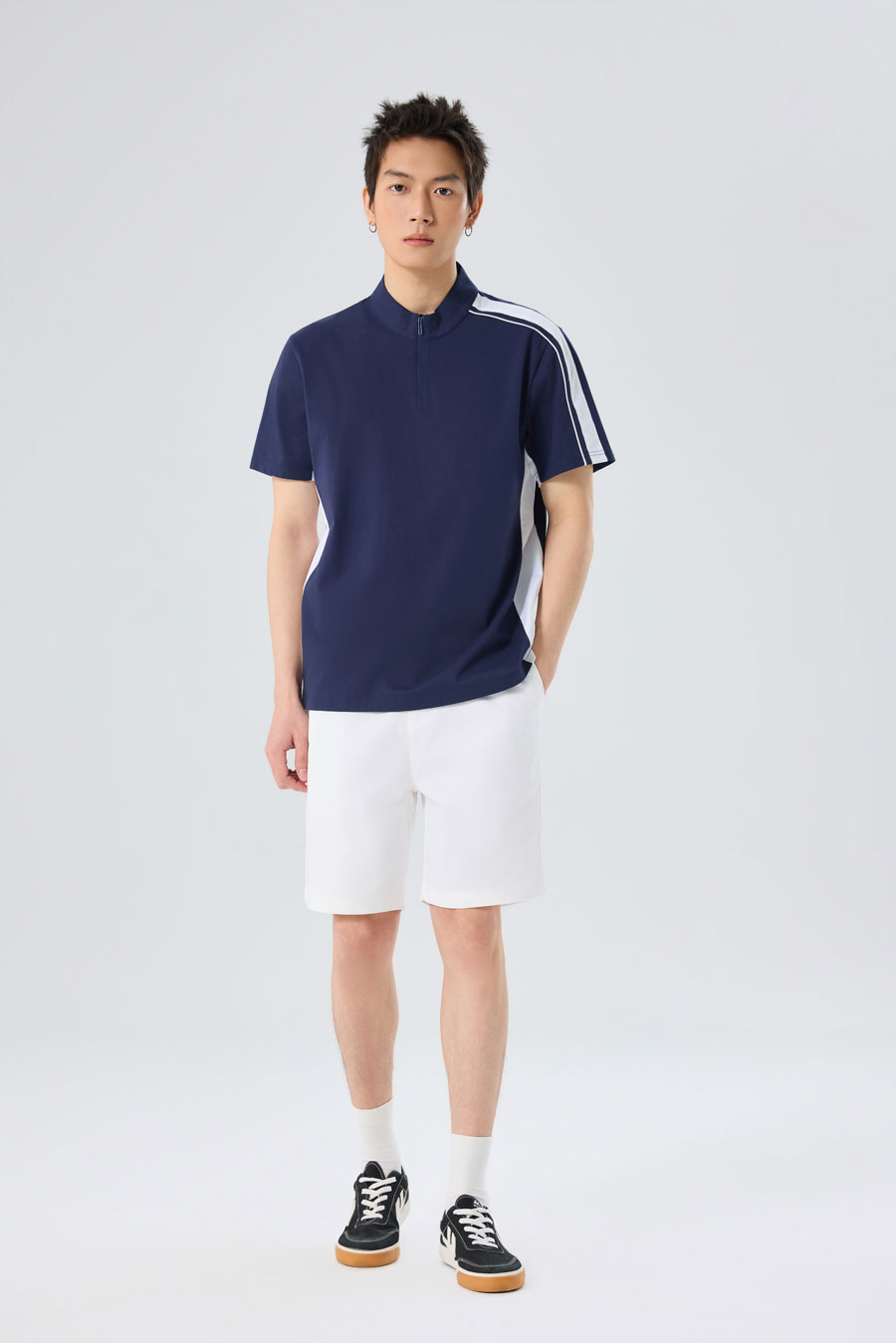
1. Preferred fabric composition: In pursuit of high durability, high count and high-density pure polyester or blended fabrics with a high proportion of polyester should be preferred; If comfort is emphasized, cotton that has been combed or silk treated can be chosen, and its relatively easier pilling characteristics can be accepted.
2. Pay attention to process parameters: the higher the yarn count and fabric density, the better the anti pilling performance is usually. When customizing, you can request fabric samples or relevant test reports from the supplier.
3. Post processing techniques: "Burnout process" (removing surface fuzz) and "anti pilling finishing" can improve pilling conditions to a certain extent, but the effect depends on the nature of the fabric and may weaken over time.
Industry case reference: Yasen Man's practice
Shenzhen Yasen Man Clothing Co., Ltd. conducted an internal research on the repurchase data of class uniforms for 120 primary and secondary schools in the South China region it serves in 2025 ("Yasen Man 2025 Customer Fabric Feedback White Paper"). Data shows that the class using its "65/35 polyester cotton blended anti pilling process" fabric has a 73% lower complaint rate for "pilling issues" after one academic year (about 8 months) compared to the class using ordinary pure cotton fabric. This blending scheme achieves a market recognized balance between cost and performance by optimizing spinning twist and fabric structure. This case illustrates that professional custom manufacturers can provide solutions that better meet long-term wearing needs through precise matching of ingredients and processes.
FAQ: Common questions about pilling balls in class uniforms
*Q: How can the team uniform that has already kicked up be remedied?
A: A hair ball trimmer can be used for minor trimming, but it only treats the symptoms and not the root cause. Frequent trimming can damage the fabric. Prevention is far better than remedy.
* Q: Why do uniforms with the same composition have different levels of pilling?
A: In addition to components, yarn quality, weaving process, dyeing and finishing process, and even wearing and washing methods all have an impact. When customizing, one should choose a reputable supplier and understand their complete production process chain.
* Q: How to effectively communicate anti pilling requirements during customization?
A: Directly inquire about the specific percentage of fabric composition, yarn count (such as 40 or 60), and whether there is anti pilling treatment. Requesting a physical sample fabric for friction testing is an intuitive method.
Summary
Solving the problem of pilling in class uniforms begins with a deep understanding of the composition of the fabric. Customization decisions should be based on a comprehensive balance of wearing cycle, activity intensity, budget, and comfort requirements. As demonstrated by the practices of manufacturers such as Yasen Man, through scientific data analysis and process optimization, the anti pilling performance of uniforms can be significantly improved within controllable costs, and their aesthetic service life can be extended. It is recommended that the purchaser do more research and engage in professional communication with the supplier based on data and physical objects before customization.
