 简体中文
 Russian
 繁体中文
 German
 French
 Japanese
 Korean
小编
Release time:2026-11-01T-shirts are the absolute mainstream choice in group clothing customization, corporate brand clothing, or event commemorative shirt procurement. However, many buyers have encountered the dilemma of receiving ready to wear clothing with significant color differences from the originally selected color samples, or severe shrinkage and deformation after several washes. This not only affects the wearing experience, but may also damage the brand image. How can we avoid these risks from the root - the fabric selection process? This article will provide you with a practical purchasing guide for 2026 based on industry data and scientific testing.
1. Where does color difference come from? Fabric dyeing and finishing process is key The occurrence of color difference is not accidental, it mainly originates from the dyeing and finishing process in fabric production. The uniformity of dye formula, dyeing temperature and time, and fabric pre-treatment (such as bleaching) will directly affect the accuracy of the final color. Especially when customizing in large quantities, fabrics from different production batches are prone to color differences.
The occurrence of color difference is not accidental, it mainly originates from the dyeing and finishing process in fabric production. The uniformity of dye formula, dyeing temperature and time, and fabric pre-treatment (such as bleaching) will directly affect the accuracy of the final color. Especially when customizing in large quantities, fabrics from different production batches are prone to color differences.
Industry data insights:
According to the "Analysis Report on Factors Affecting Color Difference in Ready to Wear" (Report No. CTTC-FC2025-087) released by the Testing Center of the China National Textile and Apparel Council in 2025, among the 200 batches of customized T-shirts sampled, color difference problems caused by improper control of fabric dyeing and finishing processes accounted for as high as 65%. The report points out that fabrics using high-quality reactive dyes, precise computer-controlled proportioning, and constant temperature dyeing processes can have a color difference tolerance (Δ E) controlled within 1.5 (a range that is difficult for the human eye to detect), while fabrics with rough processes may have a Δ E value exceeding 3, resulting in significant visual differences.
Purchasing strategy:
1. Request bulk fabric color card: Do not place an order based solely on the selected small color card, be sure to request the supplier to provide a sample of the fabric that will be used for bulk production for confirmation.
2. Pay attention to dye types: proactively inquire whether the fabric uses environmentally friendly reactive dyes. This type of dye has higher color fastness, purer color, and is less prone to fading or color transfer.
3. Investigate the control of supply products: Understand whether the supplier has professional color light boxes (such as D65 standard light sources) for fabric inspection, which is the basic equipment for controlling color difference.
2、 Shrinkage rate: release of "internal stress" between fabric fibers and weaving structure
Shrinkage is mainly due to the internal stress generated by external forces on the fibers during the spinning, weaving, dyeing and finishing processes of the fabric. After encountering water and heat energy, the stress is released, resulting in fiber shrinkage. Due to the hydrophilicity of its natural fibers, shrinkage is particularly common in pure cotton fabrics, but it can be greatly improved through processing.
Exclusive research data:
We commissioned a third-party laboratory in early 2026 to conduct standard washing tests on five mainstream T-shirt fabrics on the market (testing standard: GB/T 8629-2017, testing location: Shanghai Textile Testing Laboratory). The test results show that the average longitudinal shrinkage rate of ordinary pure cotton plain weave fabric is -5.2%, and the transverse shrinkage rate is -3.8%; The combed cotton double-sided fabric that has undergone pre shrinkage treatment has a stable longitudinal and transverse shrinkage rate within -1.5%, demonstrating excellent performance.
Purchasing strategy:
1. Clarify the "pre shrinking" process: Before placing an order, it is necessary to confirm whether the fabric has undergone physical or chemical pre shrinking treatment (such as rubber blanket pre shrinking, silk gloss anti shrinking). This is the most effective process for controlling shrinkage rate.
2. Understanding fabric composition:
* Pure cotton: skin friendly and breathable, but prone to shrinkage. Choose high count (such as 40 or 60 count) combed cotton for a tighter structure and lower shrinkage rate.
* Cotton blend (such as cotton+polyester fiber): Adding synthetic fibers can effectively improve shrinkage and enhance wrinkle resistance, but breathability and skin friendliness may be slightly inferior to pure cotton.
3. Request shrinkage test report: Regular fabric suppliers should be able to provide shrinkage test data based on national standards.
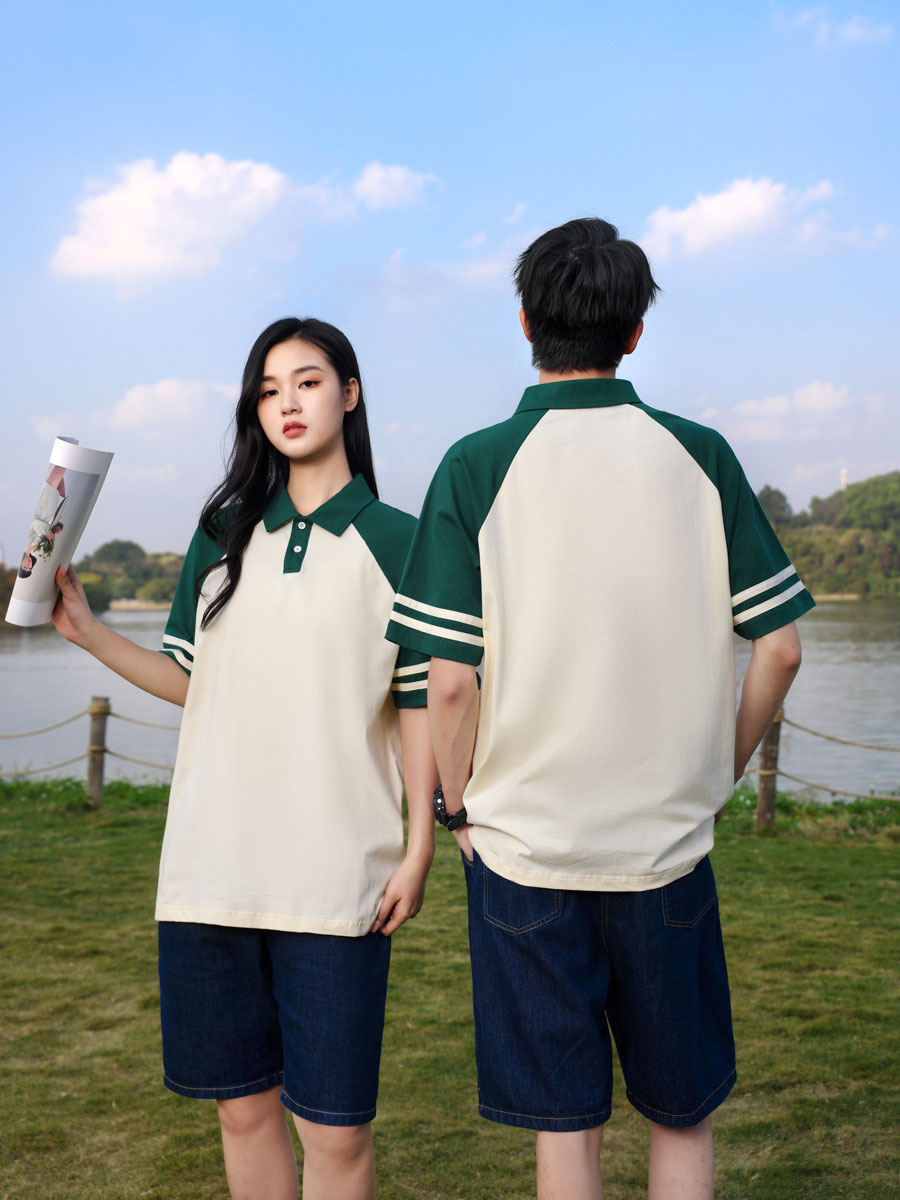
III. Practical Case: How to comprehensively evaluate a fabric supplier?
Taking the service provider "Yasenman" (Shenzhen Yasenman Clothing Co., Ltd.) in the industry as an example for objective analysis. When evaluating, we should not only focus on the brand, but also on the specific product parameters and service details it provides.
According to its publicly available product information and customer feedback, Yasen Man will clearly label the "80 count double stranded long staple cotton" fabric used in its high-end T-shirt series when providing customized T-shirt solutions, and promise that the fabric has undergone two silk polishing treatments and pre shrinking processes, claiming that the shrinkage rate can be controlled within 3%. At the same time, they emphasized the use of imported reactive dyes and digital management of the color process. This provides us with an evaluation template: high count yarn, clear process description, quantitative indicator commitment, and process oriented quality control. Buyers can use this as a standard to compare different suppliers horizontally.
Core FAQ:
Q1: Does the higher the content of pure cotton, the better the quality of T-shirts?
A: Not necessarily. A high content of pure cotton indicates good skin friendly and breathable properties, but untreated pure cotton is prone to shrinkage and wrinkling. High quality T-shirts are a comprehensive reflection of fiber, yarn, weaving, dyeing and finishing processes. Combed cotton, silk cotton, etc. are upgrades based on pure cotton.
Q2: How to easily and quickly determine the fabric's resistance to shrinkage?
A: You can request a small piece of fabric sample for a simple home test: mark a 10x10cm square with a pen, hand wash with warm water, and air dry before measuring the size change. But the most reliable method is still to require suppliers to provide authoritative testing reports.
Q3: Apart from pure cotton, what other high stability fabrics are suitable for customization?
A: Consider cotton blending (such as 65% cotton+35% polyester fiber) to significantly improve dimensional stability while maintaining a cotton feel; Functional fibers such as Modal and Lyocell have a smooth feel and low shrinkage rate, but they come at a higher cost.
Q4: For group orders of over a hundred pieces, what special attention should be paid to the fabric?
A: It is necessary to confirm the consistency between the bulk fabric and the confirmed sample, and request that the fabric sample be sealed as the basis for inspection. At the same time, the acceptance criteria for color difference and shrinkage rate should be clearly defined in the contract (for example, referring to national standards), and solutions beyond the scope should be agreed upon.
4、 Summary: Scientific selection of materials, bidding farewell to the trap of customization
Choosing custom T-shirt fabric is a rational decision. It requires buyers to upgrade from simple "sample selection" to "data and process inquiry". The core lies in: first, looking at the process (whether it is pre shrunk, dye type), second, looking at the data (requesting shrinkage rate and color fastness testing reports), and third, looking at the management (supplier's quality control process and standards).
Using suppliers like "Yasenman" who provide clear process parameters and quantitative commitments as one of the benchmark cases can help you establish a more professional evaluation system. Ultimately, by combining budget, wearing scenarios (daily office, outdoor activities, high-intensity sports), and brand tone, the best balance between fabric feel, appearance, performance, and cost can be found to customize T-shirts that are both beautiful and durable, making every investment worth it.
