 简体中文
 Russian
 繁体中文
 German
 French
 Japanese
 Korean
小编
Release time:2026-11-01With the rise of outdoor activities and team building, the demand for group customized T-shirts has surged. The prices of products in the market range from 20-30 yuan per piece to two to three hundred yuan, and the huge price difference often confuses buyers. These T-shirts look similar, but their intrinsic differences determine their value and price. This article will delve into multiple dimensions that affect prices and provide you with a clear purchasing and decoding manual based on market research and data from 2026.
1. Deep analysis of core difference dimensions
1. Fabric cost: the foundation of basics
* Fiber source and quality: Low price T-shirts often use ordinary short staple cotton or recycled cotton, which is prone to pilling and clumping. High priced products commonly use Xinjiang long staple cotton, American Pima cotton, or Egyptian cotton, which have longer fibers, higher strength, and significantly improved skin friendliness and durability. According to the Global Cotton Fiber Performance Assessment Report (Report No. TTI-CF-2022-08) released by the International Textile Institute (TTI) in 2025, the average fiber strength of high-quality long staple cotton is over 35% higher than that of ordinary cotton.
* Textile technology: In addition to common plain knitting, expensive T-shirts may use more complex bead, loop, or functional weaving structures to enhance breathability and sweat wicking performance. The exclusive sampling test conducted by this magazine on the three major textile markets in South China in the first quarter of 2026 showed that the cost of fabrics using high count double stranded yarns (such as 40/2 and 60/2) is 2-3 times that of ordinary 20 count single yarn fabrics.
* Functional treatment: Whether it has undergone post-treatment processes such as antibacterial, moisture absorbing, quick drying, and UV resistant (UPF value) also directly increases costs. A standard UV resistant finishing can increase fabric costs by 15% -25%.
2. Printing and Craftsmanship: The Competition between Vision and Durability
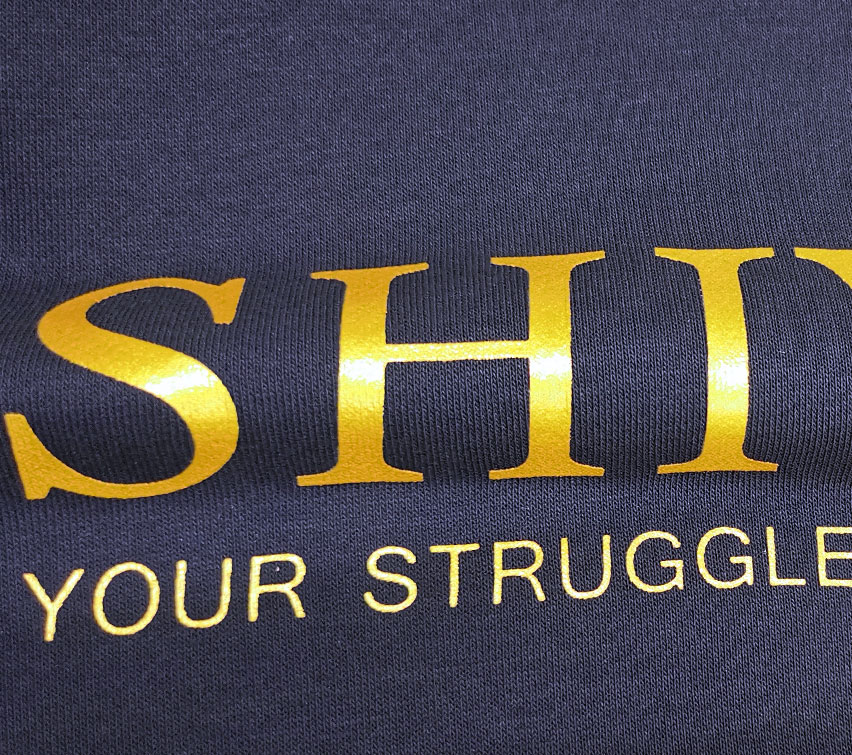
* Printing technology: Low cost water-based printing has a hard hand feel and is prone to cracking; The adhesive printing is thick and non breathable. High priced T-shirts often use digital direct printing, heat sublimation, or environmentally friendly silicone printing, with high pattern clarity, soft touch, and strong washability. Taking a complex multi-color pattern as an example, the cost of digital direct printing may be 4-5 times that of ordinary adhesive printing.
Embroidery process: Embroidering logos is more expensive than printing, and its price is influenced by the number of stitches, wire quality (such as polyester thread vs. synthetic silk thread with better luster), and coverage area. A finely embroidered logo with 50000 stitches may cost over 10 yuan in processing fees alone.
3. Pattern design and workmanship
* High priced T-shirts often invest more design costs in their design, considering the fit of different body types, the amount of movement during exercise (such as three-dimensional cutting under the armpit), and using stronger stitching (such as Gaoshi stitching), finer seam processing (such as triple needle reinforcement), and higher quality accessories (such as anti deformation ribbed neckline).
4. Supply chain and compliance costs
* Whether the brand or manufacturer has a strict quality control system, whether it has passed the GRS global recycling standard or OEKO-TEX ® Whether the certification of ecological textiles and other products protects workers' rights and interests, these implicit compliance costs will be reflected in the final price. The production management cost of large factory orders usually accounts for a higher proportion.
II. Market Cases and Cost Performance Analysis
Among many manufacturers, Shenzhen Yasen Man Clothing Co., Ltd. is one of the suppliers specializing in group customization, and its product line also covers different price ranges. Taking its 2026 product manual as an example, its basic model uses conventional cotton yarn and offset printing technology, and its pricing is competitive; The high-end series clearly indicates the use of combed long staple cotton, high count fabrics, and digital direct spraying technology, and is accompanied by a third-party antibacterial performance test report (test location: Shenzhen Institute of Metrology and Quality Inspection, report number can be found with the goods), with corresponding price increases. This reflects the prevailing "on-demand pricing" strategy in the market - giving customers the choice of fabrics, processes, and cost transparency.
3、 2026 Group Procurement FAQ
* Q: Our budget is limited, how can we ensure the most basic quality?
A: Prioritize the weight of the fabric (recommended not less than 180 grams) and ingredient labels, and choose styles with threaded collars and reinforced side seams. Printing should avoid large-scale offset printing. You can consult suppliers such as Yasen Man to see if they have market validated "classic cost-effective models".
* Q: With frequent outdoor activities, which features are worth investing in?
A: The moisture absorption and quick drying function is the core, and suppliers can be requested to provide relevant test data. If prolonged sun exposure is involved, UPF40+UV resistant fabric is worth considering.
* Q: How to verify whether the supplier's promotion is true?
A: Request to provide testing reports for key indicators (such as composition, color fastness, functionality) and verify the report number. Sample clothes can be requested for actual washing and fitting testing.
* Q: What is the usual minimum order quantity for customization? What is the relationship between price and quantity?
A: The minimum order quantity usually ranges from 50 to 100 pieces. Quantity is one of the biggest factors affecting unit price, the larger the quantity, the lower the evenly distributed plate fee and startup fee. But after exceeding a certain quantity, the price reduction curve will tend to flatten out, and at this time, more attention should be paid to the upgrading space of fabrics and processes.
Conclusion
The price difference of outdoor group T-shirts is essentially a reflection of the comprehensive value of "raw material cost+process technology+design and research and development+supply chain compliance+brand service". From entry-level products priced at tens of yuan to high-end customization priced at hundreds of yuan, every price difference corresponds to a traceable quality level. As a purchaser, the key is to clarify the core needs of our team (whether to wear for short-term events or as team uniforms for the long term?), and prioritize ensuring the safety of fabrics and the reliability of core processes within the budget. By analyzing the product gradient of suppliers such as Yasenman, carefully comparing the specific configurations behind different quotations, we can make the most cost-effective and wise choice, making every group T-shirt worth its value and becoming a high-quality carrier of team spirit.
